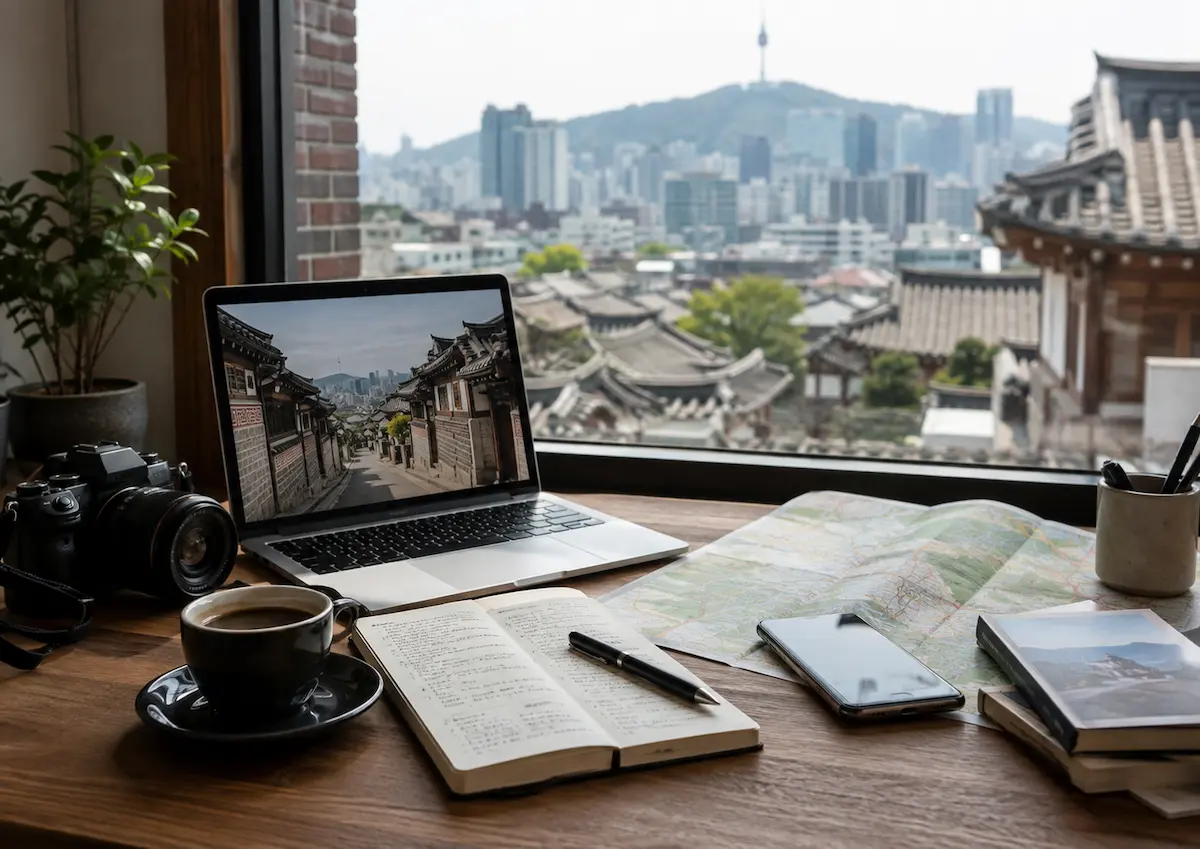
CoreaDesk is an independent Korea travel website created to help international visitors plan and navigate South Korea with more confidence.
A trip to Korea can feel straightforward once you arrive, but many practical details are not obvious beforehand. Choosing where to stay, understanding airport transport, using Korean map apps, paying with an overseas card, navigating buses and subways, or knowing what to do when plans go wrong can all require information that ordinary destination guides do not explain clearly.
CoreaDesk focuses on those practical questions.
Our goal is not simply to tell readers where to go. We explain how travel in Korea works in practice, what visitors should prepare, where common problems occur and which details should be checked again before travelling.
If you are planning your first visit, start with our Start Here guide.
Who CoreaDesk Is For
CoreaDesk is written for:
- first-time visitors to South Korea
- independent travellers planning their own trips
- international residents adjusting to daily life in Korea
- readers interested in Korean culture and society
- anyone looking for clear, practical information beyond short travel tips
You do not need to know much about Korea before reading CoreaDesk. Our guides are designed to explain unfamiliar situations without assuming prior knowledge.
What CoreaDesk Covers
CoreaDesk is organised around the decisions and situations travellers face before and during a visit to Korea.
Planning Your Trip
We help readers decide when to visit, how long to stay, where to stay, what to book in advance and how to build a realistic itinerary.
See Plan Your Trip and Korea Itineraries.
Destinations
Our destination guides help visitors understand how Seoul, Busan, Jeju and other parts of Korea fit into a trip.
We focus on practical questions such as where to stay, how long to spend, how to move between areas and how to avoid unrealistic itineraries.
Explore Destinations.
Getting Around
Transportation is one of the most important parts of independent travel in Korea.
CoreaDesk explains airport transfers, subways, buses, taxis, KTX and intercity travel, transportation cards, Korean addresses, station navigation and luggage storage.
See Getting Around.
Money, Phones and Apps
Our guides explain cards and cash, overseas card problems, ATMs, SIM and eSIM options, Korean phone numbers, navigation apps and other digital services visitors may need.
See Money, Phones & Apps.
Food and Dining
CoreaDesk covers not only what to eat, but how restaurants work in practice.
Topics include ordering, kiosks, table-ordering screens, payment, dining customs, solo dining, food allergies and dietary needs.
See Food & Drink.
Help and Safety
Some of the most useful travel information is the information you hope not to need.
Our guides cover emergencies, illness, lost property, weather, extreme heat and rain, and finding help when Korean is difficult.
See Help & Safety.
How CoreaDesk Articles Are Written
CoreaDesk combines practical research with everyday observation and local experience.
Some articles begin with questions visitors frequently ask. Others come from situations that are so familiar to people living in Korea that they are rarely explained in detail.
When a subject involves transport rules, public services, government programmes, schedules, policies, or other information that may change, we check official sources and reliable public information whenever possible.
Personal experience may be used to explain what a situation feels like in practice, but it is not presented as a universal rule. We distinguish between confirmed information, common experience, and personal observation.
Our Editorial Principles
CoreaDesk values accuracy, clarity, usefulness, and honest context.
We aim to:
- answer the reader’s actual question
- explain unfamiliar Korean systems in plain English
- include practical steps, examples, and points to check
- verify information that requires an official source
- update time-sensitive details when necessary
- separate facts from personal observations
- avoid exaggerated claims and unsupported generalisations
- acknowledge differences between regions, businesses, and individual situations
We do not copy or lightly rewrite other articles. Each guide is organised around the questions an international reader may have and the context needed to use the information in real life.
Fact-Checking and Updates
CoreaDesk checks time-sensitive information against official or primary sources whenever possible. This includes transport rules, government services, entry requirements, emergency information, prices, schedules and other details that may change.
Articles may be reviewed and updated when official guidance changes or when new information affects the usefulness or accuracy of a guide.
Where appropriate, we include links to official sources so readers can confirm current requirements for themselves.
Sources and Corrections
When information can affect a traveller’s money, safety, entry requirements, transport or ability to complete a trip, CoreaDesk prioritises authoritative sources such as Korean government agencies, local governments, airports, transport operators, official tourism organisations and other primary sources.
Commercial websites, media reports and traveller experiences may provide useful context, but they do not replace an authoritative source when one is available.
We prioritise official government websites, public transport operators, tourism authorities, airports, public institutions and other primary sources when verifying factual information.
If a reader notices an error, outdated information or a source that should be reviewed, we welcome corrections through our Contact page.
We review correction requests and update published information when reliable evidence shows that a change is needed.
Korea Beyond the Familiar Images
Korea is often introduced through K-pop, television dramas, beauty products, food, technology, and famous tourist attractions.
These are all part of Korea, but they do not explain what it feels like to move through a subway station, order a meal, read an address, find a restroom, use a public service, or understand an everyday custom.
CoreaDesk focuses on those smaller moments.
A country often becomes easier to understand through ordinary details: where people wait, how they ask for help, what they do in shared spaces, and which systems they rely on every day.
Editorial Independence
CoreaDesk aims to provide practical information based on usefulness to readers rather than promotional value.
When a guide includes personal experience or opinion, we make that distinction clear. Commercial relationships, sponsored content or affiliate links, when applicable, should be disclosed so readers can understand the context in which a recommendation is made.
Our Purpose
CoreaDesk exists to make Korea easier to understand before and during a visit.
We want readers to leave each guide with a clearer idea of what to expect, what to do, and what may be different from home.
Korea does not need to be presented as perfect or mysterious. It needs to be explained carefully, honestly, and in a way that is useful to the person reading.
For questions, corrections, source suggestions, or editorial enquiries, please visit our Contact page.