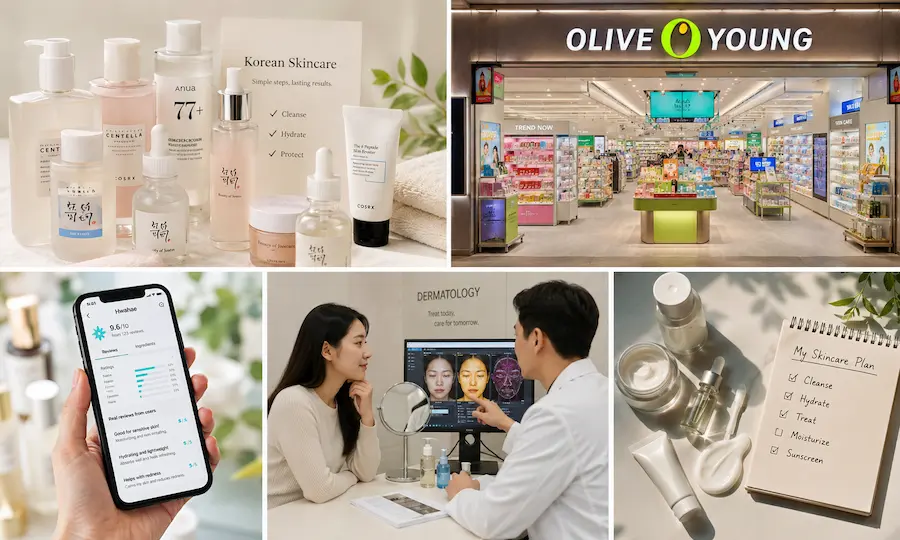
Korean skincare is often introduced overseas through products: sheet masks, sunscreens, serums, toner pads, cushion compacts, and the famous idea of a long multi-step routine.
That image is only part of the story.
In Korea, skincare is not limited to beauty trends or product collections. It is connected to everyday habits, retail culture, online reviews, seasonal weather, first impressions, and the practical idea of maintaining the skin before problems become serious.
This does not mean every Korean follows a complicated skincare routine. Many people keep their routine simple. A basic cleanser, moisturizer, and sunscreen may be enough for some. Others add toner, serum, masks, or professional care depending on their skin condition, age, budget, and personal interest.
A more realistic way to understand Korean skincare is this: it is widely accessible, often discussed, and treated as a normal part of daily self-care.
K-Beauty Is Also a Large Export Industry
Korean skincare has become familiar far beyond Korea.
In 2025, South Korea’s cosmetics exports reached about 11.4 billion US dollars, according to Korean government data reported in 2026. This placed Korea among the world’s leading cosmetics exporters and showed how much K-beauty has grown outside its home market.
International consumers often connect K-beauty with hydration, sunscreen, gentle textures, barrier care, and relatively affordable product innovation. These associations did not appear by chance. They were shaped by a domestic market where consumers compare products closely and respond quickly to new formulas, textures, and reviews.
Still, export success alone does not explain why skincare matters inside Korea.
To understand the culture, it is more useful to look at daily habits: how people shop, how they read reviews, how they talk about ingredients, and how easily beauty products are found in ordinary shopping areas.
Skincare Is Not One Routine for Everyone
One common misunderstanding is that Korean skincare means one fixed routine.
It does not.
Some people enjoy using several products. Others prefer a short routine because their skin is sensitive, their schedule is busy, or they do not want to spend too much money. A person’s routine may also change by season. In humid summer weather, lighter products may feel better. In winter, many people look for richer creams or barrier-supporting products.
Age also changes the focus.
Younger consumers may pay attention to sunscreen texture, makeup compatibility, product feel and daily convenience. People in their 30s, 40s and older may be more interested in moisture, comfort, simple routines and long-term daily care.
This is why it is inaccurate to describe Korean skincare as if everyone follows the same steps. The culture is not about copying one routine. It is about choosing products and habits based on skin condition, lifestyle, and personal preference.
Review Culture Shapes Beauty Shopping
Reviews play a major role in Korean beauty shopping.
Before buying a product, many consumers look at texture, ingredients, skin type comments, photos, rankings, and user reviews. Beauty apps and online platforms have made this easier. Some platforms allow users to compare ingredients, read large numbers of reviews, and check how people with similar skin concerns responded to a product.
This review culture affects brands as well.
A product can become popular quickly if people like its texture, price, and results. But attention can also disappear quickly if reviews are poor or if the product does not match its claims. Korean beauty consumers are often active testers, not passive buyers.
This helps explain why K-beauty changes fast. New formats and ingredients appear often, but consumers also push brands to make products that are easy to use in real life.
Ingredient Awareness Has Become Normal
Korean skincare shoppers often pay attention to what a product is supposed to do.
They may ask whether a product is for calming, hydration, barrier support, oil control, or gentle exfoliation. They may also check whether it contains fragrance, whether it feels sticky, whether it layers well with sunscreen, or whether it is suitable after a skin daily care.
This does not mean every consumer studies ingredients deeply. But ingredient awareness has become common enough that brands often need to explain their products clearly.
A cream is not judged only by whether it is popular. People also ask practical questions. Is it too heavy for oily skin? Does it pill under makeup? Is the sunscreen comfortable enough to reapply? Does the toner pad feel too harsh? Can sensitive skin tolerate it?
These small questions are part of everyday skincare culture in Korea.
Beauty Stores Make Skincare Easy to Compare
Another reason skincare feels visible in Korea is the retail environment.
Beauty and health stores are common in busy shopping districts, subway areas, and neighborhood commercial streets. Olive Young is one of the most recognizable examples, but the larger point is not one company. It is the way Korean beauty shopping often works.
Customers can compare many brands in one place. They can check testers, look at rankings, compare textures, and see new products without going to a department store. For younger consumers especially, this makes skincare feel casual and accessible rather than formal or expensive.
This kind of retail setting also helps visitors understand Korean beauty culture quickly. The products are not hidden behind counters. They are displayed as everyday items that people can test, compare, and discuss.
Dermatology Is Visible, But Not Required
Dermatology is another part of the conversation, but it should be understood carefully.
In Korea, especially in Seoul, beauty stores and skincare brands are easy to notice in many commercial areas. Some people enjoy exploring new products, while others keep their routines simple and use only a few familiar items.
It would be wrong to say that professional care is necessary for Korean skincare. It is not. Many people prefer simple routines, familiar products and everyday habits without using paid beauty services.
The more balanced point is that professional skin care is relatively visible and accessible compared with what some visitors may expect. This visibility has made dermatology one possible option within Korea’s wider skincare culture.
Anyone considering skin beauty service in Korea should be careful. Medical beauty services can have side effects. Paid beauty services choice should not be based only on social media posts, discounts, or before-and-after photos. It is important to check medical qualifications, understand risks, ask questions, and avoid rushed decisions.
Skincare and First Impressions
Appearance can matter in many societies, and Korea is no exception.
In Korea, clean and healthy-looking skin can be associated with neatness and self-care. This does not mean everyone must have perfect skin. It also does not mean Korean beauty standards are always healthy or fair. Like many countries, Korea has ongoing pressure around appearance, age, and social impressions.
For that reason, skincare culture should not be romanticized too much.
There is a positive side: people often learn about sunscreen, cleansing, hydration, and prevention from an early age. There is also a difficult side: some people may feel pressure to look polished, youthful, or “well managed” in school, work, dating, or social life.
A fair explanation needs both sides.
Korean skincare is not only about enjoying beauty products. It is also connected to social expectations. That is one reason many people treat skincare as a regular habit rather than an occasional luxury.
The 10-Step Routine Is Mostly a Global Image
The “10-step Korean skincare routine” is one of the most famous ideas connected to K-beauty.
Some people enjoy long routines, but it is not how everyone in Korea lives. Many people do not have the time, money, or interest to use ten products every day.
A more realistic routine is flexible.
In the morning, people may cleanse lightly, moisturize, and apply sunscreen. At night, they may cleanse more carefully, especially if they wore makeup or sunscreen. After that, they may use toner, serum, or cream depending on their skin condition.
The number of steps is less important than the purpose of each step.
This practical attitude is one reason Korean skincare has remained influential. It is not always about using more products. Often, it is about choosing what the skin needs at that moment.
Why K-Beauty Keeps Changing
Korean beauty brands work in a competitive market.
Consumers notice small details. A sunscreen that feels too greasy may receive criticism. A cream that does not sit well under makeup may lose interest. A calming product with a pleasant texture and reasonable price can spread quickly through reviews.
This pressure encourages brands to keep improving.
It also explains why Korean beauty often focuses on easy-to-use formats: lightweight sunscreens, toner pads, sleeping masks, cushion compacts, calming creams, and barrier-focused moisturizers.
The strongest K-beauty products are not successful only because they are Korean. They succeed because they solve everyday problems well.
A More Honest View of Korean Skincare
Korean skincare is sometimes presented as a promise of flawless skin. That image is too simple.
A better description is this: Korean skincare is a culture of regular maintenance.
People compare products. They read reviews. They talk about ingredients. They visit beauty stores. Others keep their routines short. The goal is not always dramatic change. For many people, the goal is comfort, prevention, and steady care.
This is what makes Korean skincare interesting beyond the products themselves.
It combines consumer knowledge, fast retail, product testing, online reviews, and social habits. It makes skincare visible and easy to access. It treats skin not as something to fix once, but as something to care for over time.
That is the culture behind K-beauty: not one perfect routine, but a daily habit shaped by information, access, and constant comparison.
Medical note: This article discusses Korean skincare culture for general information only. It should not be used as personal skincare or medical advice.
Sources
Ministry of Food and Drug Safety, South Korea cosmetics export data, 2025
Korea.net, cosmetics export report, January 2026
Hwahae official website, K-beauty review and ingredient platform information
CJ Olive Young, 2025 Impact Report
Ministry of Health and Welfare, foreign patient statistics, 20251