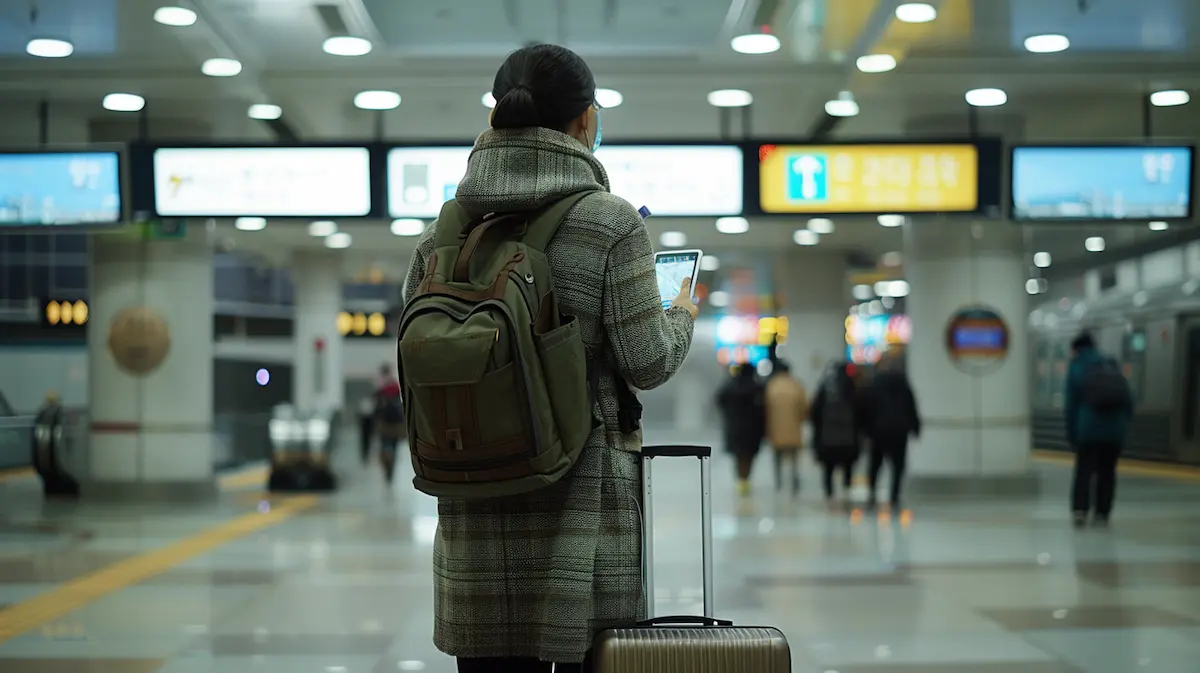
First day in Korea can feel confusing for foreign visitors, not because the country is difficult to travel in, but because several small decisions arrive at the same time. Transport, maps, payment cards, taxis, Korean addresses and translation tools all become important within the first few hours.
You may have just landed after a long flight.
You may be carrying luggage.
You may not know whether to take the airport railroad, subway, airport bus or taxi.
You may wonder whether your overseas card will work.
You may open a map app and realize that directions in Korea feel different from what you expected.
None of these problems is serious on its own.
But together, they can make the first day feel stressful.
This guide is for foreign visitors arriving in Korea in 2026. It explains what to prepare for transport, maps, payments, taxis and basic communication so that your first day in Korea feels more manageable.
Quick Guide for Your First Day in Korea
A smooth first day in Korea usually depends on a few simple preparations.
| Situation | What to prepare |
|---|---|
| Finding your way | Korean map app and saved accommodation address |
| Public transport | Transport card or suitable visitor pass |
| Airport transfer | Route checked before leaving the airport |
| Payments | Main card plus small backup cash |
| Taxi ride | Korean address and phone number of accommodation |
| Language help | Translation app and a few simple phrases |
| First-day schedule | Keep it simple and avoid too many plans |
The simple rule is this:
Do not try to master Korea on the first day.
Prepare enough to reach your accommodation, pay for basic needs, find your route and ask for help if something becomes confusing.
Why the First Day in Korea Can Feel Confusing
For many foreign visitors, the first day in South Korea is not difficult because the country is hard to travel in.
It is difficult because several small decisions come at the same time.
A visitor may arrive at Incheon Airport or Gimpo Airport after a long flight and need to choose a route immediately.
The airport railroad may be fast.
An airport bus may be easier with luggage.
A taxi may be more comfortable late at night.
The subway may be cheaper, but transfers can feel stressful with bags.
At the same time, the visitor may need to think about payment, transport cards, maps, translation and the Korean address of the hotel or rental stay.
That is why the first few hours matter.
A little preparation before arrival can remove much of the stress.
What to Prepare Before Your Flight to Korea
A smooth first day in Korea usually begins before arrival.
You do not need to plan every meal or every attraction.
But you should prepare the things that help you move, pay and ask for help.
Before your flight, install one Korean map app. Many visitors are used to Google Maps, but local map apps are still useful in Korea for subway transfers, bus routes, walking directions and local place searches.
Install a translation app as well.
English signs are common in airports, major train stations and popular tourist areas, but not every restaurant, shop or bus stop has English information.
Most importantly, save your accommodation address in Korean.
This is one of the simplest and most useful things you can do before arriving.
A taxi driver or local navigation system may recognize the Korean address more easily than an English hotel name.
Before departure, prepare these basics:
Install a Korean map app.
Install a translation app.
Save your accommodation address in Korean.
Save your accommodation phone number.
Check your airport-to-accommodation route.
Prepare one main payment card.
Plan to carry a small amount of Korean won.
This preparation takes only a short time, but it can prevent many first-day problems.
At the Airport: Check Your Route Before Leaving
After landing, it is tempting to leave the airport quickly.
But before you go, take a few minutes to check your route.
Incheon Airport and Gimpo Airport both have public transport options. Depending on where you are staying, you may use the airport railroad, subway, airport bus or taxi.
The best choice depends on:
arrival time
luggage
budget
weather
number of transfers
distance from the nearest station
whether children or older travelers are with you
If your accommodation is near a station, public transport may be convenient.
If you arrive late at night, have heavy luggage or are traveling with children, an airport bus or taxi may be easier.
Do not choose a route only because it is the cheapest.
On the first day, the better choice is often the one that gets you to your accommodation with less confusion.
Before leaving the airport, check these points:
How many transfers are required?
Will you need to carry luggage up or down stairs?
Is the last train or bus still running?
Do you have the Korean address ready for a taxi?
Is your payment method ready?
Do you know which exit or pickup point you need?
The goal of the first day is simple:
Reach your accommodation safely and calmly.
Which Korea Transport Card Should Visitors Choose?
Korea uses rechargeable prepaid transport cards for subways, buses and some other transport services.
Visitors may see names such as Tmoney, EZL, WOWPASS and Climate Card.
These cards are not all the same, and not every visitor needs the same type of card.
For many short-term visitors, a regular prepaid transport card is enough. It can be used for subway and bus rides and is usually easy to understand.
If you are staying mainly in Seoul and taking public transport several times a day, you may want to compare a Seoul-focused pass such as the Climate Card.
It can be useful for some visitors, but it is not automatically the best choice for everyone.
If you only take one or two rides a day, a regular transport card may be more practical.
Some visitor-focused prepaid cards combine payment, currency exchange and transport functions.
These can be convenient for certain travelers, but they are not necessary for every trip.
Before choosing one, check:
where it can be issued
how it can be charged
whether overseas cards are accepted
what fees may apply
whether it fits Seoul-only travel or multi-city travel
whether it works for your transport plan
A good rule is this:
If you are moving around Seoul many times a day, compare Seoul-focused transport options.
If you are visiting several cities, choose something flexible.
If you want payment and transport in one card, check the fees and charging method first.
The best card is not the one with the most features.
It is the one that fits your actual route.
Payments in Korea: Cards Are Common but Cash Still Helps
Korea is a card-friendly country, especially in cities.
Hotels, cafés, supermarkets, department stores, chain restaurants and many shops usually accept card payments.
Many foreign visitors can use a credit card, debit card or prepaid travel card for most daily spending.
Still, visitors should not assume that cash is never needed.
A small amount of Korean won can be useful at:
traditional markets
small food stalls
older local shops
coin laundries
some luggage lockers
rural areas
places where an overseas card does not work smoothly
You do not need to carry a large amount of cash.
For most visitors, a small backup amount is enough for the first day or two.
A practical setup is simple:
Use your main card for regular purchases.
Use a transport card for subway and bus rides.
Keep a small amount of Korean won for backup.
This is not because Korea is difficult to pay in.
It is because traveling is easier when one payment method fails and you still have another option.
Why Visitors Should Prepare a Korean Map App
Many foreign visitors naturally open Google Maps when traveling.
In Korea, it is still better to prepare a local option as well.
For many years, Google Maps had limited navigation functions in Korea because of mapping data and security-related rules.
In 2026, South Korea conditionally approved Google’s access to high-precision map data. This may improve Google Maps services over time.
But visitors should not assume that every function will immediately work in the same way as it does in other countries.
For everyday travel, a Korean map app can still be useful for:
subway transfers
bus routes
walking directions
local place searches
restaurant names in Korean
building entrances
nearby stations and exits
taxi destination checks
Before your trip, search for your accommodation, nearest station and first destination in the map app you plan to use.
If possible, save them in advance.
This is especially helpful after a long flight.
A busy airport station or subway transfer is not the best place to learn a new map system for the first time.
Save Your Korean Address Before Taking a Taxi
Taxis can be helpful in Korea, especially late at night, during bad weather or when traveling with heavy luggage.
However, do not rely only on an English hotel name.
Some hotel names sound similar.
Smaller guesthouses or rental stays may not be easy to find by name alone.
Save the Korean address of your destination before taking a taxi.
If possible, also save the phone number of your accommodation.
Showing the Korean address on your phone can reduce confusion.
It also helps when the driver uses a local navigation system.
If you use a taxi app, check the pickup point carefully.
Airports, large stations and shopping areas may have several exits or taxi zones.
A taxi may not be able to stop exactly where you are standing.
For your first day in Korea, the safest taxi habit is simple:
Show the Korean address.
Check the destination on the map.
Confirm the pickup point.
Keep your accommodation phone number saved.
Translation Apps and Simple Korean Phrases
English signs are common in airports, major subway stations, hotels and popular tourist areas.
Seoul, Busan and Jeju are generally manageable for visitors who do not speak Korean.
But English is not available everywhere.
Small restaurants, local buses, older cafés, traditional markets and rural destinations may have Korean-only menus or signs.
A translation app can help with:
menus
notices
ticket machines
bus stop information
short conversations
building signs
payment or kiosk screens
It is useful to prepare a few simple phrases:
Thank you.
Can I pay by card?
Where is this place?
I do not speak Korean well.
Please show me the way.
Even if the translation is not perfect, polite effort can make everyday situations easier.
A translation app is not only for emergencies.
It can help visitors feel less pressure when asking simple questions.
Public Transport Etiquette on Your First Day in Korea
Korea’s public transportation is efficient, but it also has quiet social rules.
On subways and buses, people usually keep their voices low.
Long or loud phone calls are uncommon.
Priority seats are meant for older passengers, pregnant women, people with disabilities and passengers who need extra care.
In busy stations, avoid stopping suddenly in the middle of a walkway.
If you need to check your phone, step aside first.
When using a bus, tap your transport card when boarding.
In many cases, it is also best to tap when getting off, especially for transfer discounts or correct fare calculation.
These habits are small, but they help visitors move more naturally with local passengers.
The first day in Korea becomes easier when you move slowly, step aside when checking your phone and follow the rhythm around you.
First-Day Mistakes Foreign Visitors Should Avoid
The first mistake is relying on only one app.
A map app, a translation app and a saved Korean address can prevent many small problems.
The second mistake is assuming that an overseas card will work everywhere.
It may work most of the time, but a little cash is still useful.
The third mistake is choosing a transport card without looking at the itinerary.
A Seoul-focused pass may not be useful for a multi-city trip.
A card with many features may not be necessary for a short stay.
The fourth mistake is planning too much on the arrival day.
Korea is easy to explore once you settle in, but the first day can still be tiring because of jet lag, luggage, language and unfamiliar systems.
A simple first day is usually better.
Go to your accommodation.
Prepare your transport card.
Check your map app.
Eat somewhere nearby.
Rest before starting a busy schedule the next day.
A Simple First-Day Plan in Korea
For most foreign visitors, the first day in Korea does not need to be complicated.
Before arrival, install a Korean map app and a translation app.
At the airport, check your route before leaving.
Prepare a transport card if you will use public transportation.
Keep a small amount of Korean won.
Save your accommodation address in Korean.
Use a local map app for public transport and walking routes.
Do not schedule too many activities on the first day.
Korea becomes much easier to travel in once these basics are ready.
The goal is not to master every system immediately.
The goal is to avoid small problems that can make the first day stressful.
Local Note from Korea
For people who live in Korea, many of these systems feel ordinary.
Using a transport card, checking a subway route, showing a Korean address to a taxi driver or switching to a local map app may not feel like special knowledge.
But for someone arriving after a long flight, those small steps can decide whether the first day feels smooth or overwhelming.
That is why first-day preparation matters.
A good Korea trip does not begin with doing everything perfectly.
It begins with removing the avoidable stress.
Final Thoughts
First day in Korea can be much smoother when a visitor prepares the basic systems before arrival.
You do not need to understand every transport card, every map app or every payment option.
You only need the practical setup that helps you reach your accommodation and handle the first few hours calmly.
Prepare a suitable transport card.
Keep a backup payment method.
Install a Korean map app.
Save your accommodation address in Korean.
Use a translation tool.
Keep the first day simple.
With those basics ready, Korea becomes much easier to travel in after the first day.
Information note: This article is for general travel information only. Transport cards, airport routes, payment acceptance, map app functions, taxi app rules and visitor pass conditions can change. Foreign visitors should check official transport, airport, tourism and card-service information before relying on a specific route or payment method.