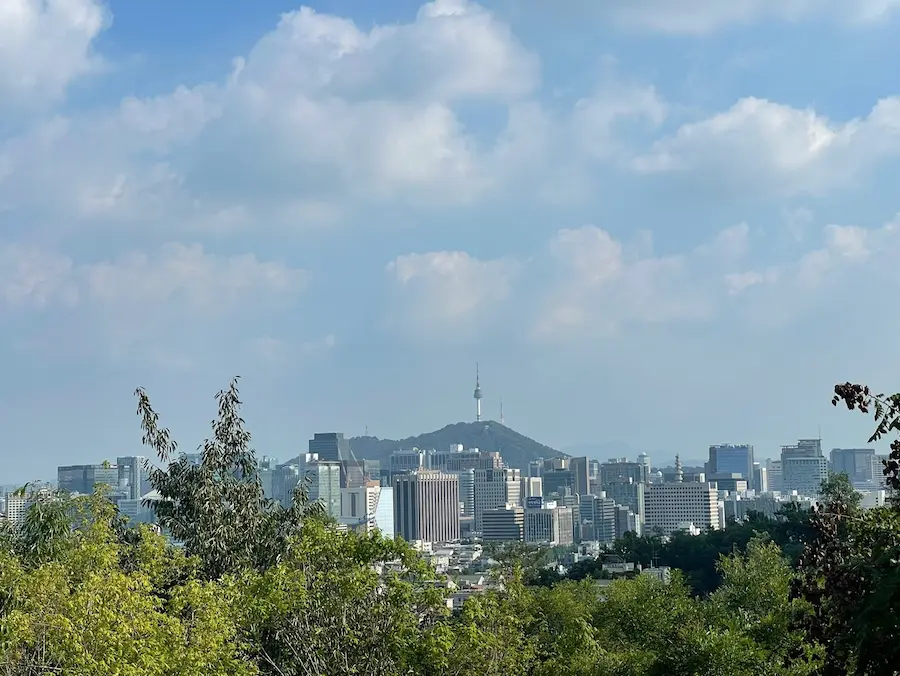
Most visitors arrive in Seoul expecting palaces, cafés, shopping streets, night markets, subway stations and crowded avenues.
Fewer expect the mountains to feel so close.
Yet that closeness is one of Seoul’s quiet surprises. In this city, hiking is not separate from urban life. It sits beside it. A person can leave a subway station, walk through an ordinary neighborhood and reach a trail entrance without turning the day into a long countryside trip.
That is why hiking has become a meaningful part of the Seoul travel experience.
It shows a side of the city that is easy to miss from shopping streets and café districts. Seoul is a capital of apartments, offices, buses, restaurants and bright signs. But it is also a city where mountain ridges are part of the daily view.
A City Where the Mountains Stay Near
One of the most interesting things about Seoul is how close the mountains can feel.
In many places, visiting a hiking area means renting a car, driving for hours or planning a full day outside the city. In Seoul, some routes are much easier to reach.
Take the subway.
Walk from the station.
Check the signs.
Choose a route that matches your level.
This does not mean every Seoul mountain is easy. It also does not mean every route is suitable for beginners. Some trails are steep, rocky or tiring, especially in hot, rainy, icy or windy weather.
But the connection between public transport and mountain access is one reason Seoul hiking feels unusual to many visitors.
Bukhansan, Inwangsan, Achasan and Dobongsan are among the names people often hear when talking about Seoul hiking. Each has a different mood, difficulty level and view of the city.
For residents, hiking can fit into a normal weekend.
For travellers, it means nature is possible without leaving Seoul behind.
Why Seoul Hiking Feels Different
The appeal is not only the scenery.
It is the combination.
A person can hike in the morning, eat lunch near a subway station, visit a café in the afternoon and return to a hotel before evening. That is different from hiking trips that require a full weekend away from the city.
This flexibility is one reason Seoul’s mountains feel connected to everyday life.
A hike does not always have to be a major expedition. It can be a short break, a morning plan, a quiet walk with a view, a date, a family outing or a few hours alone.
That practicality matters.
In Seoul, hiking can feel less like leaving the city and more like finding another layer of it.
The Changing Image of Hiking
Hiking in Korea has long been popular among older adults and organized groups. That culture still exists, and many people enjoy the social side of climbing together, eating afterward and returning home as a group.
But another style is also visible.
Some people now choose shorter routes. Some go early in the morning. Some hike in small groups. Some prefer a simple walk and coffee afterward instead of a full-day plan.
For busy urban residents, this kind of hiking can be easier to fit into daily life.
The mountain becomes a place to reset without giving up the entire day. It offers movement, air and distance from screens, but it does not always require special travel planning.
This is one reason hiking has become easier for visitors to understand as part of Seoul, not just as a separate outdoor activity.
Some People Hike Alone
In a crowded city, hiking alone may sound unusual at first.
But for some people, it makes sense.
A solo hike allows a person to move at their own pace. It gives them time away from messages, schedules and crowded streets. On popular Seoul routes, especially during busy hours, a person may walk alone while still being near other hikers.
That balance can feel comfortable.
Still, solo hiking requires caution. A city mountain is still a mountain. Weather, route difficulty, daylight, proper shoes, water, phone battery and personal fitness all matter.
Beginners should avoid isolated routes, unfamiliar trails and late starts. If the weather is poor or daylight is short, it is better to choose another plan.
The point is not to make hiking sound effortless. The point is that Seoul makes some routes accessible, and accessibility should be matched with care.
Hiking Without Losing the Whole Day
Time is another reason Seoul hiking appeals to both residents and visitors.
Some routes can be completed in a few hours, depending on the course, weather, fitness level and pace. That makes it possible to start early, finish before lunch and still have the rest of the day available.
A visitor does not have to choose between a city trip and a nature trip.
A careful route can make both possible on the same day.
This is one of the strengths of Seoul as a travel destination. The city offers palaces, museums, cafés, markets, shopping streets and nightlife, but it also offers places where the noise drops and the skyline appears below the trail.
For travellers who want a fuller view of Seoul, hiking can change the rhythm of the trip.
Why Foreign Visitors Notice Seoul’s Mountains
Foreign visitors are increasingly able to find hiking information in English and other languages. Seoul also has hiking tourism support spaces where visitors can access route information, brochures and practical guidance.
This matters because hiking can be confusing for a first-time visitor.
A person may not know which mountain is suitable, where to start, how long a route takes or whether the trail is safe in a certain season. Clear information helps visitors avoid treating every mountain as a casual walk.
Hiking also gives travellers a different view of Seoul.
From a trail, the city looks less like a list of attractions. Apartment blocks, old city walls, temple roofs, highways, rivers and mountain ridges appear together. The city begins to feel shaped by geography, not only by buildings and transport lines.
That is what visitors can miss if they stay only in shopping districts.
A mountain viewpoint can make Seoul feel wider, older and more open.
For current route guidance, hiking programmes and gear-rental information, check the Seoul Hiking Tourism Center.
Bukhansan, Inwangsan, Achasan and Dobongsan
Each Seoul hiking area has its own character.
Bukhansan is one of the most famous mountain areas connected to Seoul. It is part of Bukhansan National Park, which includes Bukhansan and Dobongsan. Some routes offer dramatic rock formations and wide views, but parts of the mountain can be physically demanding.
Dobongsan is also part of the same national park area and is known for its rocky peaks and more serious hiking atmosphere. It should not be treated as an easy casual walk.
Inwangsan is closer to central Seoul and is often linked with views of the city, rocky sections and parts of the Seoul City Wall. It can be more manageable than longer mountain routes, but it still includes slopes and stone paths.
Achasan is often described as one of the more approachable mountains for casual hikers. It is known for city views and a less intimidating scale than some larger mountains. Even so, weather, footwear and route choice still matter.
The best mountain depends on the visitor.
A beginner looking for a shorter route should not choose a trail only because it is famous. A visitor with limited time should check transport, route length and sunset time. A person who is unsure should choose a well-known, marked route and avoid pushing too far.
A Welcoming but Real Mountain Environment
Many popular Seoul hiking routes are used by people of different ages. On weekends, some trails can feel lively, with steady foot traffic and visible signs.
This can make the experience feel welcoming.
Visitors may notice how normal hiking is in Korean daily life. People wear proper shoes, carry water, use trekking poles, rest at viewpoints and treat the mountain as part of their weekend routine.
But it is important not to romanticise the experience.
Korean mountains can be steep. Some routes include rocks, stairs, narrow paths or exposed sections. Trails can become slippery after rain or snow. Summer heat can be tiring, and winter ice can be dangerous.
A city mountain should not be treated like a walk through a flat park.
Good shoes, water, weather checks, enough daylight and a realistic route are important. Beginners should start with easier trails and avoid hiking too late in the day.
More Than Exercise
What makes Seoul hiking interesting is that it is rarely only about exercise.
For some people, it is stress relief.
For others, it is time with friends.
For some, it is a morning habit.
For others, it is a way to see the city from above.
The mountain becomes a temporary break from urban speed.
That may be why hiking feels so natural in Seoul. It offers something simple: movement, air, views and a little distance from daily pressure.
A visitor does not have to be an athlete to understand the appeal. Sometimes, reaching a viewpoint and looking back at the city is enough.
Practical Notes for First-Time Hikers in Seoul
Choose a route that matches your fitness level. Do not choose a trail only because it is famous online.
Check the weather before you go. Rain, snow, ice, heat and poor visibility can change the difficulty of a trail.
Wear proper shoes. Even short Seoul hikes can include stone steps, slopes, dirt paths or rocky sections.
Bring water. Convenience stores are common near many stations, but they may not be available on the trail.
Start early enough. Do not begin a route too close to sunset, especially if you do not know the area.
Follow signs and stay on marked trails. Shortcuts can be risky.
Keep your phone charged. A map app, translation app and emergency contact access can be useful.
Respect the mountain and other hikers. Keep noise low, take your trash with you and avoid blocking narrow paths.
If you are unsure, visit a hiking tourism center or choose a well-known beginner-friendly route with clear access and steady foot traffic.
Seoul makes hiking accessible, but accessibility does not remove the need for basic caution.
For weather, emergency numbers and other practical safety information, see our Help & Safety guide.
A Different Way to Experience Seoul
Visitors often come to South Korea expecting technology, cafés, shopping, palaces and fast-moving streets.
Those things are part of Seoul.
But another part of the city begins where the pavement turns into a trail.
A short subway ride can bring someone close to a mountain. A short climb can change the mood of the day. A few hours outside can make Seoul feel less crowded and more open.
That is why hiking deserves a place in the Seoul travel experience.
It shows a side of the city that is easy to miss: a capital where daily life, public transport and mountain trails are closely connected.
For more ways to plan your time in the capital, return to our Seoul Travel Guide.
Official Information
- Seoul Hiking Tourism Center
- VISITKOREA — Seoul Hiking Tourism Center, Bukhansan
- Seoul Metropolitan Government — K-Hiking and Foreign Visitors
Information reviewed: September 2026.