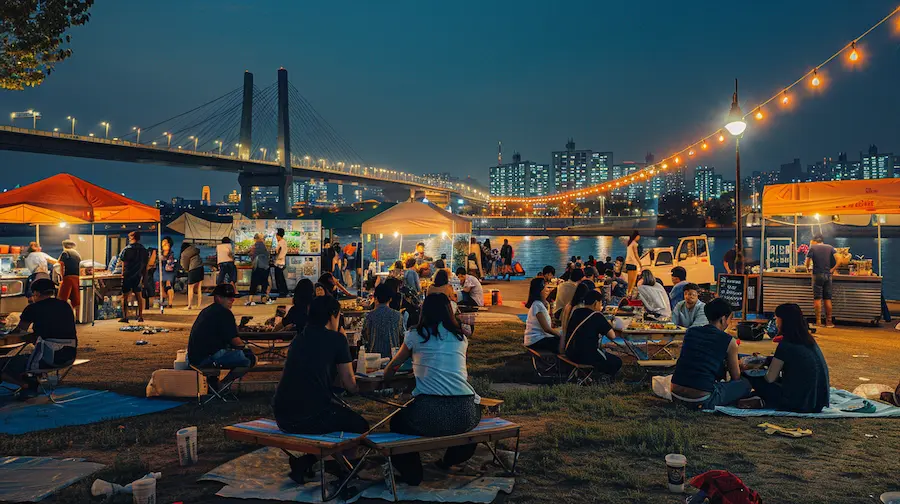
Seoul feels different after dark.
During the day, Jongno is busy but practical. People move quickly between subway exits, offices, cafés, pharmacies, old shopping streets, and small restaurants. But in the evening, especially around Jongno 3-ga Station, the mood changes. Small tables appear. Plastic stools fill narrow spaces. Steam rises from pans, and people gather under simple vinyl-covered tents for hot food, drinks, and conversation.
This is the world of the pojangmacha, often shortened to pocha.
A pojangmacha is a casual food stall or tent. It is not a polished restaurant, and that is exactly why many people like it. Customers come for simple dishes, late-night snacks, soju, beer, and the kind of relaxed conversation that often comes at the end of a long day.
For visitors, a pocha can be one of the most direct ways to experience Seoul’s everyday food culture. It is not quiet or carefully staged. It is close, warm, sometimes loud, and strongly connected to local life.
Jongno 3-ga Pocha Street
Jongno 3-ga is one of Seoul’s best-known areas for pocha culture. Around Jongno 3-ga Station, especially near Exit 6 toward Nakwon Music Mall, visitors can find rows of food stalls and tented spaces in the evening.
The setting is simple. Some places have vinyl-covered seating. Others use open tables when the weather allows. Menus may be limited, and not every stall will have English explanations. In many cases, customers order familiar dishes or choose from what is displayed.
Common dishes include kimchi pancakes, spicy stir-fried octopus, chicken feet, fish cake soup, grilled meats, and other anju. Anju means food eaten with alcohol, and it is an important part of Korean drinking culture.
The appeal of Jongno 3-ga is not luxury. It is atmosphere. Office workers stop by after dinner. Friends share one more plate before going home. Visitors sit close to local customers and see a side of Seoul that feels very different from shopping malls, hotels, or carefully designed tourist spaces.
Before sitting down, check the price if it is not clearly written. Operating hours can vary by stall, and weather or local conditions may affect opening times.
What to Order at a Pocha
A first pocha meal does not need to be complicated. It is better to order slowly and share.
Good starting choices include kimchi jeon, a pan-fried kimchi pancake, or eomuk soup, a warm fish cake broth that is especially comforting in colder weather.
For stronger flavors, many people order spicy stir-fried octopus, grilled pork, chicken feet, or golbaengi-muchim, a spicy sea snail salad often mixed with noodles.
Some dishes are very spicy. Portions can also be larger than expected because many dishes are made for sharing. If you are visiting with one or two people, start with one main dish and add more later.
Gwangjang Market: A Classic Food Stop in Seoul
Gwangjang Market is one of Seoul’s most famous traditional markets. It is known for textiles, hanbok, vintage clothing, everyday goods, and especially food.
The food alleys are crowded and energetic. Vendors cook in front of customers, and seats are often placed along counters. You do not go there for privacy. You go there because the food culture is visible from every direction: pancakes frying in oil, small gimbap rolls stacked on trays, bowls of noodles, plates of raw beef, and people eating close together.
One of the market’s best-known dishes is bindaetteok, a mung bean pancake fried until crisp on the outside and soft inside. It is usually served with a soy-based dipping sauce and is often enjoyed with makgeolli.
Another popular snack is small gimbap served with a mustard-style dipping sauce. These bite-sized rolls are simple, quick to eat, and one of the foods many visitors remember after leaving the market.
Gwangjang Market is also known for yukhoe, Korean-style raw beef. This is a well-known local dish, but visitors should choose a busy, reputable shop and consider their own comfort with eating raw meat before ordering.
Practical Expectations for Visitors
Food prices in Seoul can change, especially in popular areas. For that reason, it is better not to rely on old blog posts or short social media videos for exact prices.
Simple snacks such as fish cake, tteokbokki, small gimbap, or pancakes are usually more casual options, while seafood, grilled meat, or raw beef dishes may cost more depending on the shop and portion size.
Before ordering, check the menu board. If there is no visible price, ask first.
Useful phrases include:
Igeo eolmayeyo?
How much is this?
Hana juseyo.
One, please.
Neomu maepji anke haejuseyo.
Please make it not too spicy.
About Han River Night Food Events
Seoul has also held seasonal night food events around the Han River, including markets with food trucks, handmade goods, performances, and riverside seating.
These events are different from permanent traditional markets or pocha streets. Their names, locations, dates, and operating hours can change by year and season. For that reason, it is better to treat them as special events rather than everyday night market destinations.
If a Han River night food event is operating during your visit, it can offer a more open and relaxed atmosphere than Jongno or Gwangjang. Instead of sitting inside a small tent, people usually buy food from trucks or stalls and sit near the river while watching the city lights.
Tips for First-Time Visitors
Bring some cash. Korea is very card-friendly, but smaller stalls and older vendors may still prefer cash.
Do not assume every stall is open every night. Weather, holidays, inspections, and local conditions can affect opening hours.
Go with at least one other person if possible. Many dishes are designed for sharing, and it is easier to try several foods as a small group.
Check the crowd. If many local customers are waiting at one stall, there is usually a reason.
Take photos respectfully. Markets and pocha streets are photogenic, but vendors and customers are not decorations. Avoid close-up photos of strangers, and ask before photographing a stall owner directly.
Drink carefully. Pocha culture is closely connected to alcohol, but there is no need to match the pace of another table. Eat slowly, drink water, and make sure you know how you will get back to your accommodation.
Why These Places Matter
Seoul is often introduced through skyscrapers, technology, shopping, cafés, beauty trends, and pop culture. Those are real parts of the city, but they are not the whole story.
Pojangmacha and traditional markets show another side of Korean life. They are practical, social, crowded, and sometimes messy in the best possible way. Food is not separated from conversation, work, weather, age, drinking habits, and neighborhood routine.
That is what makes these places worth visiting.
You may not understand every word around you. You may not know the name of every dish. But if you sit under a simple tent with a hot plate in front of you, listening to the sound of pans, laughter, and people calling for another bottle, you will understand something about Seoul that is hard to find in a hotel lobby.
For many visitors, that memory lasts longer than any planned itinerary.
References
Korea Tourism Organization. “Jongno 3-ga Pocha Street.” Visit Korea.
Korea Tourism Organization. “Gwangjang Market Food Guide.” Visit Korea.
Visit Seoul. “Gwangjang Market and Traditional Food in Seoul.” The Official Travel Guide to Seoul.
Seoul Metropolitan Government. “Hangang Moonlight Market.” Seoul Metropolitan Government.