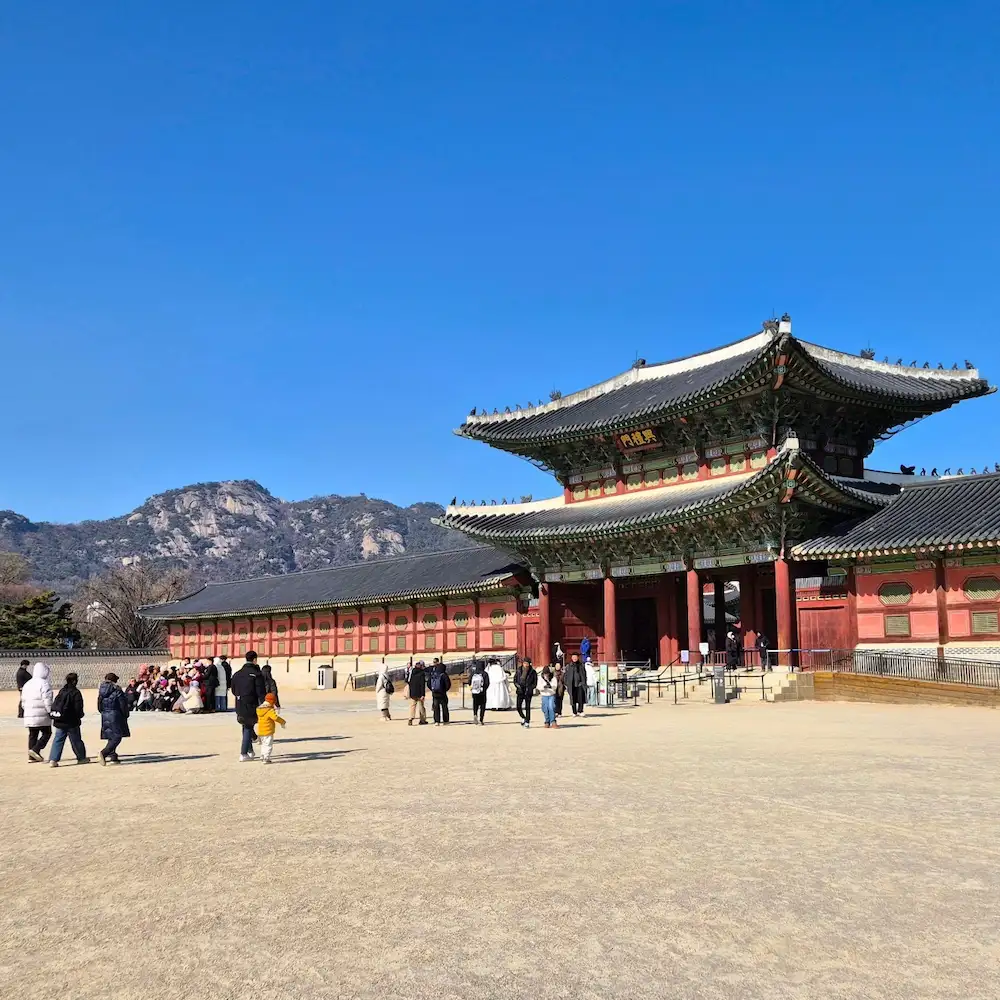
Many first-time visitors to Seoul naturally head towards famous districts such as Myeongdong, Gangnam or Bukchon Hanok Village.
Those places are popular for good reasons.
They are easy to find, full of things to do and strongly connected to the image many travellers have of Seoul.
But west of Gyeongbokgung Palace, there is another neighbourhood that often leaves a quieter and more personal impression:
Seochon.
Seochon is not hidden in the strict sense.
It sits in central Seoul, close to the palace, government buildings, museums, markets and major roads.
Yet the feeling of the area is different from Seoul’s larger shopping and nightlife districts.
Its narrow alleys, low-rise buildings, old hanok houses, small galleries, local restaurants and quiet cafés give visitors a slower way to experience the city.
As of 2026, the area around Seochon also feels different because Cheong Wa Dae, widely known as the Blue House, has returned to presidential use.
Public access to the Blue House area may not be the same as it was during the years when the site was opened widely as a tourist destination.
Visitors should check current access information before planning a visit.
This change makes Seochon itself worth exploring more carefully.
Instead of treating the neighbourhood only as a quick stop near Gyeongbokgung Palace or Cheong Wa Dae, visitors may find more value in walking through its streets, markets, cafés and small cultural spaces at a slower pace.
A Historic Area West of Gyeongbokgung Palace
Seochon means “west village.”
The name refers to its location west of Gyeongbokgung Palace.
The area sits near major historic and natural landmarks, including Gyeongbokgung Palace, Sajikdan Altar, Inwangsan Mountain and Bugaksan Mountain.
This setting gives Seochon a different atmosphere from many modern districts of Seoul.
Despite being in the centre of the city, Seochon still has many narrow streets and low-rise buildings.
Traditional hanok houses stand beside brick homes, renovated cafés, small shops and ordinary residential buildings.
This mix is one of the reasons the neighbourhood feels memorable.
It is not a preserved outdoor museum.
People still live and work here.
Deliveries arrive.
Residents walk through the alleys.
Small restaurants open for lunch.
Cafés fill quietly in the afternoon.
That balance between history and daily life is what makes Seochon interesting.
A visitor should not come here expecting a staged folk village.
Seochon is more meaningful when it is understood as a living neighbourhood.
What Walking Through Seochon Feels Like
For many foreign visitors, Seochon feels less staged than some of Seoul’s better-known tourist areas.
Bukchon Hanok Village, located on the other side of Gyeongbokgung Palace, is visually beautiful and remains one of Seoul’s most famous hanok areas.
But it can become crowded, especially during peak travel seasons.
Seochon usually feels more local and less hurried.
As visitors walk through its alleys, they may pass old homes, small bakeries, galleries, independent bookshops, quiet cafés and restaurants that are easy to miss from the main road.
Some streets open towards views of palace walls or mountain slopes.
Others lead to small shops behind plain doors or simple signs.
This is not the kind of neighbourhood where every moment needs to be planned.
A good Seochon visit often begins with a simple walk.
Visitors can move slowly between cafés, markets, galleries and side streets without trying to complete a fixed checklist.
That slower rhythm is one of the area’s strengths.
It is better to leave some time unplanned here.
The Blue House Area Has Changed Again
Cheong Wa Dae has always carried meaning beyond tourism.
For decades, it was associated with presidential power, national politics, security, public protests, media attention and modern Korean history.
After the presidential office moved out of the Blue House in 2022, the compound was opened more widely to the public and became a major visitor attraction.
With the presidential office returning to Cheong Wa Dae in late 2025, the atmosphere around the area has changed again.
This does not make Seochon less interesting.
In some ways, it makes the surrounding neighbourhood more important for visitors who want to understand how Seoul places ordinary life beside political and historical space.
Only a short walk from guarded roads and official buildings, visitors can find cafés, small restaurants, local markets and quiet residential alleys.
That contrast is very Seoul.
The city often places national history, daily routine and private neighbourhood life side by side.
Anyone planning to visit Cheong Wa Dae should check current public access rules in advance.
Even when access is limited or changed, Seochon remains an area worth exploring on foot.
Small Galleries and Creative Spaces
Seochon has long been associated with artists, writers and creative people.
The area is not known mainly for large commercial museums.
Its charm comes more from smaller galleries, photography spaces, design shops, independent bookshops and carefully run cafés.
Some places are easy to miss unless visitors slow down.
A narrow alley may lead to a small exhibition space.
A plain doorway may open into a renovated hanok café.
A quiet side street may have a bookshop or craft store that does not appear in a typical first-time Seoul itinerary.
This is why Seochon often appeals to photographers, writers, solo travellers and people who prefer slow travel.
In a city known for speed, screens and constant change, Seochon offers a different pace.
It gives visitors room to notice rooftops, walls, window frames, small signs, old steps and the shape of the streets themselves.
The value of the neighbourhood is not only in what visitors can buy or photograph.
It is also in what they can notice.
Tongin Market and Everyday Food Culture
Food is also an important part of the Seochon experience.
Tongin Market is one of the area’s best-known stops.
The market is especially known for its lunchbox experience, where visitors use traditional coin-shaped tokens to choose small portions of food from participating stalls.
The experience is simple, but it gives visitors a good reason to walk through the market slowly and look at different kinds of everyday Korean food.
Visitors should still check current operating hours before going.
Market shops, lunchbox café hours, holidays and participating stalls may change.
At the same time, Seochon’s food scene is not limited to the market.
Traditional Korean restaurants, noodle shops, bakeries, dessert cafés and small dining spaces sit throughout the neighbourhood.
Some places are modern and design-focused.
Others feel older and more local.
The best way to enjoy food in Seochon is not to rush.
Rather than looking only for the most famous social media spot, visitors may enjoy the area more by walking, checking menus, looking at the atmosphere and choosing a place that fits the pace of the day.
A quiet meal can sometimes explain a neighbourhood better than a famous photo spot.
Why Many Visitors Remember Seochon
Many international visitors first come to the area because of nearby attractions such as Gyeongbokgung Palace, Cheong Wa Dae or Tongin Market.
But after the trip, they often remember the neighbourhood itself.
Part of that comes from its human scale.
Seoul can feel overwhelming to first-time visitors.
The city is large, fast, bright and dense.
Major districts can be exciting, but they can also be tiring.
Seochon offers a calmer version of Seoul while still staying close to important historic sites.
A visitor can start the morning near Gyeongbokgung Palace, walk through the alleys of Seochon, stop at Tongin Market, visit a gallery, rest in a café and still feel connected to the centre of the city.
That combination is not easy to find.
Seochon is not quiet because nothing happens there.
It feels quiet because daily life continues at a smaller scale.
How to Visit Seochon Respectfully
Seochon is attractive because it still feels like a real neighbourhood.
That also means visitors should be considerate.
Some alleys are residential.
Some hanok houses are private homes, not photo zones.
Loud conversations, blocking narrow streets, taking photos into windows or treating doorways as backdrops can disturb residents.
A respectful visit makes the experience better for everyone.
Visitors should keep noise low in residential lanes, avoid photographing private interiors, support local businesses when possible and remember that Seochon is not only a tourist setting.
It is a place where people live.
This is especially important in older neighbourhoods where narrow alleys place visitors very close to private homes.
A good traveller notices the line between public street and private life.
Why Seochon Still Matters in Modern Seoul
Modern Seoul changes quickly.
New apartment towers rise.
Commercial districts shift.
Trends appear and disappear at high speed.
Digital culture has made the city even faster and more connected.
Seochon matters because it keeps a different rhythm.
It shows that Seoul is not only a city of high-rise buildings, shopping streets and entertainment districts.
It is also a city of old alleys, small markets, mountain views, quiet cafés, historic memory and ordinary neighbourhood life.
That balance is difficult to maintain in a fast-moving global city.
For international visitors who want to understand Seoul beyond its most famous images, Seochon offers a valuable glimpse into the quieter texture of Korean urban life.
It is not the loudest part of Seoul.
It is not the most dramatic.
But for travellers who enjoy walking slowly, noticing details and letting a neighbourhood reveal itself gradually, Seochon may become one of the most memorable places in the city.
Final Takeaway
Seochon should not be treated as a secret place or a tourist checklist.
It is better understood as a living historic neighbourhood west of Gyeongbokgung Palace.
Its value comes from old alleys, hanok traces, small galleries, Tongin Market, cafés, restaurants, mountain views and the daily life that still remains between them.
The best way to visit is simple.
Walk slowly.
Check current information.
Respect private homes.
Do not rush every stop into a photo.
Let the neighbourhood stay quiet enough for residents as well as visitors.
Travel Information Notice: This article is for general travel information only. Opening hours, public access rules, market operations, exhibitions, café schedules and security restrictions around major government sites may change. Visitors should check current official information before travelling, especially if they plan to visit Cheong Wa Dae, Gyeongbokgung Palace, Tongin Market or other nearby public sites.
Sources / Further Reading
Visit Korea — Seochon Village
Visit Seoul — Seochon Hanok Village
Seoul Metropolitan Government — Seochon Hanok Area
Visit Seoul — Tongin Market
Visit Korea — Tongin Market
Visit Seoul — Gyeongbokgung Palace
Reuters — South Korea’s presidential office moving back to the Blue House
AP News — President Lee returns to the Blue House
Reuters — Overtourism and visitor restrictions in Bukchon Hanok Village
Google Search Central — Creating helpful, reliable, people-first content