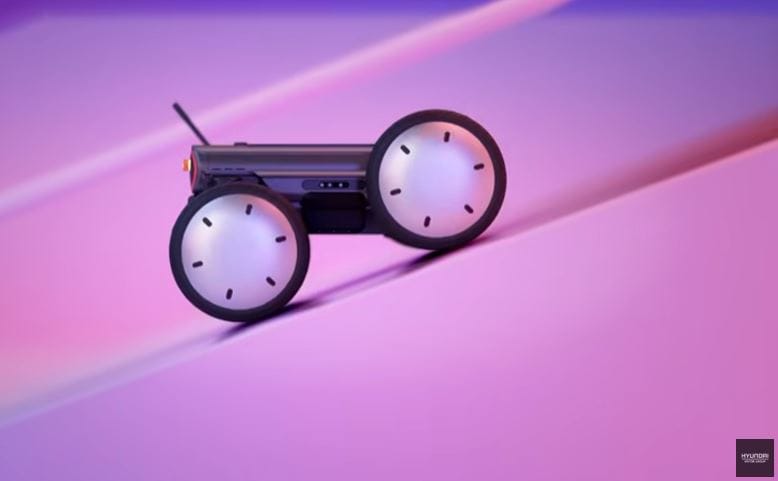
When Hyundai brought MobED to CES 2026, the award was not the only thing that caught my attention.
What felt more interesting was quieter.
Hyundai was not presenting a robot as a futuristic toy. It was presenting a robot as a working platform.
That small difference says a lot about where Korean technology is heading.
MobED is not a humanoid robot. It does not walk on two legs, have a face or try to copy human movement. It is a compact mobile robot platform designed to move through real spaces, stay balanced and carry equipment or goods.
At CES 2026, MobED received the Best of Innovation Award in the Robotics category. That gave the platform international attention.
But the more useful question is not whether it looked impressive at a technology show.
The better question is what this type of robot tells us about Korea’s next step in mobility, automation and industrial technology.
For readers outside Korea, MobED is a useful case study.
It shows how Hyundai is moving beyond traditional vehicle manufacturing and into robotics, physical AI and service automation.
It also shows why the next stage of Korean technology may not only be about screens, apps or cars.
It may also be about machines that move through real spaces and do practical work.
What Is MobED?
MobED stands for Mobile Eccentric Droid.
It was developed by Hyundai Motor Group’s Robotics LAB.
Hyundai first introduced MobED as a concept at CES 2022. A more developed, production-ready version was later presented at the International Robot Exhibition, known as iREX, in Tokyo in December 2025.
That timeline matters.
Many robots appear at exhibitions and remain as prototypes. MobED is being presented as a platform for production, testing and commercial use.
In simple terms, MobED is not one single robot for one single job.
It is a mobile base that can be adapted for different purposes.
That is why it should not be understood only as a delivery robot, a filming robot or a service robot.
It is closer to a moving foundation.
Different modules, boxes, cameras, tools or service functions can be added depending on the setting.
Why the Wheel System Matters
The most important part of MobED is the way it moves.
The platform uses Hyundai’s Drive-and-Lift system, also known as DnL. Each of its four wheels can be controlled independently. This helps the robot move across uneven ground, small bumps and slopes while keeping the main body stable.
That may sound like a small engineering point, but it matters in real places.
A robot carrying parcels, food, tools, cameras or sensitive equipment cannot shake too much. A warehouse floor, hospital corridor, hotel lobby, campus path or delivery area will not always be perfectly flat.
This is where MobED becomes more interesting than a simple delivery cart.
Its value is in the stable mobile base.
If the base can move smoothly and remain level, different tools or service modules can be placed on top with less risk of shaking, tilting or losing balance.
That is why the wheel system is not just a design feature.
It is the part that makes the platform practical.
Basic and Pro Models
Hyundai has described two versions of MobED: Basic and Pro.
The Basic model is aimed at developers, researchers and companies that want to build their own applications on the platform.
The Pro model includes stronger autonomous driving functions and is designed for more direct commercial use.
This two-model structure fits the way robotics is often adopted.
A university lab may want an open platform for experiments.
A company may want a robot that can be tested in a workplace with less custom development.
That difference matters because robotics customers do not all need the same machine.
Some need flexibility.
Some need autonomy.
Some need a platform they can study.
Others need a tool they can use in a real worksite.
Possible Uses Should Be Read Carefully
Hyundai has shown MobED in several possible forms, including delivery, object handling, filming, golf-related support and short-distance mobility concepts.
These examples should be read carefully.
A concept shown at an exhibition is not the same as a product that will appear everywhere.
Still, the examples explain the platform idea.
A hospital, warehouse, hotel, golf course, factory and university campus all have different needs. A flexible mobile base allows the upper part of the robot to be changed depending on the job.
That is why MobED should be understood less as a finished “robot product” and more as a base for different services.
The important question is not whether MobED can look impressive in a video.
The real question is whether it can work repeatedly, safely and economically in places where people actually need help moving things.
A Personal Reaction from Korea
As someone living and working in Korea, I did not think much about physical AI in daily life before seeing news about MobED.
AI tools already felt surprising enough.
Using generative AI for research, summaries, translation, writing support or business emails can be genuinely useful. Even that still feels new in many ordinary work situations.
But physical AI feels different.
A chatbot stays on a screen.
A mobile robot enters space.
It moves around people, goods, floors, doors, elevators, corridors and weather. That makes the idea feel both more exciting and more difficult.
When I first saw MobED, my reaction was close to disbelief.
Is this really becoming practical?
That was the first thought.
The second thought came from ordinary Korean life.
Korea is a fast country.
Many people are used to quick delivery, early-morning delivery, same-day service and convenient online shopping. These services are useful, and many consumers depend on them.
At the same time, most people know there is heavy labour behind that convenience.
Parcels do not move by themselves.
Food does not arrive by magic.
Warehouses, delivery routes, loading areas, apartment complexes and service workers carry the weight of that speed.
That is why a platform like MobED makes me think less about science fiction and more about everyday logistics.
If robotics can be used carefully, it may help with repetitive, heavy or difficult tasks.
It will not remove the need for people.
It will not solve every labour problem.
But it may change how some physical work is organised.
Why Korean Companies Are Looking at Mobile Robotics
From a Korean business perspective, the most interesting part of MobED is not only the robot itself.
It is the fact that a major Korean manufacturer is treating robotics as a long-term business area.
This direction makes sense.
Korea has strong industries in cars, batteries, semiconductors, electronics, software, sensors and precision manufacturing. Robotics brings many of those strengths together.
A mobile robot needs motors, chips, cameras, batteries, software, safety systems and reliable production.
Those are areas where Korean companies already have experience.
There is also a practical reason.
Some Korean industries are dealing with rising labour costs, ageing workers and pressure to improve efficiency. Logistics, inspection, facility management, service work and factory operations are all areas where automation is being watched closely.
Robots will not replace every human worker.
They will not solve every staffing problem.
But they may help with repetitive, physically demanding or difficult-to-staff tasks.
MobED sits inside that wider shift.
On-Device AI and DEEPX
Hyundai Motor Group’s Robotics LAB has also worked with South Korean AI chip company DEEPX on on-device AI for robots.
The idea is simple.
A robot should not need a cloud connection for every decision.
In a factory, warehouse, hospital, underground facility or outdoor area, the network may not always be stable.
On-device AI can help a robot process information closer to where the work happens. It may help the robot recognise its surroundings, respond faster and reduce its dependence on constant cloud communication.
This is one reason MobED connects to Korea’s wider technology story.
Robotics is not only about wheels and motors.
It also needs AI chips, sensors, batteries, software and service support.
A robot that moves in the real world needs to understand the real world quickly enough to act safely.
That is what makes physical AI different from AI on a screen.
The MobED Alliance
In March 2026, Hyundai Motor Group Robotics LAB launched the MobED Alliance.
The alliance brings together industry partners, public agencies, component suppliers and robotics-related companies to support commercial use of MobED in Korea.
This part is important because a robot platform cannot succeed through hardware alone.
Businesses also need maintenance, software support, parts supply, safety testing, training and clear use cases.
A robot that works well in a demonstration still has to survive daily operation.
It must be maintained.
It must be repaired.
It must be understood by workers.
It must be safe around people.
MobED’s future will depend on whether this support system can help the platform move from demonstration to regular use.
How MobED Compares with Other Robots
MobED is not trying to compete directly with every famous robot.
Boston Dynamics’ Atlas is a humanoid robot.
Spot is a four-legged robot.
Amazon’s warehouse robots are designed for fulfilment centres.
Other delivery robots focus mainly on last-mile movement.
MobED sits in a different space.
It is a low, wheeled, modular platform.
Its strength is not human-like movement.
Its strength is stable movement, adaptability and practical use in controlled or semi-controlled environments.
That comparison matters.
The robotics market is not moving in only one direction.
Some companies are building humanoids.
Some are building warehouse systems.
Some are building delivery robots.
Hyundai’s MobED shows another path: a flexible mobile platform that can be adapted to several jobs.
Where MobED Could Feel Useful
The most realistic uses may not be the most dramatic ones.
A robot that carries equipment inside a hospital.
A robot that moves supplies across a campus.
A robot that helps with filming by keeping a camera stable.
A robot that moves items in a warehouse or facility.
A robot that supports delivery inside a building or private site.
A robot that helps move heavy shopping bags in a large commercial space.
These uses sound less exciting than a humanoid robot greeting people on a stage.
But they may be more practical.
In Korea, this is easy to imagine.
Large apartment complexes, shopping malls, hospitals, hotels, campuses and logistics facilities already depend on constant movement. People, packages, carts, tools and supplies are always moving from one point to another.
If a robot platform can safely support part of that movement, its value may appear quietly.
Not as a spectacle.
As a tool.
What Still Needs to Be Proven
MobED has potential, but it should not be treated as a guaranteed success.
Several questions remain.
How much will it cost for business users?
How durable will it be after months of daily use?
How easy will it be to repair?
How safely will it move around people?
How well will it perform outside controlled demonstrations?
Will companies find enough practical uses to justify the investment?
Can it work reliably in elevators, crowded corridors, outdoor paths or mixed-use spaces?
Will workers accept it as a useful tool rather than a burden?
These questions matter more than the award.
CES recognition gives MobED visibility.
Real-world use will decide its value.
What This Means Beyond Korea
MobED helps explain how Korean technology is becoming more physical.
Korea is often discussed through semiconductors, smartphones, batteries, electric vehicles, K-pop, K-dramas and beauty products.
Robotics brings several of Korea’s strengths together in one field.
A platform like MobED needs hardware engineering, AI chips, software, sensors, battery systems, manufacturing skill and commercial partnerships.
MobED may first appear in business sites, controlled facilities, research settings and specialised services rather than ordinary homes.
That would not make it less meaningful.
Many practical technologies enter daily life quietly, through places where they solve a real problem.
That may be the more realistic path for physical AI.
Not sudden robot-filled streets.
Not instant replacement of human labour.
But gradual use in places where movement, safety and repeated tasks matter.
Conclusion
Whether MobED succeeds or fails will depend on what happens after the exhibitions and awards.
The real test will take place in warehouses, hospitals, campuses, factories, delivery sites, hotels, shopping spaces and service areas where robots must perform the same task again and again without attracting attention.
That may sound less exciting than a technology show.
But it is usually where useful technology proves its value.
MobED is worth reading not because it looks futuristic.
It is worth reading because it shows a practical direction for Korean robotics: less spectacle, more work.
Technology and Industry Information Notice
This article is for general technology and industry information only.
It does not provide investment advice, stock analysis, robotics procurement guidance, labour policy advice, safety certification guidance or business strategy advice.
Robot platforms, commercialisation schedules, product specifications, AI chip partnerships, safety rules and use cases may change.
Readers should check official company announcements, product documentation, safety standards and qualified professional guidance before making business, procurement, investment or policy decisions.