Do You Need a Korean Phone Number in Korea?
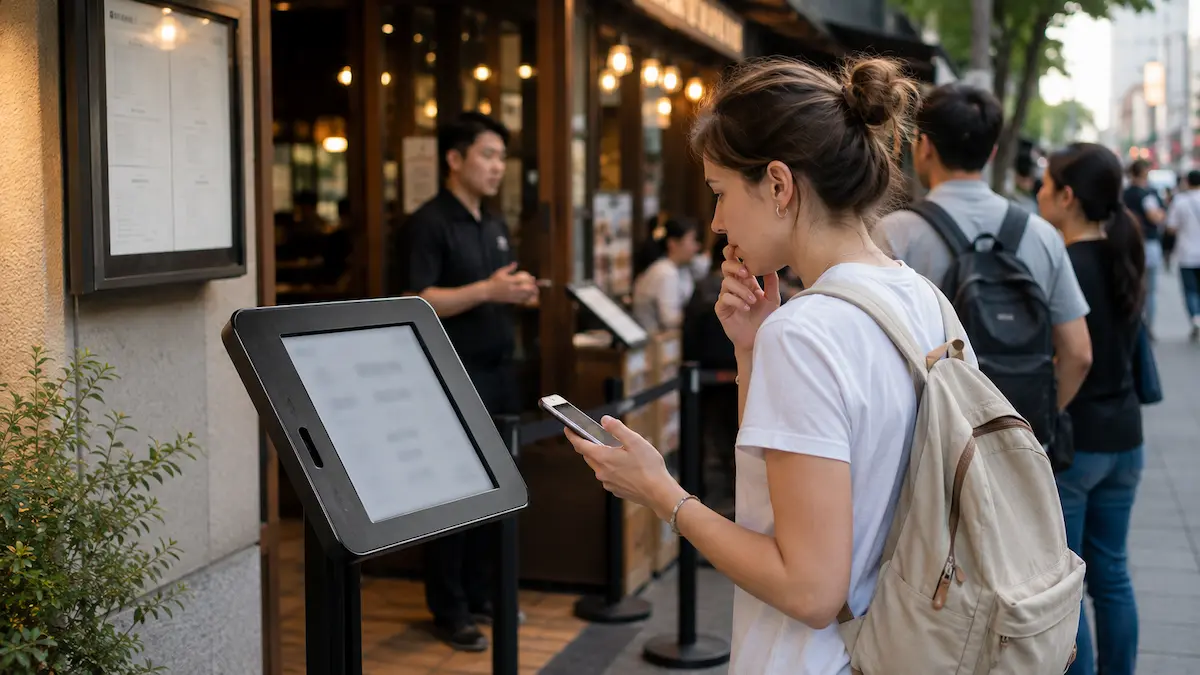
Foreign visitor checking a restaurant waiting kiosk and phone in Korea

You can travel in Korea without a Korean phone number. Hotels, maps, translation apps and many international booking services can usually be used with an overseas number, email or Wi-Fi. A Korean number becomes useful when a restaurant, app or local service expects you to receive a waiting alert, confirm an SMS code or communicate … Read more
Where Are the Spoons? Understanding Korean Restaurant Table Drawers

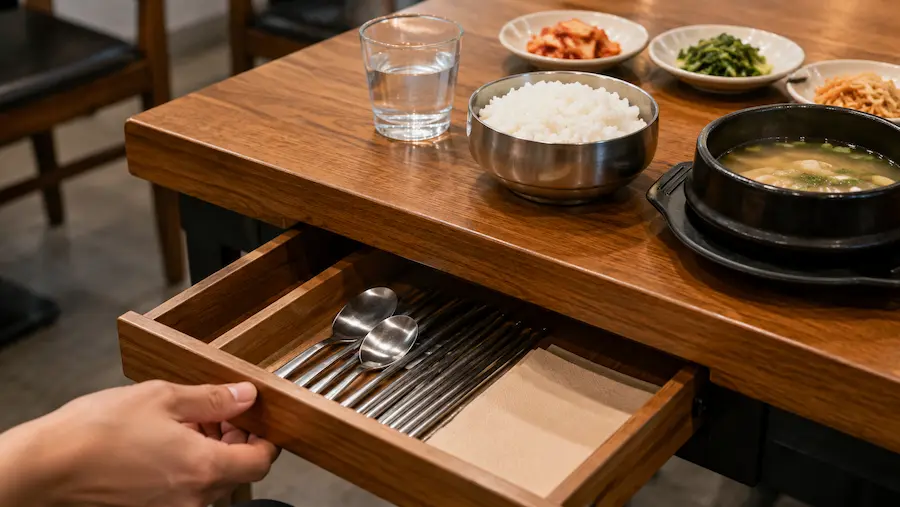
Metal spoons and chopsticks inside a drawer under a Korean restaurant table

Your food arrives, but there is no spoon or pair of chopsticks on the table. Before calling a staff member, check the side of the table. The utensils may already be inside a shallow drawer just below the tabletop. A Korean restaurant table drawer can be easy to miss when you do not know where … Read more

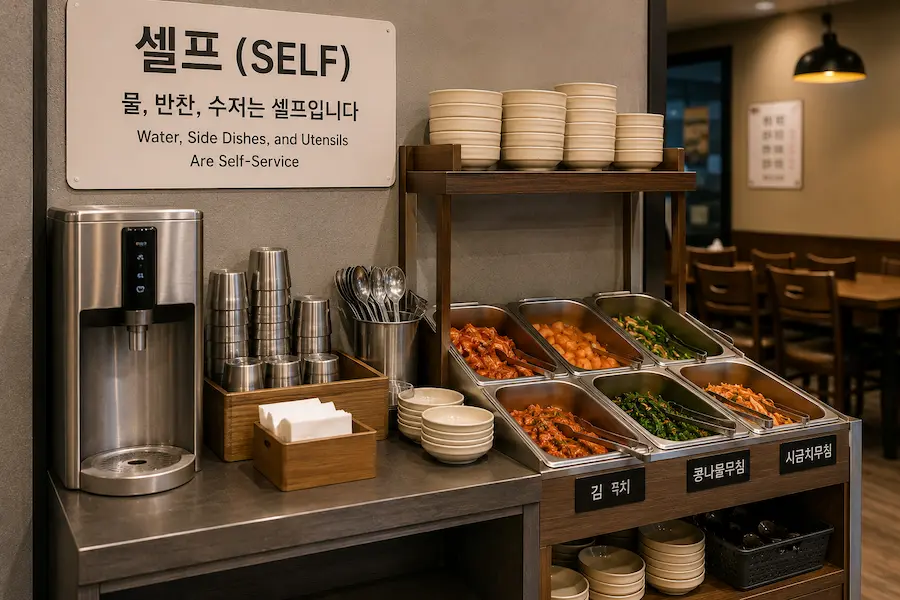
Self-Service in Korean Restaurants: Water, Side Dishes, and What to Check

Self-service water, utensils, and side dish station inside a Korean restaurant

You sit down at a Korean restaurant, place your order, and wait for water. A few minutes pass, but no one brings it. Then you notice another customer walking to a water dispenser near the wall and filling a cup. The restaurant may not have forgotten your table. Water could simply be self-service. Self-service in … Read more

Why Korean Restaurants Have Call Buttons: How to Ask for Help at the Table

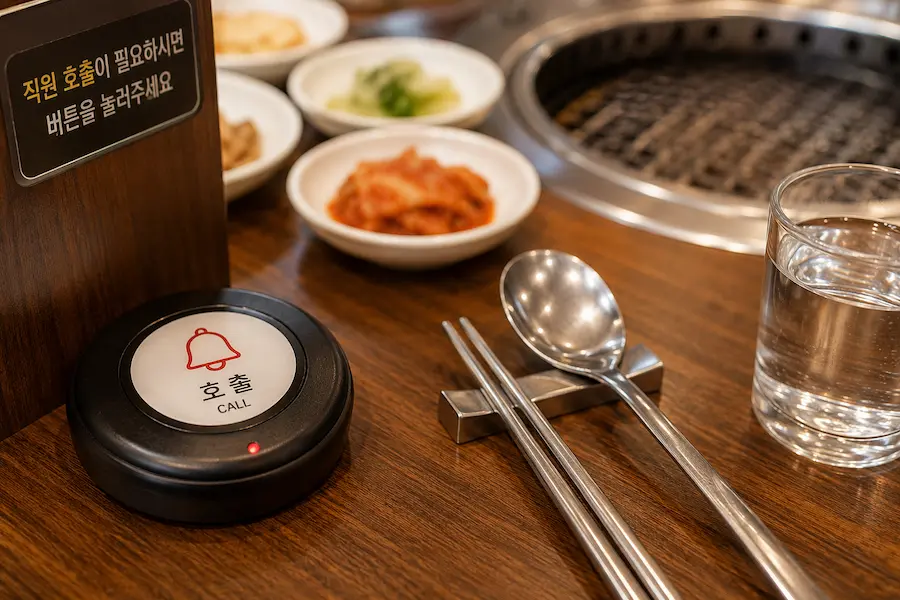
Korean restaurant call button beside metal chopsticks, a spoon, water, and side dishes

A small button on a restaurant table can be confusing when you do not know what it is for. A Korean restaurant call button is usually used to let staff know that someone at the table needs assistance. You may find it near the edge of the table, attached to a wall, or included in … Read more

Why “Acting Your Age” Feels Different in Korean Culture

In Korean, there is a phrase called “naitgap.” It is difficult to translate directly. The word “nai” means age, and “gap” can mean value or worth. But in everyday Korean, the phrase is usually about whether someone is behaving in a way that feels appropriate for their age. When someone says a person “does their … Read more

Public Wi-Fi on Korean City Buses Is Getting an Upgrade

Public Wi-Fi on Korean city buses and digital convenience in Korea

Public Wi-Fi on Korean city buses is easy to overlook. For many adults, a bus ride is still just a bus ride. You check the route, tap your transport card, find a seat if you are lucky, and look out the window or use your own mobile data. But younger passengers may notice something else … Read more

How Package Delivery Works in Korea: Doorstep Delivery, Security Offices, and Parcel Lockers

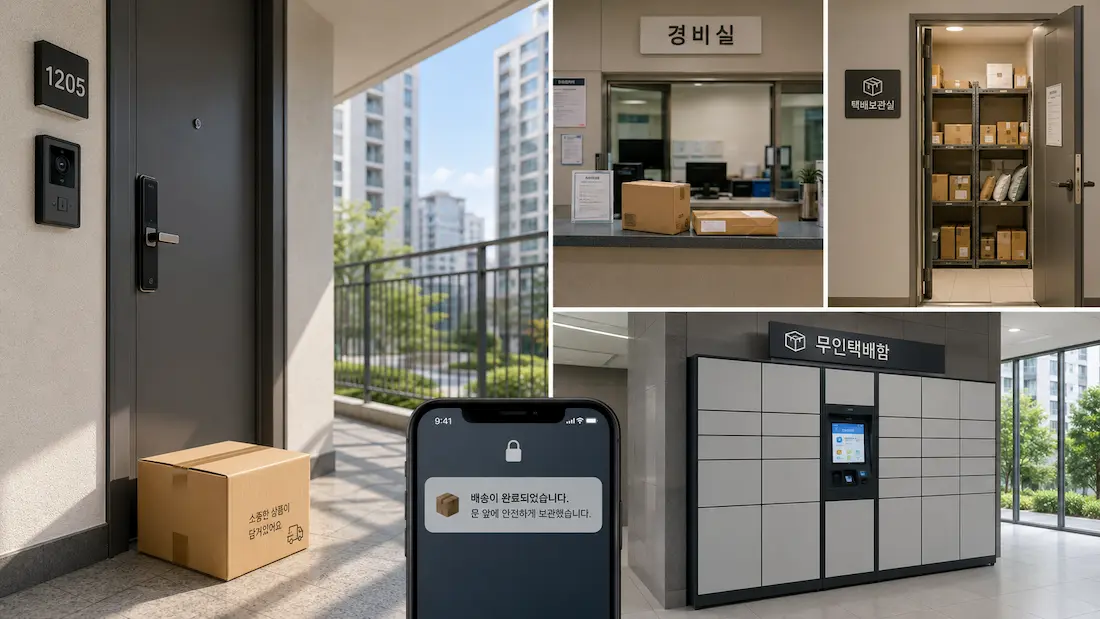
Korean apartment package delivery with doorstep parcel, security office, parcel room, and unmanned parcel locker

Package delivery in Korea is usually fast, quiet, and often contactless. For newcomers, the most confusing part is not only the speed of delivery, but also where the package is left. A parcel may be placed in front of the door, at the security office, in a parcel room, or inside an unmanned parcel locker … Read more

Korean Chopsticks and Table Manners: A Practical Guide for Korean Meals

A calm guide to how chopsticks, spoons, side dishes, and basic manners work together at a Korean table. Why Korean Chopsticks Can Feel Unfamiliar at First Korean chopsticks can feel unfamiliar to many international visitors, even if they have used chopsticks before. The shape, material, and table habits may be different from what people have … Read more

Old Korean Household Tools and the Culture of the Home

Old household tools are not just objects from the past. At first, they may look unfamiliar to modern readers. Today, many daily tasks are handled by rice cookers, washing machines, refrigerators, vacuum cleaners and other electric appliances. In the past, however, much of Korean home life depended on hands, repeated movement and simple tools. That … Read more

Sambok in Korea: Why Koreans Eat Hot Chicken Soup on the Hottest Days of Summer

In Korea, summer has three traditional hot days called Sambok. They are Chobok, Jungbok, and Malbok. Together, they mark the period many Koreans associate with the deepest heat of summer. In 2026, the dates are: Sambok Day Korean Name 2026 Date First Bok Day Chobok July 15, 2026 Middle Bok Day Jungbok July 25, 2026 … Read more