Coffee is not disappearing from Korea.
That is the first point to make clearly.
Korea still has one of the most visible coffee cultures in the world. Cafés are part of daily life in a way that many first-time visitors notice quickly. People buy coffee before work, carry iced Americanos on the subway, study in cafés, meet clients over coffee, and use café tables as short breaks between appointments.
Coffee in Korea is not just a drink. It is part of the city’s operating rhythm.
At the same time, another kind of space has become easier for visitors to notice: the Korean tea house and the modern tea café.
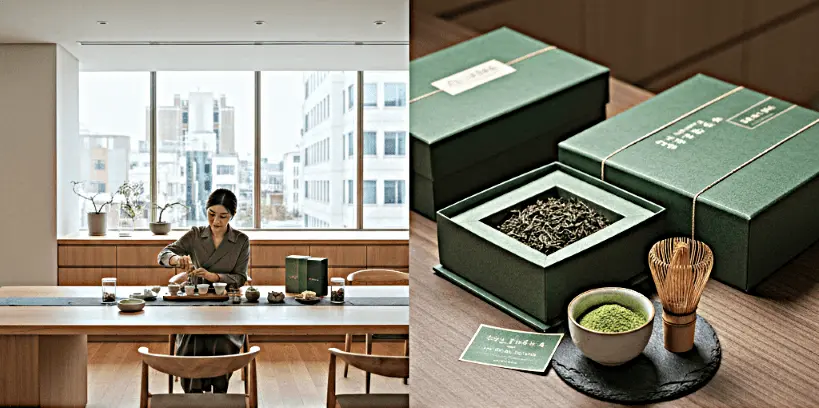
These places do not compete with coffee in a loud way. They offer a different mood. The lighting is often softer. The table may be lower. The cup may be ceramic. The menu may include yuja, omija, jujube, ginger, roasted grains, mugwort, or green tea. Some spaces feel traditional. Others look modern but still borrow from Korean ingredients, tea ware, and seasonal pairings.
The point is not that tea is replacing coffee.
The point is that tea gives people another way to sit in the city.
Coffee Fits the Speed of Korean Daily Life
Coffee works well in Korean urban life because it is quick, familiar, portable, and easy to find.
An iced Americano can be bought on the way to the office. A takeaway latte can fit between subway transfers. A café can become a study room, a meeting spot, a waiting area, or a place to open a laptop for an hour.
This explains why cafés feel so deeply built into Korean city life. They serve more than drinks. They support daily movement.
For foreign visitors, this can be surprising. In some countries, a café is mainly a place for slow conversation. In Korea, it can be that too, but it can also be part of work, study, dating, shopping, travel, and routine errands.
Coffee belongs to movement.
That is why tea feels different.
Tea Changes the Tempo
A Korean tea house usually asks people to slow down, even if only for a short time.
The experience begins before the first sip. It may come from the quiet interior, the smell of warm tea, the weight of the cup, the small dessert placed beside the drink, or the way people lower their voices without being told to.
Coffee often feels connected to speed.
Tea often feels connected to pause.
This is not because every tea house is silent or traditional. Some modern tea cafés are busy, popular, and designed for photos. Some are closer to dessert cafés than old-style tea rooms. Still, the best Korean tea spaces tend to create a different expectation from ordinary coffee chains.
They invite people to stay with the drink, not just consume it.
For a visitor, that difference is useful. A tea house can become a break between palaces, galleries, shopping streets, and long walks. It can also show a quieter side of Korean food culture without requiring formal knowledge of tea ceremony or history.
The Menu Tells a Story
Korean tea menus can feel unfamiliar at first, especially for visitors who expect black tea, mint tea, or chamomile tea.
Many Korean teas are closer to fruit preserves, grain drinks, herbal infusions, or warm dessert-like drinks. Their appeal comes from taste, season, memory, and texture rather than from a single standard idea of “tea.”
Yuja tea is one of the easiest starting points. It is made with Korean citron preserved with sugar or honey, then mixed with hot or cold water. The taste is sweet, citrusy, and familiar enough for most first-time visitors.
Omija tea is more distinctive. Omija means “five flavors,” and the drink can feel sweet, sour, slightly bitter, salty, and sharp at the same time. It often has a clear red color and is especially memorable when served cold.
Jujube tea has a deeper, sweeter taste. It can feel thicker and warmer than fruit tea. Many people associate it with colder weather and quiet indoor spaces.
Ginger tea is stronger and sharper. It is common in winter and often appears in traditional tea houses as well as ordinary cafés.
Green tea has a wider presence. It appears as brewed tea, lattes, desserts, cakes, ice cream, and packaged gifts. For many visitors, green tea is one of the easiest bridges between traditional tea culture and modern Korean café culture.
Barley tea is different. It is roasted, mild, and often served in homes and restaurants as an everyday drink. It may not feel special at first, but it is one of the most familiar tastes in Korean daily life.
These drinks should not be presented as medicine.
They are better understood as part of food culture: seasonal, personal, and often connected to memory.
Why Traditional Ingredients Feel Current
One reason Korean tea feels relevant today is that many people are paying more attention to ingredients.
This does not mean everyone is changing their lifestyle. It simply means that more consumers read menus carefully. They notice caffeine, sugar, additives, origin, seasonality, and how a drink is made.
From an F&B point of view, Korean tea has a clear strength. It is not built only on novelty. It already has ingredients with cultural memory.
Yuja, omija, jujube, ginger, mugwort, roasted grains, and green tea are not new inventions. They have been used in Korean homes, markets, restaurants, and traditional tea spaces for a long time. What has changed is the way some cafés present them.
A modern tea café may serve old ingredients in cleaner glassware. A hanok tea house may pair tea with traditional sweets. A dessert café may turn green tea into cakes or lattes. A brand may package tea as a gift that feels both Korean and contemporary.
That is where the F&B story becomes interesting.
The product is not only the drink.
The product is the pause, the table, the cup, the pairing, and the mood around it.
Where Visitors Can Start
Visitors do not need to understand Korean tea deeply before trying it.
Insa-dong is one of the easiest areas to begin. It has long been associated with crafts, galleries, souvenirs, hanok-style spaces, and traditional tea houses. For a first-time visitor, it offers a simple way to connect tea with a broader cultural walk.
Bukchon is another good area for tea with a hanok atmosphere. Some places feel traditional, while others are more polished and design-led. It suits visitors who want tea as part of a palace or hanok village route.
Seochon offers a quieter mood. It works well for people who want a slower stop after walking near Gyeongbokgung Palace or nearby streets.
Ikseon-dong gives a more social version of hanok-style café culture. It can be crowded and photo-friendly, so it is not always the best choice for silence. But it does show how traditional settings can be reused in modern food and beverage culture.
There are also modern tea brands and museum-style spaces that make tea easier to approach. Some offer green tea drinks, desserts, tasting experiences, packaged teas, or tea-related displays.
Before visiting a specific tea house, check the latest opening hours, closing days, reservation rules, and location details. Seoul cafés and tea houses can change menus or operating hours, especially around holidays.
If you prefer libraries, tea houses and slower walking routes away from Seoul’s busiest areas, see our Quiet Seoul guide.
A Tea House Is Also a Space Strategy
A good tea house does more than sell tea.
It manages pace.
That is important in Korean café culture. Many cafés compete through design, desserts, location, or visual identity. Tea houses can compete through something quieter: a sense of rest.
The cup, tray, dessert, scent, music, seating, and lighting all shape the experience. In a strong tea space, the customer does not only remember what they drank. They remember how the room made them behave.
They spoke more softly.
They stayed longer.
They looked at the cup.
They noticed the dessert.
They took a break without feeling they had wasted time.
This is why Korean tea houses can feel meaningful even to visitors who do not know much about tea. They communicate through atmosphere before explanation.
Coffee Still Leads
It would be inaccurate to say tea is overtaking coffee in Korea.
Coffee still dominates daily café culture. It is convenient, social, and deeply connected to work, study, and urban routine.
Tea is better understood as a secondary rhythm inside that larger café culture.
It gives people another option when they want something warmer, quieter, more seasonal, or more connected to Korean ingredients. Some Korean tea drinks are caffeine-free, while others, including green tea, contain caffeine. It also gives visitors a way to experience Korean food culture without needing a full meal.
That distinction matters.
Korean tea culture is not replacing coffee culture.
It is giving the city another kind of table.
What Visitors Should Know
A Korean tea house is best enjoyed slowly.
Do not treat it only as a quick drink stop. Look at the menu. Notice whether the place is traditional, modern, dessert-focused, or brand-led. Ask what the signature tea is if the staff can explain. Try one drink that feels familiar and one that feels more Korean.
Yuja tea is a safe first choice.
Omija tea is more distinctive.
Jujube tea feels warmer and deeper.
Green tea is easy to approach through both drinks and desserts.
Barley tea is simple, but it belongs closely to everyday Korean taste.
The best choice depends on the weather, the route, and the mood of the day.
That is the charm of tea in Korea. It does not need to make a big claim. It only needs to offer a slower moment inside a fast city.
Conclusion
Korea’s coffee culture remains strong.
That is not changing.
But tea houses and modern tea cafés show another side of the same city. They are quieter, more seasonal, and often more connected to older food traditions.
For visitors, they offer more than a drink. They offer a pause.
A cup of yuja tea, omija tea, jujube tea, ginger tea, barley tea, or green tea will not explain all of Korean culture.
But it can show one small truth about it.
Even in a fast city, people still look for a quiet table.
For the wider story of how cafés function as everyday urban spaces in Korea, read Korean Cafés and the Search for a Third Place.