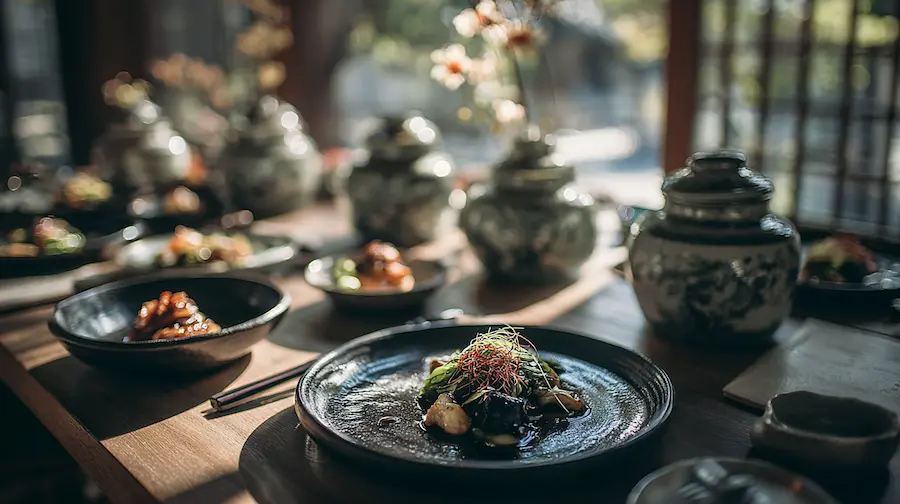
Seoul’s food culture is often introduced through barbecue, street food, cafés, fried chicken and late-night restaurants.
Those are all part of the city.
But another side of Seoul dining has become easier for foreign visitors to notice: restaurants and food experiences that pay closer attention to seasonality, waste, farming, fermentation and plant-forward cooking.
This should not be exaggerated.
Seoul has not become a fully sustainable dining city.
Restaurant kitchens still use energy, imported ingredients, packaging, delivery systems and expensive resources. Fine dining can also be costly and resource-heavy.
Still, the conversation has changed.
The Michelin Guide Seoul & Busan 2026 showed that sustainability-minded dining is now part of how some Korean restaurants are being discussed. It is no longer only a side topic.
The better question is not whether Seoul dining has become perfectly sustainable.
It has not.
The better question is why Korean food is well suited to this conversation in the first place.
What Michelin Recognised in 2026
The Michelin Guide Seoul & Busan 2026 selected more than two hundred restaurants across the two cities. Seoul remained the main centre of the guide, while Busan continued to build its place as a regional dining city.
The 2026 guide included starred restaurants, Bib Gourmand selections and recommended restaurants. Mingles in Seoul retained three Michelin stars, making it one of the most closely watched restaurants in Korea’s fine-dining scene.
The guide also drew attention to restaurants connected with sustainability-minded practices, including Gigas, Fiotto, Mitou and Gosari Express.
That detail matters, but it needs careful explanation.
A Michelin mention does not prove that an entire city’s restaurant industry has changed. It also does not mean that every practice inside a restaurant is visible to the diner.
The safer point is this:
The 2026 Korean guide captured a moment when restaurants working with farming, seasonality, lower-waste cooking and plant-forward ideas had become visible enough to receive international attention.
That is meaningful.
It is not a final verdict.
Why Sustainability Fits Korean Food
Sustainability is not a foreign idea simply added to Korean cuisine from the outside.
Some parts of Korean food culture have long been connected to seasonality, preservation and careful use of ingredients.
Fermentation is one example.
Doenjang, ganjang, gochujang, kimchi, pickles, vinegars and aged sauces are not new trends. They are everyday foundations of Korean cooking.
Vegetable side dishes are another example.
Namul, roots, greens, mushrooms, seaweed, beans, grains and seasonal vegetables have always been important to Korean meals.
Temple food also matters here.
Korean Buddhist temple cuisine is plant-based, avoids meat and seafood, and is closely tied to restraint, seasonality and not wasting food.
This does not mean all Korean food is sustainable.
It means Korean cuisine already has many traditions that make the sustainability conversation feel natural.
Fermentation Gives Korean Food Its Depth
Fermentation is one of Korea’s strongest food stories.
It gives depth without always needing heavy sauces or large amounts of meat. A spoon of doenjang, a few drops of ganjang, aged kimchi, fermented vinegar or a careful jang-based sauce can change the whole character of a dish.
In modern restaurants, chefs often use fermentation to connect older Korean flavours with newer cooking styles.
This is one reason Korean fine dining has become interesting to many foreign diners.
At its best, it does not simply copy Western fine dining.
It uses Korean pantry ingredients, seasonal produce and memories of ordinary meals in a more refined setting.
Fermentation also helps explain why vegetable-led Korean food can still feel deep and satisfying.
A dish can be quiet and still have weight.
Plant-Based Dining Is Not One Simple Trend
Plant-based dining should be described carefully.
Seoul now has more visible plant-based and vegetarian-friendly dining options than before, and some of them are receiving serious attention.
This does not mean Korea has become an easy country for every vegan traveller.
It has not.
Many Korean dishes use seafood stock, anchovy broth, fish sauce, egg, dairy, meat seasoning or hidden animal-based ingredients. Language barriers can also make ordering difficult.
But the situation is changing slowly.
Vegetarian restaurants, plant-forward menus, temple food experiences, vegan bakeries and vegetable-led dining are easier to find in Seoul than they were in the past.
For visitors, this is useful information.
Korea is still not a fully vegan-friendly destination, but Seoul has become more open to different eating styles.
What the 2026 Green Star Restaurants Showed
The Korean restaurants recognised with Green Stars in the 2026 guide showed different ways of thinking about sustainability.
They were not all the same kind of restaurant. Some belonged to fine dining. Others were connected to more casual formats. Their approaches included farming relationships, seasonal ingredients, lower-waste cooking and vegetable-centred ideas.
This variety is important.
It shows that sustainability-minded dining does not have to belong only to expensive restaurants.
It can appear in different forms.
Because Michelin is also changing how it discusses sustainability through broader editorial projects, it is better to discuss these restaurants as examples from the 2026 guide rather than as proof of a permanent industry-wide change.
The restaurants are useful examples.
They are not the whole story.
Temple Food as Another Korean Food Language
Korean temple food is one of the clearest examples of a slower food culture.
It avoids meat, seafood and the five pungent vegetables known as oshinchae. These commonly include garlic, green onion, chives, Korean wild chives and leeks or similar strong ingredients.
Temple food often uses vegetables, grains, mushrooms, wild greens, beans and fermented sauces.
It is not simply “Korean vegan food.”
It comes from Buddhist practice and is connected to restraint, gratitude, non-violence and not wasting food.
For foreign diners, temple food can be a useful way to understand that Korean cuisine is not only spicy, fast and meat-heavy.
It can also be quiet, seasonal and restrained.
That contrast gives Korean food travel more depth.
What Foreign Visitors Can Actually Do
For travellers interested in this side of Seoul dining, the best approach is practical.
Start with a mix of experiences rather than one expensive restaurant.
Try a modern Korean restaurant that uses seasonal ingredients.
Visit a traditional market and notice how vegetables, grains, fermented sauces, dried seafood and side dishes are used.
Add a temple food restaurant or class if the schedule allows.
Look for tea houses or restaurants that explain their ingredients clearly.
If you are vegetarian or vegan, check menus carefully.
Do not assume a vegetable dish is fully plant-based. Ask about broth, fish sauce, anchovy, egg and dairy where relevant.
If you want a Michelin-listed restaurant, book early and check the latest guide or the restaurant’s own website.
Awards, opening hours, menus, prices and booking rules can change.
What to Be Careful About
Sustainable dining should not be treated as a perfect label.
A restaurant may use local ingredients but still create waste.
A vegan dish may still rely on imported products.
A fine-dining meal may be beautiful but expensive and resource-heavy.
A restaurant may use the language of sustainability without explaining its practices clearly.
That is why readers should look for specifics.
Where are the ingredients from?
Does the restaurant talk about seasonality?
Does it reduce waste in a real way?
Are plant-based options clearly marked?
Does the menu explain fermentation, farming or sourcing without exaggeration?
Can staff answer allergy or dietary questions clearly?
These questions are more useful than trusting one label.
Why This Matters for Korean Travel
Korean food tourism is becoming more layered.
Visitors can still enjoy barbecue, fried chicken, tteokbokki, gimbap, noodles, markets, cafés and convenience-store food.
Those are all part of the experience.
But sustainability-minded dining adds another angle.
It helps visitors understand Korea through farming, fermentation, seasonality, temple food and the changing values of some younger diners and chefs.
This matters because it moves food travel beyond “what tastes good” and closer to another question:
What does this food say about the culture?
That question is where Korean dining becomes more interesting.
What Not to Overstate
This topic needs careful wording.
Seoul is not a fully sustainable dining city.
Michelin recognition does not prove that an entire industry has changed.
Plant-based dining in Seoul is more visible, but it is still not always easy for vegan travellers.
A restaurant using local ingredients is not automatically low-impact.
A vegetable-led menu is not automatically vegan.
A fine-dining meal is not automatically sustainable.
The safer view is this:
Seoul’s dining scene is developing a more visible conversation around fermentation, seasonality, farming, lower-waste cooking and plant-forward menus.
That conversation is meaningful, but each restaurant should still be judged by its actual practices.
Final Thoughts
Seoul’s sustainability-minded dining conversation should not be exaggerated.
It is not a perfect model, and it is not replacing the city’s larger restaurant culture.
But it is becoming easier to notice.
The most interesting part is not a single award or label.
It is the way Korean food traditions — fermentation, vegetables, temple food, seasonality and restraint — are being reinterpreted in modern restaurants.
For foreign visitors, this adds another layer to Seoul’s food culture.
Not because every meal is sustainable.
Because the conversation around Korean food is becoming deeper.
Note: Restaurant menus, opening hours, Michelin listings, Green Star references, sustainability claims and food programmes may change. This article is for general food culture and travel information only. It is not a restaurant recommendation, medical advice or dietary guidance. Visitors with allergies, dietary restrictions or medical concerns should check directly with restaurants or qualified professionals before making dining decisions.
Sources / Further Reading
Michelin Guide Seoul & Busan 2026 — official restaurant selection and Green Star references
Michelin Guide Seoul & Busan 2026 — official highlights and restaurant selection
UNESCO — Knowledge, beliefs and practices related to jang making in the Republic of Korea
Korea.net / Korea Heritage Service — Korean temple food as National Intangible Cultural Heritage
Korean Temple Food resources — temple cuisine, ingredients and Buddhist food culture
Google Search Central — Creating helpful, reliable, people-first content