There are moments in modern life when even a holiday does not feel like real rest.
You change location, but the phone keeps ringing.
You visit a beautiful place, but still check messages, take photos, post updates and scroll through other people’s lives.
By the end of the day, the body may be away from work, but the mind is still busy.
In South Korea, where daily life often moves quickly, this feeling is familiar to many people.
That is one reason Korean temple stays are being seen in a new way.
What once sounded like a niche cultural programme for visitors interested in Buddhism is now attracting people who simply want a quieter break from schedules, notifications and crowded city life.
This should not be exaggerated.
A temple stay is better understood as a cultural experience, not as health or medical advice.
It is not a guaranteed stress-relief programme.
It is not a perfect answer to modern fatigue.
But it can offer something many ordinary trips do not provide:
a slower rhythm, fewer distractions and a short stay inside a religious and cultural space.
For many visitors, the surprise is that a temple stay does not feel dramatic.
It feels simple.
And that simplicity is the point.
Temple Stays Are Simpler Than Many People Imagine
Outside Korea, temple stays are sometimes described as spiritual retreats or wellness experiences.
Some visitors arrive expecting something formal, difficult or highly religious.
In reality, many Korean temple stays are built around simple daily routines.
You may wake up early.
You may eat simple meals.
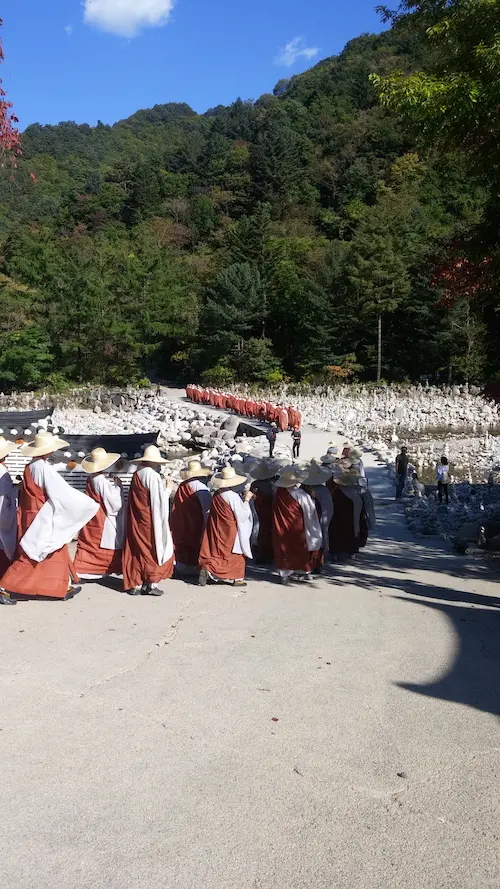
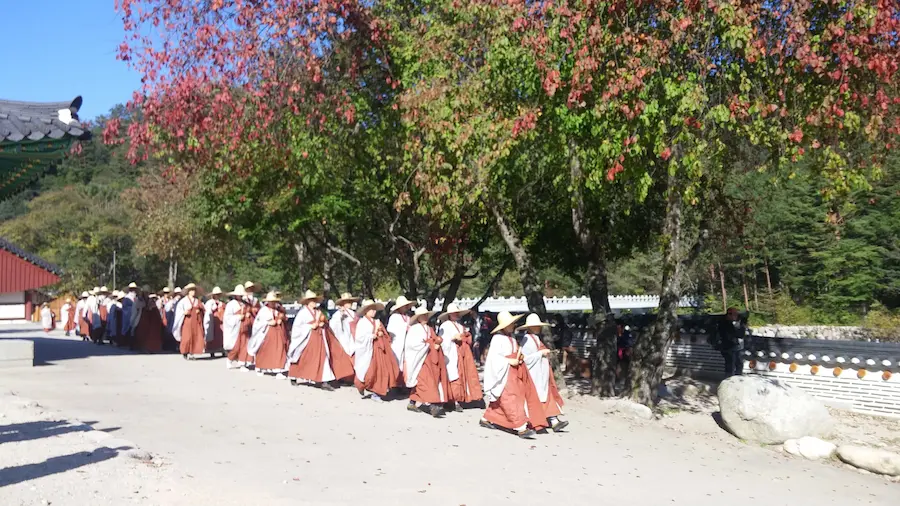
You may walk quietly.
You may sit in silence for a while.
You may help keep shared spaces clean.
You may spend time without constantly checking your phone.
That rhythm is why many people find the experience different from ordinary travel.
For visitors coming from large cities such as Seoul, London, Singapore or New York, the silence can feel unfamiliar at first.
Modern life rarely leaves much room for complete quiet.
After some time, smaller things become noticeable:
wind moving through trees,
footsteps on wooden floors,
temple bells in the morning,
steam rising from a simple meal,
and cold mountain air after sunrise.
A temple stay slows the day down without turning rest into another complicated schedule.
What Actually Happens During a Temple Stay
Programmes differ by temple, season and location.
Still, many include a few common experiences.
Visitors may join morning or evening Buddhist services.
They may practise seated meditation.
They may take part in a tea conversation or tea ceremony.
They may learn basic temple manners.
They may share a monastic-style meal.
Some programmes are structured around cultural experience.
Others are designed mainly for rest.
The official Korean Templestay programme introduces activities such as temple tours, Seon meditation, tea ceremony, monastic meals and Buddhist services.
VisitKorea also explains that some programmes may include Buddhist services, Seon meditation, 108 prostrations, communal work, monastic meals and tea ceremony rituals.
This does not mean visitors need to be Buddhist.
Many people join because they are tired, curious or simply looking for a quieter side of Korea.
The important point is to understand the place.
A temple is not a hotel.
It is not a theme attraction.
It is a religious and cultural space.
Visitors are expected to follow basic manners and respect the daily rhythm of the temple.
Why Korean Mountain Temples Feel Different
Part of the experience comes from location itself.
Many Korean temples are in mountain areas surrounded by forests, hiking paths, streams and old stone steps.
For foreigners visiting Korea for the first time, this contrast can be strong.
Only a few hours after leaving crowded subway stations and bright city streets, visitors may find themselves in places where conversations become softer, evenings feel darker and people move more slowly.
In Korea, mountains have long been connected with reflection, retreat and religious practice.
Even many Koreans who are not religious still associate mountain temples with rest, quietness and seasonal change.
That setting is one reason temple stays feel so different from ordinary city travel.
Some Korean mountain monasteries are also recognised internationally for their cultural and historical value.
The UNESCO-listed Sansa, Buddhist Mountain Monasteries in Korea, show how mountain temples have functioned as places of religious practice, daily monastic life and historical continuity.
Not every temple stay takes place at a UNESCO-listed site.
But the wider mountain temple culture helps explain why the setting feels important.
Temple Food Is Part of the Experience
Temple food is very different from what many tourists first expect from Korean cuisine.
Many people outside Korea first encounter Korean food through barbecue, fried chicken, spicy noodles or street food.
Temple meals feel almost opposite to that image.
They are usually simple, seasonal and mostly plant-based.
A meal may include rice, soup, vegetables, fermented side dishes, roots, mushrooms or mountain greens.
Korean temple food is connected to Buddhist culture and mindful eating rather than luxury dining.
It is not designed to impress visitors with heavy flavours or large portions.
For some foreign visitors, the food may feel plain at first.
But after a day or two, they may begin to notice the slower pace of the meal, the smaller portions and the attention given to each bite.
The experience is less about eating something unusual.
It is more about paying attention while eating.
This should be explained carefully.
Temple food should not be presented as a cure, detox or guaranteed health food.
It is part of a religious and cultural way of living.
Why People Are Looking for Quiet Spaces Again
Part of the recent interest in temple stays appears to be connected to screen-heavy daily life.
Many people spend their days moving between phones, computers, messages, meetings, videos and notifications.
Even travel can become another kind of performance:
take the photo,
upload the story,
check the comments,
and move to the next place.
Temple stays remove much of that stimulation.
In many programmes, visitors are encouraged to limit phone use or spend periods of time in silence.
There is no pressure to document every moment.
For some people, that feels strange at first.
Others realise how rarely they spend time without background noise, entertainment or digital distraction.
That quietness can become one of the most memorable parts of the experience.
Still, the point is not to make a medical claim.
The point is simpler.
A temple stay gives visitors a short period of life with fewer inputs.
For some travellers, that is enough to feel different from ordinary tourism.
Temple Stays Are Not Only for Spiritual People
One misunderstanding many foreigners have is that temple stays are only for deeply religious visitors.
In reality, many participants simply want rest, cultural understanding or time away from busy routines.
Some are office workers from Seoul.
Others are students, foreign travellers, remote workers or people who want to experience a slower side of Korea for a short time.
The atmosphere is usually less strict than people expect.
Many temples welcome visitors with little knowledge of Buddhism.
Programmes are often designed around experience, reflection and cultural understanding rather than religious pressure.
That openness is one reason temple stays work well for international visitors.
But openness does not mean visitors can ignore temple manners.
Even a short stay requires respect.
Quiet speech, modest clothing, punctuality, clean shared spaces and careful photography all matter.
Winter Temple Stays Feel Especially Memorable
Winter changes the atmosphere of a temple stay completely.
Snow-covered mountains, cold morning air, warm ondol floors and quiet temple courtyards create a very different feeling from busy winter streets.
For many visitors, waking before sunrise and hearing temple bells in cold mountain air becomes one of the strongest memories of the trip.
The contrast between cold outdoor air and warm indoor spaces also reflects something deeply familiar in Korean winter life.
Much of the season is about creating warmth indoors while the world outside feels still and sharp.
Temple stays can capture that feeling in a quiet and simple way.
But winter also requires preparation.
Mountain temples may be cold.
Paths may be uneven or slippery.
Schedules may begin early.
Visitors should check clothing guidance, room heating, shared facilities, walking routes and weather conditions before booking.
A beautiful winter stay is still a real winter stay.
What Visitors Should Check Before Booking
Temple stay programmes vary widely.
Some are one-night cultural experience programmes.
Some focus more on meditation.
Some are designed for rest.
Others may include hiking, Buddhist services, tea, temple food or conversations with monks.
Visitors should check the programme type before booking.
They should also check language support, schedule, room style, meal rules, clothing guidance, arrival time, cancellation policy and physical requirements.
This is especially important for people who have mobility issues, strict dietary needs, medical conditions or difficulty with early morning schedules.
Mountain temples may involve stairs, uneven paths, cold weather or shared facilities.
Visitors should also remember that temple stays are not luxury accommodation.
Rooms may be simple.
Bathrooms may be shared.
Schedules may begin early.
Knowing this in advance helps prevent disappointment.
A temple stay is easier to appreciate when the visitor understands what it is and what it is not.
Why This Matters for Foreign Travellers
Korea is often introduced through energy:
K-pop, night markets, cafés, shopping streets, festivals and fast-moving city life.
Temple stays show another side of the country.
They help visitors understand Korea not only as a place of speed and technology, but also as a place with older traditions of mountain retreat, Buddhist practice, seasonal food and silence.
That balance is valuable.
A traveller may enjoy Seoul’s nightlife, beauty shops and restaurants.
But a night in a mountain temple can make the trip feel more personal and less rushed.
It gives visitors a different way to remember Korea.
The memory may not be dramatic.
It may be a quiet breakfast, a bell before sunrise or a walk through cold morning air.
Sometimes that is what lasts.
The Real Appeal of a Korean Temple Stay
A temple stay is not a cure for stress.
Not every visitor leaves changed.
Some may find the early mornings difficult.
Others may feel awkward during silence or unfamiliar rituals.
Some may simply decide that temple life is not for them.
That is natural.
The value of a temple stay is often much simpler.
It offers a quiet place where visitors do not have to perform, reply quickly or rush from one attraction to another.
In a world where even rest often feels busy, that may be enough.
For foreign travellers trying to understand modern Korea, temple stays offer a useful lesson.
Korea is not only fast, bright and connected.
It also knows how to be still.
Final Takeaway
A Korean temple stay is best understood as a short cultural stay inside a living religious space.
It may include early mornings, simple meals, Buddhist services, meditation, tea, temple manners and quiet time.
It may also include discomfort for visitors who expect hotel-style convenience.
That is why preparation matters.
Visitors should check the official programme details, respect temple rules, understand the accommodation style and avoid expecting guaranteed relaxation or personal transformation.
The quiet is real.
But it works best when visitors arrive with realistic expectations.
Travel and Wellness Information Notice: This article is for general travel and cultural information only. A temple stay is not a medical treatment, mental health treatment or guaranteed stress-relief programme. Programme schedules, activities, prices, language support, accommodation style and meal arrangements may change by temple and season. Visitors should check official programme details before booking and consult a qualified professional if they have health, mobility, dietary or mental health concerns.
Sources / Further Reading
Official Korean Templestay — Programme information and reservations
VisitKorea — Templestay programme explanation
Visit Seoul — Temple stay programme types and activities
UNESCO World Heritage Centre — Sansa, Buddhist Mountain Monasteries in Korea
Ministry of Foreign Affairs — Sansa inscription on UNESCO World Heritage List
Official temple stay pages of individual temples — current schedule, price and language support
Google Search Central — Creating helpful, reliable, people-first content