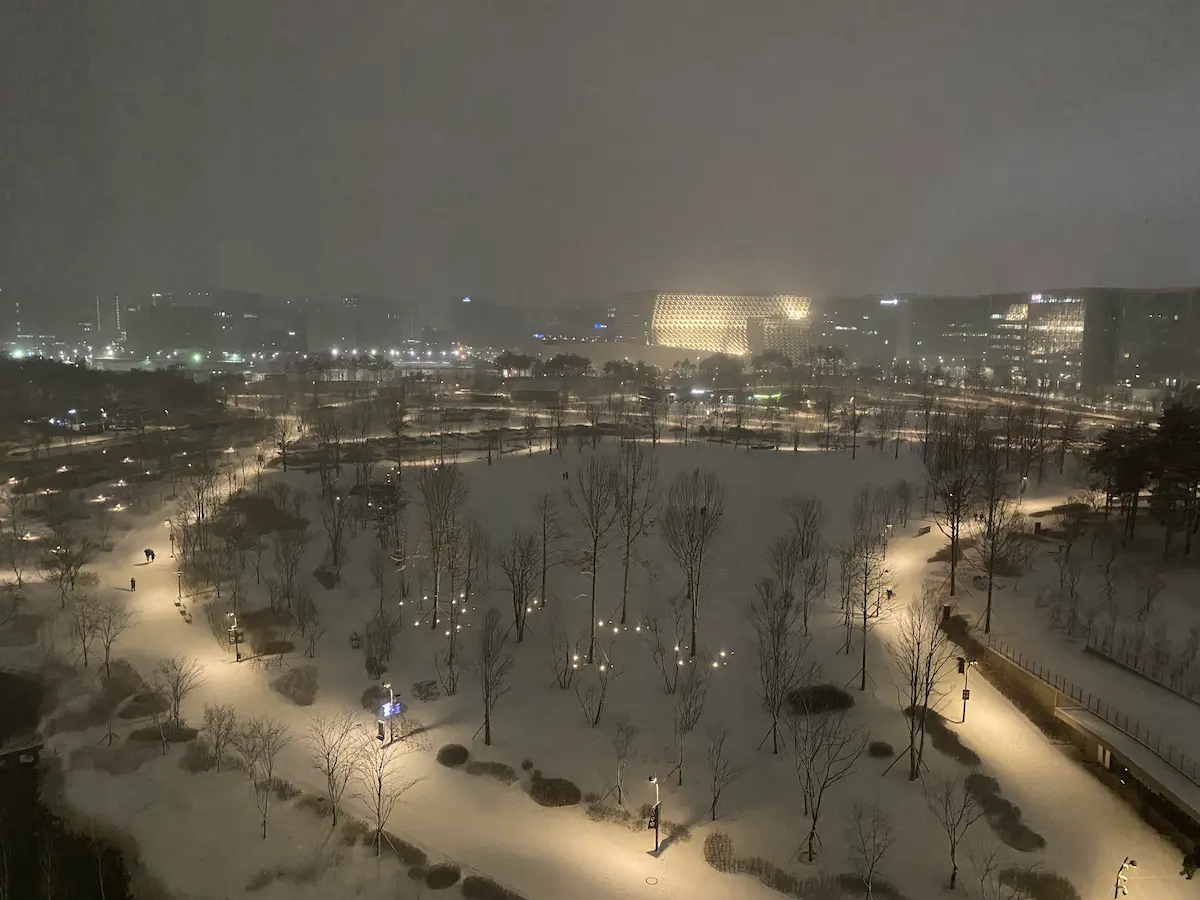
The humidity of summer disappears.
The colours of autumn fade.
Cold wind moves between apartment towers, office buildings and narrow alleys. People walk faster, cafés become fuller, and steam rises from street-food stalls near subway exits.
For many visitors, winter is not the easiest season to travel in Seoul.
It can be cold, dry and tiring. January is usually one of the coldest months, and the wind can make short walks feel longer than expected.
Yet winter can also be one of the most memorable seasons to experience the city.
Not because it is always comfortable.
Because it changes the way a visitor should travel.
A good winter trip in Seoul should leave room to warm up. It should include indoor breaks, hot meals, careful walking, flexible timing and fewer outdoor stops than a spring or autumn itinerary.
This is the part many travellers underestimate.
Winter Seoul is not a season to rush through.
It is a season to move carefully, eat warmly and notice how daily life changes when the temperature drops.
The City Changes Its Rhythm
People who visit Seoul during spring or autumn often focus on famous outdoor places.
Palaces, parks, hanok villages, mountain trails and riverside walks are easier to enjoy when the weather is mild.
Winter changes the rhythm.
Instead of spending the whole day outside, people move between warm indoor spaces.
A café becomes more than a place to drink coffee.
A soup restaurant becomes more than a meal stop.
A convenience store becomes a quick shelter from the wind.
This is why winter in Seoul feels different from the city shown in many travel brochures.
It is less about perfect scenery.
It is more about daily life.
Visitors start noticing small details: heated floors, padded coats, hot packs, steamed fish cakes, warm restaurant windows and crowded dining rooms on freezing evenings.
These are ordinary winter scenes for Koreans.
For visitors, they can become the memories that remain.
The Cold Is Manageable, But It Should Be Respected
Seoul’s winter usually runs from December to February, with January often being one of the coldest months.
The temperature is not the only issue.
The air can feel dry, and the wind can make the cold sharper. Travellers from milder climates may be surprised by how quickly their hands, ears and face become cold outdoors.
This is why winter clothing matters.
A thick coat, gloves, warm socks, a scarf and comfortable shoes are important if you plan to walk around the city.
Many Koreans also use small disposable or rechargeable hot packs, especially during commutes, outdoor dates or long waits at bus stops.
Snow does not fall every day in Seoul.
But icy streets can appear after snow, freezing rain or very cold nights.
Visitors should be careful on palace paths, hills, side streets and subway stairs.
Winter Seoul is manageable.
But it becomes much easier when you prepare for it properly.
A beautiful winter day can still become uncomfortable if the shoes are too thin or the schedule is too ambitious.
Warm Indoor Spaces Are Part of the Trip
One thing many visitors quickly notice is how important indoor warmth becomes in Korea.
Traditional Korean homes used ondol, a floor-heating system. Today, many modern apartments, guesthouses and accommodations still use floor heating.
This has shaped the way many people think about winter comfort.
For foreign visitors, this can be surprising.
In some countries, warmth comes mainly from radiators or warm air. In Korea, warmth often comes from below.
That is why heated floors in homes, guesthouses or small restaurants can feel especially comforting during winter.
This also explains why people spend long hours indoors during the colder months.
Cafés, tea houses, bookstores, shopping centres, hotel lounges and restaurants become winter shelters as much as social spaces.
In Seoul, staying warm is not a small detail.
It is part of the day’s plan.
Winter Food Is About Comfort, Not Luxury
Winter is one of the best seasons to understand ordinary Korean food culture.
Many Korean dishes feel especially right in cold weather because they are hot, rich, spicy, fermented or slow-cooked.
Kimchi-jjigae is a bubbling kimchi stew often served with rice. It is sharp, hot and familiar to many Korean households.
Seolleongtang is a milky ox-bone soup that many Koreans eat as a simple, filling meal, especially during cold weather or late at night.
Eomuk, often called fish cake, is commonly sold at street stalls with hot broth. Holding a paper cup of warm broth near a subway exit is one of Seoul’s ordinary winter scenes.
Bungeoppang is a fish-shaped pastry usually filled with sweet red bean paste. It is strongly associated with Korean winter street food.
Roasted sweet potatoes are another simple winter comfort, often sold from small street stalls, trucks or convenience-store areas.
These foods are not luxury experiences.
They are ordinary foods that explain how people in Seoul deal with cold weather.
For visitors, they can offer a better understanding of the city than another rushed photo stop.
Cafés Feel Slower in Winter
Seoul is famous for cafés, but winter changes how people use them.
In warmer months, cafés can be part of a fast-moving day of shopping, walking and sightseeing.
In winter, they often become places to stay.
People sit longer.
They remove heavy coats, warm their hands around cups and talk for hours.
Students study.
Friends meet.
Couples take a break from walking outside.
Neighbourhoods such as Seochon, Euljiro, Ikseon-dong, Hannam-dong and Buam-dong can feel especially good in winter because many cafés there have smaller interiors, warmer lighting and a slower atmosphere.
Traditional tea houses are also worth considering.
A warm cup of tea in a wooden or hanok-style space can feel very different from a crowded franchise café.
For visitors who want a quieter Seoul, winter tea houses can be a good way to slow the day down.
The important point is not to visit every famous café.
It is to choose one or two places where the day can pause.
Different Districts Feel More Different in Winter
Winter makes the contrast between different parts of Seoul easier to notice.
Gangnam, Apgujeong and Cheongdam remain busy even in cold weather. Department stores, restaurants, cafés and nightlife areas continue to attract office workers, shoppers and visitors.
This part of Seoul feels polished and fast.
Northern Seoul can feel very different.
Areas near Bukhansan, Buam-dong, Seochon or older hillside neighbourhoods often become quieter in winter.
Stone walls, narrow roads, small cafés and mountain views create a slower feeling.
This contrast is one of the reasons Seoul is interesting in winter.
The same city can feel modern and busy in one district, then quiet and almost still in another.
Visitors who only stay in one area may miss this difference.
A winter trip works better when the route includes contrast, not only distance.
A Hotel Can Be Part of the Itinerary
Hotel staycations have become popular in Korea for many reasons.
In winter, the appeal becomes easier to understand.
People may not want to travel far in cold weather, but they still want rest. A hotel inside Seoul can offer warm rooms, city views, breakfast, indoor facilities and a sense of separation from daily routines.
For local residents, this can feel like a short escape without leaving the city.
For foreign visitors, the same idea can be useful.
Instead of planning too many outdoor activities, it can be better to choose a well-located accommodation and build a slower winter itinerary around nearby restaurants, cafés, museums and evening walks.
Winter travel in Seoul becomes more enjoyable when the schedule includes rest.
The hotel is not only a place to sleep.
In winter, it can be the place that keeps the trip from becoming too tiring.
A Winter Day Should Not Be Too Ambitious
A comfortable winter itinerary should not try to do too much.
A good day might begin with a palace visit or museum in the morning, followed by hot soup or stew for lunch.
The afternoon can be slower, with a café, tea house or bookstore.
Later in the day, a short walk through Seochon, Namsan, Hannam-dong or another neighbourhood can work well if the weather is not too harsh.
In the evening, a warm meal such as Korean barbecue, seolleongtang, kimchi-jjigae, hotpot-style dishes or noodles can make the day feel complete.
This kind of plan works better than trying to walk outdoors for eight hours.
Winter rewards slower movement.
It also rewards indoor breaks.
A good winter schedule should have space between places.
That space is not wasted time.
It is what makes the trip comfortable.
What Visitors Should Avoid
Avoid underestimating the cold.
Avoid wearing thin shoes if you plan to walk a lot.
Avoid planning too many outdoor attractions in one day.
Avoid assuming snow will make everything romantic.
Snow can be beautiful, but it can also make pavements slippery and transport slower.
Avoid relying only on outdoor tourist spots.
Avoid ignoring smaller restaurants, cafés and tea houses. They are often where winter Seoul feels most memorable.
Avoid booking accommodation too far from the areas you plan to visit, especially if you are travelling with children, older parents or heavy luggage.
The best winter trip is not the busiest one.
It is the one that leaves enough time to warm up.
Why Winter Is Still Worth Experiencing
Winter Seoul is not always easy.
It can be cold, grey and dry.
Some days feel harsh.
Outdoor sightseeing requires more effort than in spring or autumn.
But winter also reveals a side of the city that warmer seasons can hide.
You notice how much people value warm spaces.
You understand why soups and stews matter.
You see how cafés become living rooms.
You feel the difference between fast Gangnam streets and quiet northern neighbourhoods.
For foreign visitors, this can be more meaningful than a perfectly planned tourist route.
Winter in Seoul is not about chasing the most beautiful view.
It is about noticing how people live through the cold.
A steaming bowl of soup, a warm café window, a heated floor, a paper cup of fish-cake broth near a subway exit — these small details are what make the season memorable.
Sometimes, they explain the city better than any landmark.
Winter Travel Information Notice: This article is for general travel and cultural information only. Weather, snow conditions, restaurant hours, café schedules, street-food availability and public transport conditions can change by date and location. Visitors should check current weather forecasts, official transport notices and opening hours before travelling, especially during cold waves, snow, freezing rain or icy conditions.
Sources / Further Reading
Korea Meteorological Administration — current weather and cold wave notices
WeatherSpark — Seoul winter climate averages
Cultural Heritage Administration — Ondol underfloor heating
Visit Korea — winter travel information and Korean food culture
Seoul Metropolitan Government — public transport and safety notices
Korea Tourism Organization — travel information for Seoul
Google Search Central — Creating helpful, reliable, people-first content