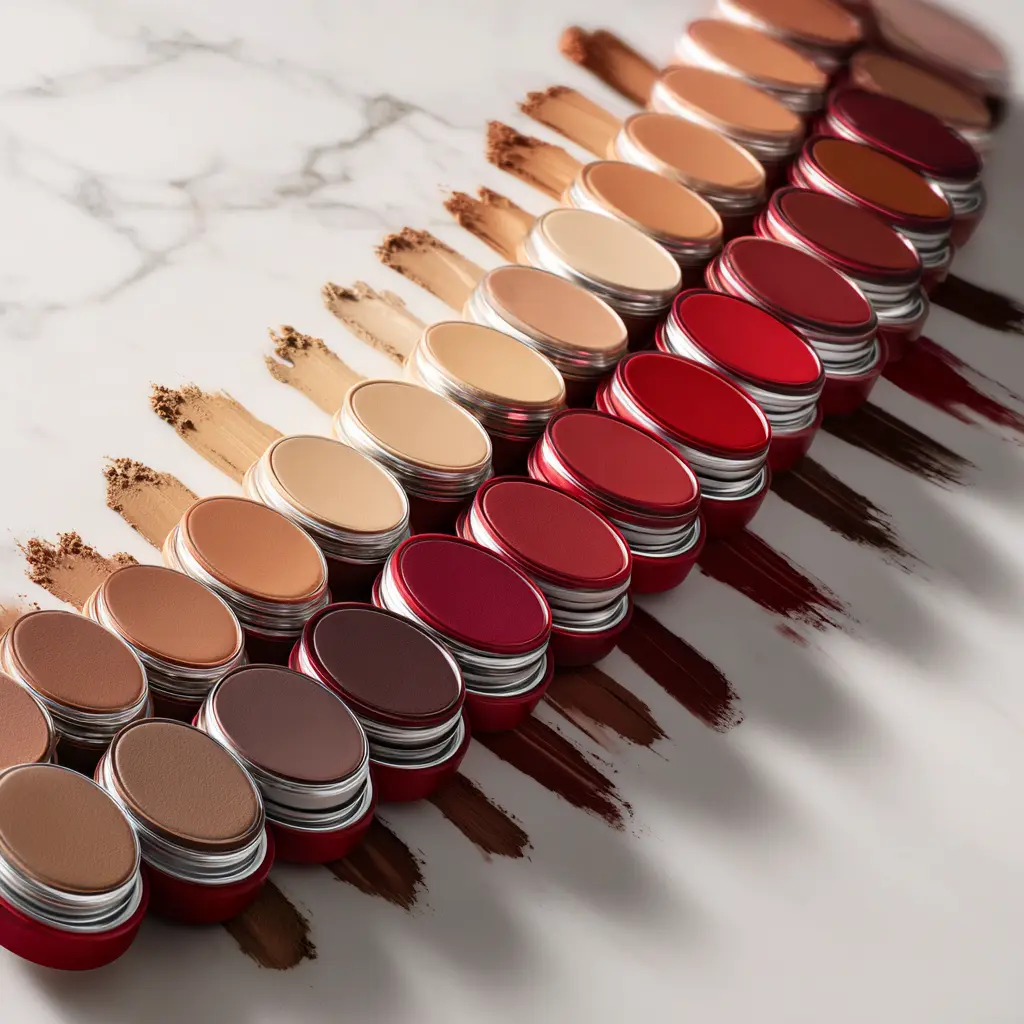
K-beauty foundation is facing a different global test from skincare. Korean beauty has long been known for skincare, sunscreen, cushion compacts, lightweight textures and dewy finishes. But foundation and cushion makeup have one question that cannot be avoided: who is the shade range made for?
For many years, Korean cushion foundations and complexion products were mainly developed for the domestic Korean market.
Lighter shades were often the focus, while deeper skin tones were less represented.
As K-beauty became more visible outside Korea, that limitation became harder to ignore.
A serum can be used by people with many different skin tones.
A cleanser can travel across markets without needing to match the face.
A sunscreen may still have issues with white cast, but it does not need to match a full foundation shade system in the same way.
A foundation is different.
It has to meet the skin directly, in color as well as texture.
If the shade does not match, the product fails at its most basic job.
That is why shade range has become one of the clearest tests for K-beauty foundation in the global market.
Quick Guide to K-Beauty Foundation and Shade Range
The shade range question is not only about adding more numbers to a chart.
| Issue | Why it matters |
|---|---|
| Shade depth | Fair, light, medium, tan, deep and very deep skin tones need real options |
| Undertone | Golden, olive, neutral, cool, red and warm undertones affect the match |
| Oxidation | Some formulas darken or change color after application |
| Texture | A good shade still needs to sit well on dry, oily or textured skin |
| Availability | A wide range matters only if consumers can actually buy the shades |
| Shade description | Online shoppers need clear swatches, names and undertone guidance |
| Testing | Brands need feedback from people with many skin tones, not only one market |
The simple point is this:
K-beauty foundation cannot become fully global if the shade range stays narrow.
Skincare made K-beauty familiar.
Foundation asks whether K-beauty can serve more faces with more care.
Why Foundation Is Different from K-Beauty Skincare
K-beauty’s global reputation was built largely through skincare.
Cleansing oils, essences, sheet masks, sunscreens, barrier creams and gentle textures helped Korean brands reach international consumers.
Many of these products could travel more easily because they were not tied to one exact skin tone.
Foundation is more complicated.
If the shade is too light, too gray, too orange or too red, the product does not work well.
The finish may be beautiful.
The compact may be convenient.
The formula may feel pleasant.
But if the color does not match, the product fails at its most basic job.
For consumers with deeper skin tones, limited shade ranges can feel especially frustrating.
It is not only a product issue.
It can also make shoppers feel that the brand did not imagine them as part of its audience.
That is why shade diversity matters.
A wider range does not automatically make a product perfect.
Undertones, depth, oxidation, texture, finish, availability and shade descriptions all matter.
But a broader shade range is an important starting point.
K-Beauty Cushion Foundation and the Global Market Test
The cushion compact is one of K-beauty’s most recognizable makeup formats.
It is portable, easy to apply and familiar to many Korean consumers.
But for a long time, many cushion foundations were available in only a small number of shades.
That made sense for brands focused mainly on the domestic market.
It became more limiting once K-beauty reached consumers in the United States, Europe, Southeast Asia, the Middle East, Africa and Latin America.
A global audience does not have one skin tone.
It also does not have one undertone.
Some consumers need fair shades.
Some need light-medium shades.
Some need golden undertones.
Others need olive, neutral, red, cool, deep or very deep tones.
A K-beauty foundation that wants to travel globally has to consider that range more carefully.
This is where Korean cushion foundation is changing.
The question is no longer only whether the compact is convenient or the finish looks fresh.
The question is whether the product can match more people.
The TIRTIR Cushion Example and Its 40-Shade Expansion
One of the clearest recent examples is TIRTIR’s Mask Fit Red Cushion.
The product became widely discussed internationally after its shade range expanded significantly.
Teen Vogue reported that the cushion grew from three shades in 2023 to 40 shades by August 2024.
TIRTIR’s official global product information also lists the product as available in 40 shades.
The reason this example attracted attention was not only the number.
It was the context.
K-beauty cushion foundations had often been criticized for narrow shade ranges.
When one Korean cushion foundation moved toward a broader range, international consumers noticed.
Beauty creators tested shades.
They compared undertones.
They discussed where the product worked and where it still had limitations.
This public conversation mattered.
It showed that consumers were not only asking for attractive packaging or a dewy finish.
They were asking whether K-beauty foundation could serve more skin tones with more care.
This does not mean one cushion solved the entire issue.
It means one visible example showed that change was possible.
How Social Feedback Changed K-Beauty Foundation Faster
Beauty creators played an important role in this conversation.
On TikTok, YouTube, Instagram and beauty forums, creators reviewed the cushion, tested deeper shades, compared undertones and discussed problems such as oxidation or shade gaps.
In the past, complaints about shade range might have remained inside smaller consumer circles.
Today, a single review can travel quickly.
That gives consumers more visibility and gives brands a stronger reason to respond.
This does not mean social media always gives a complete picture.
A viral video can simplify a product.
A single review cannot represent every skin tone.
Some reactions are based on first impressions.
Lighting, filters and camera settings can affect how a foundation appears online.
Still, the broader point is clear.
Public feedback has become part of how beauty brands learn, adjust and communicate.
For K-beauty foundation, this matters because the customer base is no longer only local.
The conversation is global, public and fast.
Why Inclusivity Is More Than a Shade Count
A 40-shade range is meaningful, but shade count alone is not enough.
A brand can offer many shades and still leave gaps.
Medium-deep, deep and very deep categories need careful attention.
Undertones matter just as much as depth.
Some consumers need golden tones.
Others need neutral, olive, red or cool undertones.
Formula behavior also matters.
Some foundations oxidize after application, meaning the color can become darker or change over time.
Some shades may look gray or ashy on deeper skin.
Some formulas may not photograph well.
Some may sit differently on dry, oily or textured skin.
This is why inclusive beauty requires more than expanding a shade chart.
It requires testing across different skin tones.
It requires listening to consumers.
It requires improving undertones.
It requires clear shade descriptions.
It requires making the full range available in the markets where people are asking for it.
A wider range is progress.
It is not the finish line.
Why Shade Range Matters for Korean Makeup Brands
K-beauty cannot rely only on skincare if it wants to build a broader global makeup presence.
Base makeup is a different challenge because it is immediately visible when it does not work.
A moisturizer can feel too light or too heavy.
A foundation can visibly fail to match.
That makes shade range a business issue as much as a cultural one.
Global consumers expect beauty brands to consider more than one skin tone.
Retailers also need clearer shade systems, better swatches and more reliable product information.
Online shoppers need help choosing a match without testing the product in person.
For Korean brands, this creates pressure.
It also creates opportunity.
Brands that listen carefully, test widely and explain shades clearly are more likely to build trust with international consumers.
A K-beauty foundation shade range is not only about makeup.
It is about whether the brand understands who its global customers are.
What K-Beauty Foundation Brands Still Need to Improve
TIRTIR is not the only brand paying attention.
As K-beauty becomes more global, more brands are thinking about shade expansion, international retail, diverse models, creator feedback and clearer product descriptions.
This does not mean K-beauty is now fully inclusive.
Many Korean base makeup products still have limited shade ranges.
Some brands are improving faster than others.
Some launches still focus heavily on lighter tones.
Some expanded ranges still need better undertone balance.
Some product pages still do not explain shades clearly enough for online shoppers.
Some deeper shades may be available in one market but not another.
The most accurate view is this:
K-beauty foundation has started to take shade diversity more seriously, but the work is still ongoing.
Progress should be noticed.
But it should not be overstated.
A Balanced View of Progress
The response to TIRTIR’s expanded shade range was not only about one cushion compact.
For many consumers who had struggled to find a match in K-beauty products, it represented recognition.
It showed that a Korean beauty brand could listen to international feedback and make visible changes.
That kind of response can build trust.
Consumers are more likely to support a brand when they feel the brand is paying attention.
They are also more likely to share reviews when a product works for them.
At the same time, one product cannot solve an industry-wide issue.
A broader shade range does not guarantee a perfect match.
It does not mean all deeper skin tones are equally represented.
It does not mean every K-beauty brand has changed.
It does not remove the need for better undertone testing, clearer product information and wider availability.
The fairest conclusion is simple:
This is progress.
It is not completion.
Local Note from Korea
In Korea, many base makeup products were historically developed around the domestic consumer base.
That shaped the shades, undertones, marketing images and product expectations.
For Korean consumers with lighter or common local shade ranges, a limited cushion lineup may have felt normal for years.
But once the same product entered global beauty conversations, the standard changed.
International shoppers were not only asking whether the cushion looked dewy or lasted well.
They were asking whether the brand saw them.
That is why the shade range question is important.
It shows how K-beauty changes when it moves from a domestic beauty culture to a global consumer market.
The New Standard for K-Beauty Foundation
K-beauty is changing as it becomes more global.
Skincare may have introduced many people to Korean beauty, but complexion products are now showing where the industry must improve.
Shade range is one of the clearest tests.
It asks whether a brand is only exporting a Korean beauty image, or whether it is adapting to the people who are actually buying the products.
TIRTIR’s Mask Fit Red Cushion became a major example because it showed that a Korean cushion foundation could move beyond a narrow shade range and reach more consumers.
The larger lesson is simple.
Inclusive shade ranges are not a temporary trend.
They are becoming a basic expectation in global beauty.
For K-beauty foundation, that expectation is both a challenge and an opportunity.
The brands best prepared for the next stage will not be the ones that only add more shades for attention.
They will be the ones that test carefully, describe shades clearly and treat more consumers as part of the conversation from the beginning.
Final Thoughts
K-beauty foundation is now facing a question that skincare did not have to answer in the same way.
Can Korean makeup serve a wider global audience not only through texture, packaging and finish, but also through shade match?
The answer is still being built.
A wider shade range matters.
Better undertones matter.
Clear swatches matter.
Real consumer testing matters.
Honest product descriptions matter.
Availability across markets matters.
K-beauty’s global success began with skincare, but the next stage of Korean makeup will require more than a beautiful finish.
It will require products that more people can actually wear.
Information note: This article is for general beauty industry and consumer culture information only. It does not provide medical, dermatological or product-purchase advice. Shade availability, product formulas, brand claims and retailer listings can change. Consumers should check official product pages, current shade charts, ingredient lists, retailer information and independent reviews before buying makeup.