Eat and Drink in Korea With Confidence
This Korean food and dining guide covers everything from street food and traditional markets to barbecue restaurants, cafés, and late-night meals. Use this guide to understand what to order, how meals are served, and what to expect at the table.
For a complete introduction to ordering, self-service, side dishes, payments and table customs, see our Korean Restaurant Guide.
Start With Essential Korean Foods
Bibimbap
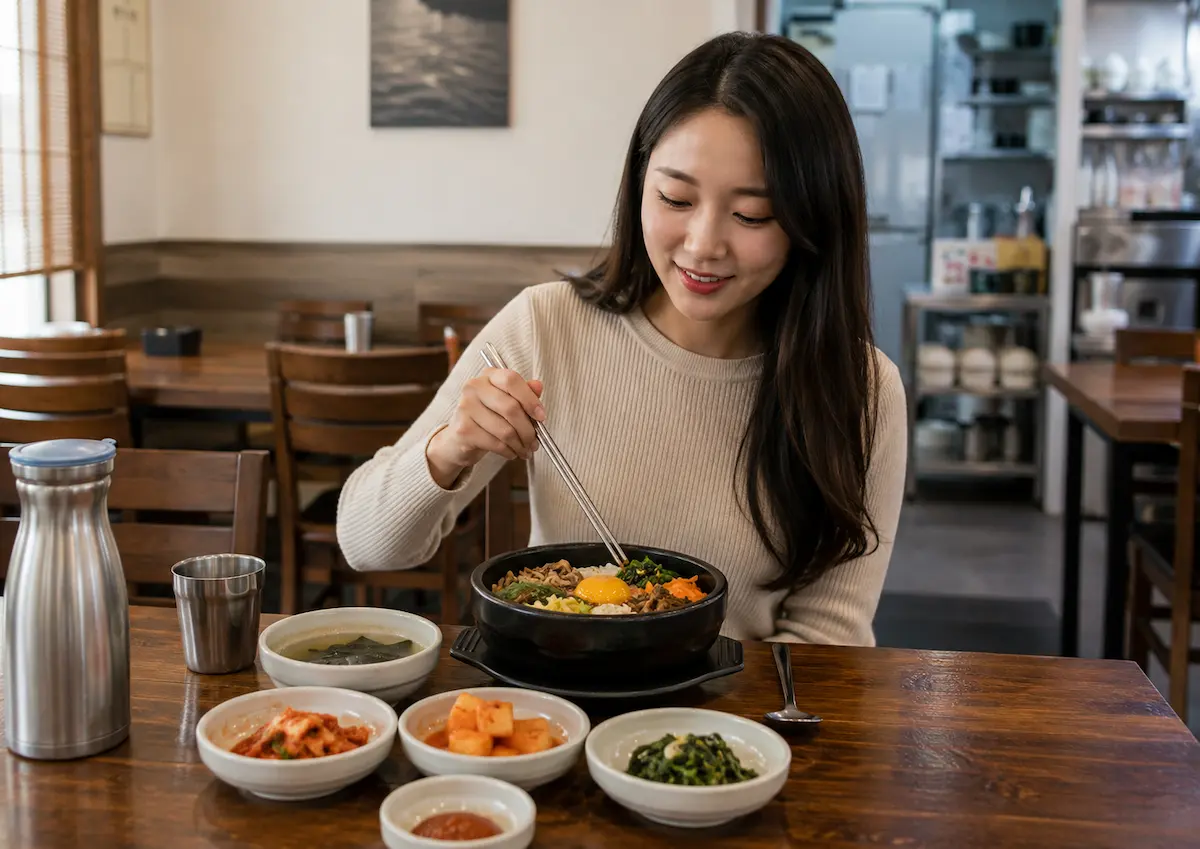
Bibimbap combines rice, vegetables, sauce, and often egg or meat in one bowl. Mix the ingredients thoroughly before eating and add spicy sauce gradually.
Korean Barbecue
At Korean barbecue restaurants, meat is cooked on a grill at the table and shared with the group. Wrap a piece of meat with vegetables, sauce, and side dishes to create your own bite.
Gimbap and Convenient Meals
Gimbap is a practical meal made with rice and various fillings rolled in seaweed. Convenience stores also offer rice dishes, sandwiches, snacks, drinks, and simple meals for travelers.
Soups, Stews, and Noodles
Korean meals include many soups, stews, and noodle dishes. Some arrive extremely hot or spicy, so taste carefully before adding extra seasoning.
Order With Confidence
Use Photos and Simple Phrases
Many restaurants display photos or sample dishes. Pointing politely at a menu item can help when an English menu is unavailable.
Check Spice and Ingredients
Ask about spice levels, meat, seafood, and common allergens before ordering. Translation apps can help, but carry a clearly written allergy card for serious dietary restrictions.
Understand Shared Dishes
Side dishes are commonly shared, while rice and soup may be served individually. Use serving utensils when provided and avoid placing used utensils in shared dishes.
Understand Korean Dining Etiquette
Wait Before Starting
In formal or family settings, it is polite to wait until the eldest person begins eating. In casual restaurants, simply follow the pace of the group.
Use Spoons and Chopsticks Correctly
Use the spoon for rice and soup and chopsticks for side dishes. Do not leave chopsticks standing upright in a bowl of rice.
Handle Water and Side Dishes
Water and additional side dishes may be self-service. Look for a station or politely ask a staff member when you need more.
Eat Safely With Dietary Needs
Explain Allergies Clearly
Do not rely only on the appearance of a dish. Sauces, broths, and side dishes may contain ingredients that are not immediately visible.
Plan for Vegetarian or Halal Needs
Research suitable restaurants before visiting less tourist-oriented areas. Save their Korean names and addresses so that drivers or local staff can help you find them.
Choose Busy and Clean Restaurants
Choose restaurants where food handling appears orderly and where dishes are prepared and served appropriately. High customer turnover can be one useful signal, but it should not be treated as a guarantee of food safety.
Pay and Tip Like a Local
Pay at the Counter
At many casual restaurants, customers pay at the counter after eating. Some cafés and fast-food restaurants require payment when ordering.
Tipping Is Usually Not Expected
Standard restaurant service normally does not require an additional tip. Check the bill carefully in hotels, premium venues, or businesses catering mainly to international visitors.
Keep a Payment Backup
Carry more than one payment method. A card may occasionally be declined, and smaller establishments may have different payment arrangements.