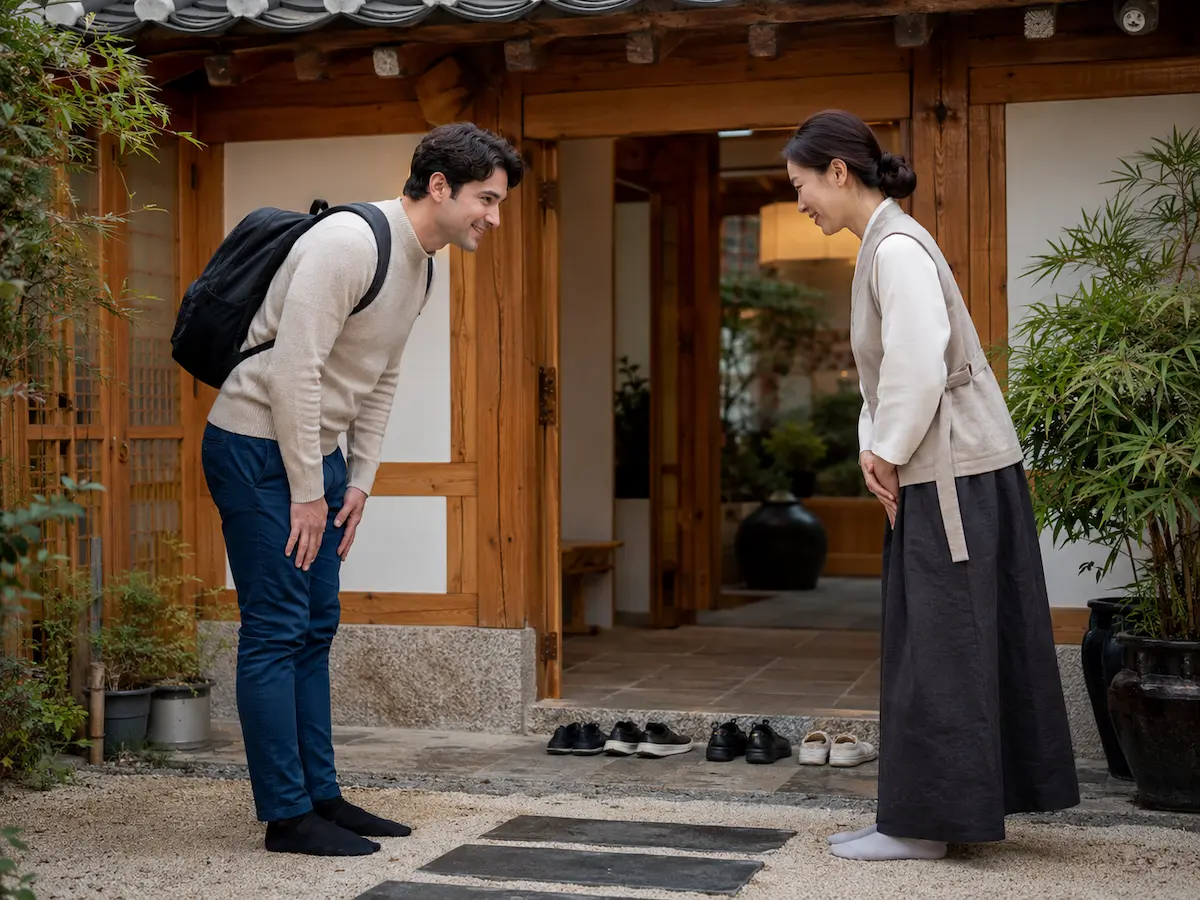
Understand Korean Culture and Etiquette
Korean etiquette is often based on respect, age, context, and consideration for the group. Visitors are not expected to know every rule, but a few practical habits can make everyday interactions smoother and more comfortable.
Start With Everyday Courtesy
Greet Politely
A small bow with a friendly greeting is appropriate in many situations. Handshakes are also common, especially in business settings, and may be combined with a slight bow.
Use Two Hands When Appropriate
Use both hands, or support your right wrist with your left hand, when giving or receiving money, cards, gifts, or drinks in more formal situations.
Respect Age and Seniority
Age can influence language, seating, serving order, and introductions. When unsure, follow the lead of the people around you.
Follow Public-Space Etiquette
Keep Your Voice Moderate
Public transport is often quiet. Keep calls and conversations brief and avoid playing audio without headphones.
Queue and Let Passengers Exit
Wait in line and allow passengers to leave trains or elevators before entering.
Use Priority Seats Carefully
Priority seats are intended for older adults, pregnant passengers, people with disabilities, and others who need them. Be ready to offer your seat.
Understand Dining Customs
Wait Before Starting
At group meals, it is polite to wait until the oldest or most senior person begins eating.
Handle Chopsticks Respectfully
Do not leave chopsticks standing upright in rice. Place them on the table or a chopstick rest when not in use.
For a fuller explanation of restaurant ordering, self-service, payments and table customs, see our Korean Restaurant Guide.
Share Dishes Considerately
Many Korean meals are shared. Use serving utensils when available and follow the group’s pace.
Visit Homes and Traditional Places Respectfully
Remove Your Shoes When Expected
Shoes are normally removed before entering homes and some traditional restaurants, guesthouses, temples, and indoor spaces.
Dress and Behave Appropriately
At temples, memorial sites, and ceremonies, choose modest clothing, speak quietly, and follow posted instructions.
Ask Before Photographing People
Request permission before taking close photographs of individuals, ceremonies, private spaces, or working areas.
Communicate With Confidence
Learn a Few Useful Phrases
Simple phrases such as annyeonghaseyo for hello and gamsahamnida for thank you are appreciated, even if your pronunciation is not perfect.
Understand That Practices Vary
Etiquette differs by generation, region, setting, and personal preference. Observe the situation, remain polite, and do not worry about small mistakes.
Lead With Respect
A calm tone, patience, and willingness to follow local guidance matter more than perfect knowledge of every custom.