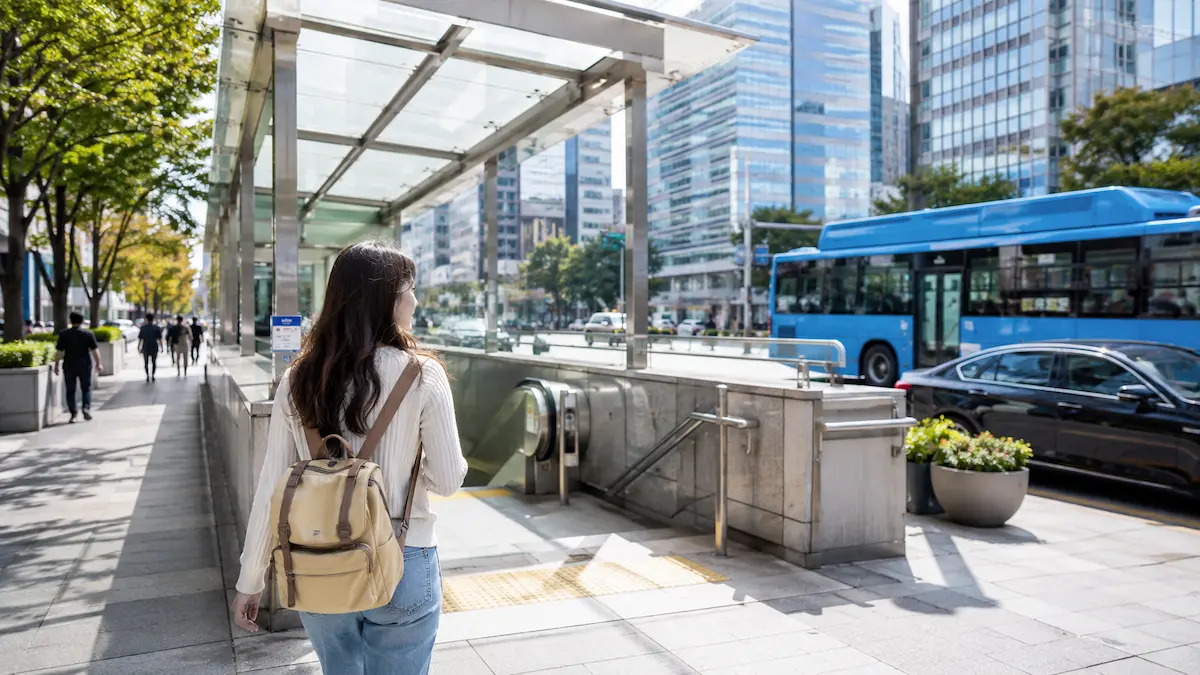
Navigate Korea With Confidence
Getting around South Korea is straightforward once you understand the country’s public transport, transport cards, map apps, and route-planning habits. Use this guide to move between airports, cities, neighborhoods, and attractions with less confusion.
Choose the Right Transport
Subways
Use subways for most trips within Seoul, Busan, Daegu, Daejeon, and Gwangju. Check the station name, line number, direction, and exit before starting your journey.
City Buses
Buses reach neighborhoods and attractions beyond the subway network. Confirm the route number and direction in a Korean map app before boarding.
Trains
Use high-speed and conventional trains for comfortable travel between major cities. Compare the complete journey, including station transfers and travel to your accommodation.
Express and Intercity Buses
Buses can be useful for cities, towns, and regions with limited rail connections. Check the departure terminal carefully because large cities may have several bus terminals.
Taxis
Taxis are useful with luggage, late at night, or for places that are difficult to reach by public transport. Keep your destination name and address available in Korean.
Use a Transport Card
Buy a Transport Card
A rechargeable transport card makes subway and bus travel easier and can also be used for transfers on many local networks.
Recharge Before You Travel
Keep enough balance for the day and recharge at a convenience store or station when needed.
Tap Correctly
Tap when entering and leaving the subway. On buses, tap when boarding and again when getting off so transfers and fares are calculated correctly.
Navigate With the Right Apps
Use Korean Map Apps
Naver Map and KakaoMap generally provide more useful local routes, station exits, walking directions, and place information than overseas map services.
Save Important Places
Save your accommodation, stations, airports, and priority attractions before departure. Keep the Korean names and addresses available for drivers or staff.
Check the Last Departure
Train, subway, and bus operating times vary. Check the final service before an evening trip and leave enough time for transfers.
Travel Between Cities
Compare the Whole Route
Do not compare only the train or bus time. Include the trip to the departure station, waiting time, transfers, and travel from the arrival terminal.
Allow Time for Transfers
Large stations and terminals can take time to navigate. Build in a margin for finding platforms, buying food, using lockers, and moving luggage.
Travel Lighter
Fewer and smaller bags make stairs, station transfers, buses, and crowded trains much easier.
Avoid Common Mistakes
Confirm the Direction
A correct line or route number is not enough. Check the destination direction before boarding.
Check the Exit Number
The right subway exit can save a long walk and make it easier to find hotels, attractions, and bus stops.
Keep Korean Addresses Ready
Store screenshots or offline notes with important place names, addresses, booking details, and emergency contacts.