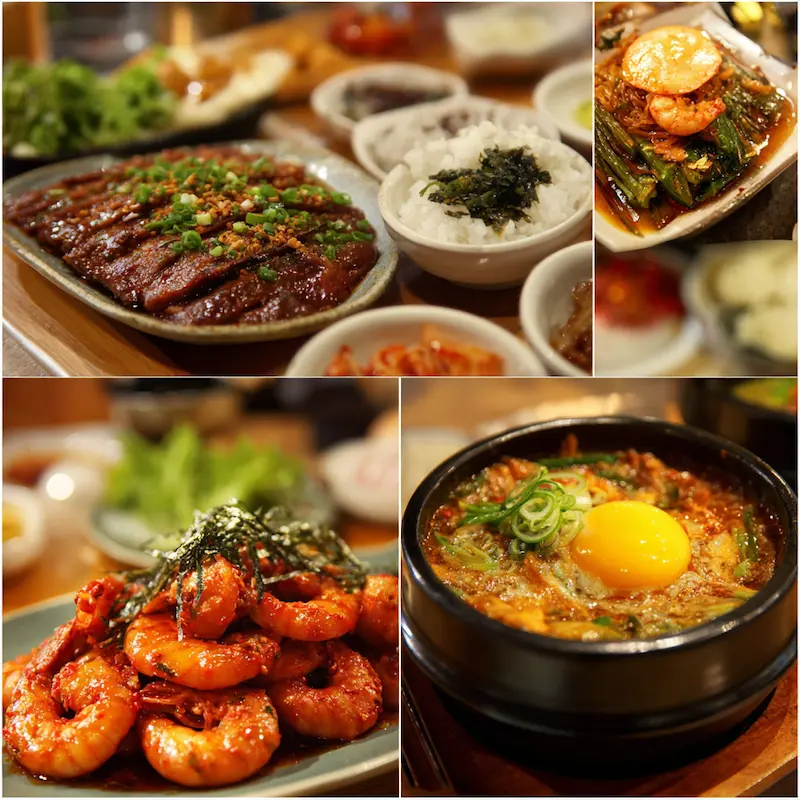
Muslim-friendly Korea is becoming easier to explore than before, but it should not be described as a fully halal-friendly destination. Muslim travelers can now find more halal-certified restaurants, Muslim-friendly dining guides, prayer rooms and travel information, especially in Seoul and major tourist areas. Still, visitors should check restaurant categories, ingredients, alcohol use and certification carefully.
For many years, Muslim visitors who wanted to enjoy Korean food faced a simple problem.
Korean cuisine often uses pork, alcohol-based sauces, meat broths or seasonings that are difficult to confirm.
Even when a dish looked safe, travelers could not always know how it was prepared.
That situation is slowly changing.
In Seoul and other major tourist areas, halal-certified restaurants, self-certified Muslim-owned restaurants, pork-free restaurants and Muslim-friendly dining options have become more visible.
Prayer rooms, Muslim travel guides, halal food maps and tourism information are also easier to find than before.
This does not mean Korea has become a fully halal-friendly destination in the same way as countries with long-established halal systems.
It has not.
But Korea is making visible efforts to welcome Muslim travelers, especially visitors from Southeast Asia and other Muslim-majority regions.
The most useful way to understand the situation is balanced:
Korea is becoming more convenient for Muslim travelers.
But careful checking is still necessary.
Quick Guide to Muslim-Friendly Korea
Muslim-friendly Korea is not one simple category. Travelers need to understand the difference between several labels.
| Category | What it usually means |
|---|---|
| Halal-certified | Certified by an accredited halal certification body |
| Self-certified | Usually Muslim-owned or operated and states that its food is halal |
| Muslim-friendly | May provide some halal dishes, but may also sell alcohol or non-halal items |
| Pork-free | Does not serve pork, but this does not automatically mean the food is halal |
| Vegetarian or seafood option | May be useful for some travelers, but ingredients and cooking methods still need checking |
| Prayer room | A designated or available space for prayer, often found in airports, malls, universities or tourist facilities |
| Muslim-friendly guide | Tourism information that helps travelers find restaurants, prayer spaces and services |
The simple rule is this:
Do not assume every Muslim-friendly restaurant is halal-certified.
The category matters.
Why Muslim-Friendly Korea Matters for Travelers
Korea’s tourism industry is recovering strongly.
In the first quarter of 2026, South Korea recorded about 4.76 million foreign visitors, a record for that period. March alone passed two million foreign visitors, helped by the wider return of Asian travel, interest in Korean culture and stronger international demand for trips to Korea.
For Korea, Muslim travelers are an important part of the future tourism market.
Visitors from countries such as Indonesia, Malaysia, Singapore, Brunei and parts of the Middle East often look for food, prayer spaces and accommodation that respect Islamic dietary and religious needs.
Food is especially important.
A traveler may be interested in K-pop, K-dramas, beauty shopping, palaces, cafés or Korean street food.
But if meals are difficult to manage, the travel experience becomes stressful.
This is why halal and Muslim-friendly dining matters.
It is not only about food.
It is about whether visitors feel considered and welcome.
A destination becomes easier to recommend when travelers can eat, pray and move around with less uncertainty.
Halal, Self-Certified, Muslim-Friendly and Pork-Free in Korea
One important point is that not every Muslim-friendly restaurant is fully halal-certified.
The Korea Tourism Organization classifies restaurants into different categories to help Muslim travelers understand their options.
A halal-certified restaurant is certified by an accredited halal certification body, such as the Korea Muslim Federation or another recognized agency.
A self-certified restaurant is usually owned or operated by Muslims and states that its food is halal.
This may be useful for some travelers, but it is different from third-party halal certification.
A Muslim-friendly restaurant may provide some halal dishes, but it may also sell alcohol or non-halal menu items.
A pork-free restaurant does not serve pork, but that does not automatically mean all ingredients, sauces, broths, meat sources and preparation methods meet halal standards.
This distinction is important.
Muslim travelers have different levels of comfort depending on their personal practice.
Some may only eat at formally certified halal restaurants.
Others may accept Muslim-owned, seafood, vegetarian or pork-free options after checking ingredients.
A careful travel article should not use “halal” for every restaurant.
The category matters.
For Muslim-friendly Korea to build trust, restaurant descriptions must be clear.
Why Halal-Certified Restaurants Are Still Limited in Korea
Korea has more Muslim-friendly information than before, but fully halal-certified Korean restaurants are still limited.
More restaurants appear in tourism guides under broader Muslim-friendly, self-certified or pork-free categories.
This means Muslim travelers should plan meals carefully.
In Seoul, Itaewon remains one of the easiest areas for halal food because it is home to Seoul Central Mosque and many Muslim-owned restaurants.
Other tourist districts such as Myeongdong, Hongdae, Gangnam and COEX have more options than before, but travelers should still check each restaurant’s certification status before visiting.
The situation is improving, but it is not yet equal across all areas of Korea.
Seoul is easier than many smaller cities.
Major tourist areas are easier than rural destinations.
Restaurants near mosques, international districts or tourist hubs are usually easier to research than restaurants in ordinary local neighborhoods.
The safest conclusion is this:
Korea has become more Muslim-friendly, but halal-certified dining still requires planning.
K-Halal Festa and Korea’s Growing Halal Interest
K-Halal Festa Seoul 2026 was announced for May 9 and 10 at the aT Center in Seoul.
The event was promoted as a platform for halal food, lifestyle, business, tourism, modest fashion and global halal market opportunities.
It was designed to connect Korean companies with halal-related buyers, certifiers, distributors and consumers.
The event is meaningful because it shows that halal is no longer discussed only as a small restaurant issue.
Korean food companies, tourism groups, exporters and cultural businesses are paying more attention to Muslim consumers.
However, it should not be exaggerated.
One event does not prove that Korea has already become a leading halal destination.
It is better understood as one sign of a growing market and a developing tourism strategy.
For Muslim-friendly Korea, this kind of event matters because it shows industry interest.
But travelers still need practical support on the ground:
clear menus
accurate restaurant categories
prayer room information
ingredient transparency
staff awareness
updated travel guides
Why Southeast Asian Muslim Travelers Matter to Korea
Southeast Asia is especially important for Korea’s halal tourism plans.
Indonesia has one of the world’s largest Muslim populations.
Malaysia has a strong halal certification culture and a large Muslim travel market.
Singapore and Brunei also have Muslim travelers who are familiar with halal food systems and international travel.
Many visitors from these countries are already interested in Korean culture.
K-dramas, K-pop, Korean food, K-beauty, shopping and filming locations all influence travel interest.
But cultural interest alone is not enough.
If Muslim travelers cannot find reliable food or prayer spaces, they may shorten their stay, limit their activities or choose another destination.
That is why Korea’s tourism industry needs practical services, not only marketing.
Clear restaurant information, prayer room locations, halal certification details and staff awareness can make a major difference.
A Muslim traveler does not need every restaurant in Korea to be halal.
But they do need enough reliable information to plan meals without constant uncertainty.
Why Korean Food Needs Careful Halal Adaptation
Halal Korean food is not only about removing pork.
Korean food can include ingredients such as soy sauce, gochujang, doenjang, mirin, cooking wine, meat broth, gelatin or seasoning powders.
Some ingredients may contain alcohol or animal-derived components.
This makes halal adaptation more complicated than simply changing the meat.
Restaurants that want to serve halal-conscious travelers need to think about the whole process.
They need to check:
ingredients
meat suppliers
broths
sauces
cooking oil
seasoning powders
storage
utensils
kitchen separation
alcohol use
staff explanation
They also need to explain clearly whether they are halal-certified, self-certified, Muslim-friendly or pork-free.
This is where trust becomes important.
If a restaurant claims to be halal without proper preparation, it can damage confidence among Muslim travelers.
If a restaurant is only pork-free, it should say pork-free.
If it serves alcohol, it should not hide that fact.
Accurate labeling is more respectful than vague promotion.
Packaged K-Food and the Halal Market
Halal interest is not limited to restaurants.
Korean food manufacturers are also seeking halal certification for packaged foods.
Ramyeon, snacks, seaweed, sauces, beverages, frozen food and ready-to-eat products are important because they can reach consumers overseas.
For Southeast Asian markets, halal certification can be essential.
A product that wants to sell widely in Indonesia or Malaysia often needs to meet local halal rules and consumer expectations.
This is one reason Korean food companies are paying more attention to halal standards.
The goal is not only to serve tourists in Korea.
It is also to export Korean food to Muslim-majority markets.
For travelers, packaged halal-certified K-food can also be helpful during a trip.
A visitor who cannot find a suitable restaurant nearby may rely on certified packaged food, convenience store options or food brought from home.
Still, package labels should be checked carefully.
Ingredients, certification marks and market-specific versions can differ.
Prayer Rooms and Muslim-Friendly Travel Infrastructure
Food is important, but Muslim-friendly travel also includes prayer spaces and travel information.
Korea now has more prayer rooms in airports, shopping centers, universities, tourist attractions and some hotels than in the past.
Incheon International Airport and several major tourist sites provide prayer facilities or quiet spaces that Muslim visitors can use.
Tourism websites also provide Muslim-friendly travel information, including restaurant guides and prayer room locations.
Still, access is uneven.
Seoul is easier than smaller cities.
Major tourist areas are easier than rural destinations.
Visitors may still need to plan ahead, especially if they travel outside Seoul, Busan, Jeju or major transport hubs.
For Muslim travelers, a good itinerary may need to include meal planning and prayer planning together.
This does not have to make the trip difficult.
It simply means that spontaneous travel may be easier in some districts than others.
Challenges Muslim Travelers Still Face in Korea
Korea’s halal tourism environment is improving, but several challenges remain.
First, fully halal-certified Korean restaurants are still limited.
Second, halal and Muslim-friendly labels can be confusing for travelers who do not know the difference.
Third, many restaurants may want to serve Muslim visitors but lack detailed knowledge about ingredients and preparation.
Fourth, halal food options are concentrated in certain tourist areas.
Fifth, language barriers can make it difficult for visitors to ask about meat, alcohol, broth, sauces or kitchen practices.
Sixth, restaurant policies can change, but old blog posts or outdated map information may remain online.
These challenges do not mean Korea is unwelcoming.
They mean the system is still developing.
A useful travel guide should explain both progress and limits.
That is more helpful than describing Korea as either impossible for Muslim travelers or fully halal-friendly.
The truth is more practical:
Korea is becoming easier, but checking still matters.
What Muslim Travelers Should Check Before Eating in Korea
Muslim travelers visiting Korea can reduce stress by checking a few things before choosing a restaurant.
First, check the restaurant category.
Is it halal-certified, self-certified, Muslim-friendly or pork-free?
Second, check whether alcohol is served.
Some Muslim-friendly restaurants may still sell alcohol.
Third, ask whether meat is halal-certified.
This matters especially for beef, chicken and lamb dishes.
Fourth, ask whether broth, sauces or seasonings contain alcohol or non-halal ingredients.
In Korean food, broth and sauce can be just as important as visible meat.
Fifth, check recent reviews.
Restaurant policies can change, and older information may no longer be reliable.
Sixth, use official tourism guides when possible, but confirm directly with the restaurant when the meal is important.
This kind of preparation is especially important outside Seoul.
A practical question list can help:
Is the meat halal-certified?
Is alcohol used in the sauce or broth?
Is pork used in the kitchen?
Are the cooking tools shared?
Is the restaurant halal-certified or Muslim-friendly?
Are there vegetarian or seafood options without alcohol-based seasoning?
These questions are not about being difficult.
They are about making a safe and comfortable choice.
Why Muslim-Friendly Travel Matters for Korea
Halal-friendly tourism is not only about one religious group.
It is part of a larger question:
How well can Korea welcome visitors with different needs?
A good tourism destination does not ask every visitor to adapt completely.
It tries to provide clear information and respectful options.
For Korea, this matters because tourism is becoming more diverse.
Visitors come from different regions, religions, food cultures and travel habits.
Muslim-friendly services are one example of how Korea can become more accessible.
If Korea improves halal dining, prayer facilities and restaurant information, it can become more comfortable for Muslim visitors without changing the identity of Korean food.
The goal is not to replace Korean cuisine.
The goal is to make parts of Korean cuisine accessible to more people.
For Muslim-friendly Korea to grow, trust is the key.
Trust comes from accurate labels, clear ingredients and honest restaurant information.
Local Note from Korea
For many Korean restaurants, serving Muslim travelers is still a new learning process.
Some owners may understand “no pork” but may not fully understand questions about broth, alcohol-based sauces, halal meat, shared utensils or certification.
This is not always bad intention.
Often, it is a gap in awareness.
That is why clear communication matters.
Travelers should not assume every Korean restaurant understands halal requirements.
Restaurants should not use halal-related words too loosely.
Tourism organizations should keep guides updated.
And writers should be careful not to call every pork-free or Muslim-friendly place halal.
A careful distinction protects both travelers and trustworthy businesses.
A Balanced View of Muslim-Friendly Korea
Korea is becoming more Muslim-friendly, but the process is still developing.
Halal-certified restaurants, Muslim-friendly dining guides, prayer rooms and halal-related business events show clear progress.
Southeast Asian Muslim travelers are an important audience, and Korean tourism organizations are paying more attention to their needs.
At the same time, halal Korean dining remains limited compared with countries that have long-established halal systems.
Travelers still need to check certification, ingredients, alcohol use and restaurant categories carefully.
The most accurate conclusion is this:
Korea is not yet a fully halal-friendly destination.
But it is becoming easier for Muslim travelers than it was before.
That change matters.
It shows that Korean tourism is learning to welcome a wider range of visitors, not only by promoting culture, but by addressing practical needs such as food, prayer and trust.
Final Thoughts
Muslim-friendly Korea is best understood as a work in progress.
The country has more halal and Muslim-friendly information than before.
Seoul has more visible options than many smaller areas.
Tourism organizations are providing clearer restaurant categories.
Events and food companies are paying more attention to halal markets.
But visitors should still plan carefully.
Halal-certified restaurants are limited.
Muslim-friendly does not always mean halal-certified.
Pork-free does not automatically mean halal.
Sauces, broths and seasonings may need checking.
Prayer rooms may be easier to find in major tourist areas than in smaller cities.
For Muslim travelers, Korea can be a rewarding destination with the right preparation.
For Korea, Muslim-friendly tourism is a chance to become more welcoming, more accurate and more trusted.
The future will depend not on broad slogans, but on practical details:
clear labels
honest restaurant categories
better prayer room information
ingredient transparency
and respect for different travelers’ needs.
Information note: This article is for general travel information only. It does not provide religious rulings, certification decisions or dietary guarantees. Halal certification, restaurant categories, ingredients, menus, alcohol policies, prayer room access and tourism information can change. Muslim travelers should check official tourism guides, certification bodies and restaurants directly before making dining decisions.