Korean webtoons began as stories made for the screen.
Readers did not turn printed pages. They scrolled.
They did not wait for magazines. They opened an app.
They did not need to sit at home. They read on buses, subways, lunch breaks, and late at night before sleeping.
That mobile-first habit helped Korean webtoons grow quickly.
Today, webtoons are still mostly read on screens. The phone remains the centre of the experience. Readers follow weekly episodes, unlock paid chapters, leave comments, share scenes, and discover new titles through platforms.
That has not changed.
What is changing is what happens around the screen.
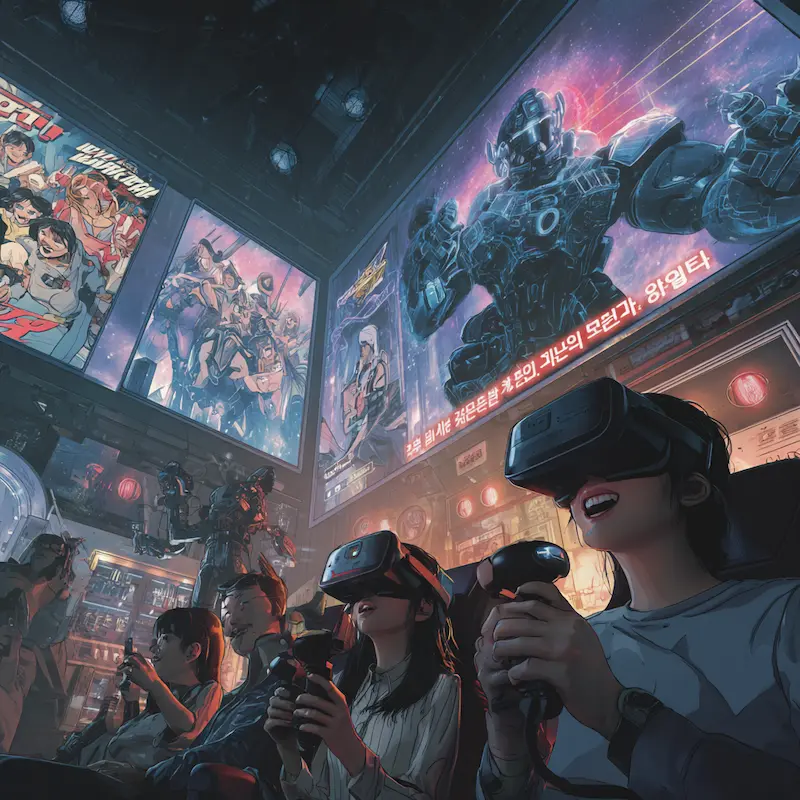
Some popular webtoon stories now move into exhibitions, pop-up stores, merchandise spaces, animation, games, fan events, and offline cultural venues.
This does not mean the vertical scroll is disappearing.
It means that, for certain popular titles, the story can become something fans visit, photograph, collect, discuss, and experience with other people.
Why Webtoons Travel So Easily
The strength of Korean webtoons has always been accessibility.
A reader does not need a specialist comic shop or a printed magazine. A smartphone is enough.
The vertical-scroll format also fits naturally with mobile reading. Panels are arranged for the screen, and the reader moves through the story with one finger.
This made webtoons easy to read during short breaks and daily commutes. It also made them easier to distribute internationally.
Through translation, mobile platforms, recommendation systems, and online sharing, Korean webtoons have reached readers far beyond South Korea.
Industry figures should be read carefully because user numbers and market forecasts vary by company, reporting period, region, and method. Still, the broader direction is clear. Korean webtoons are no longer a small digital category. They are now part of a wider entertainment business that connects comics, web novels, animation, dramas, games, merchandise, and fandom.
That is why webtoon intellectual property has become important to producers, studios, platforms, and event organisers.
A story that proves its popularity online can sometimes travel into other formats.
The Screen Is Still the Centre
It is important not to exaggerate the change.
The smartphone remains the main home of the webtoon.
Most readers still discover stories through mobile platforms. They follow regular updates, comment on episodes, pay for early access, and share favourite moments online.
This reading habit is the foundation of the industry.
Without regular readers, there is no strong fandom.
Without strong fandom, there is little reason to build exhibitions, pop-up stores, games, or physical experiences around a title.
So the screen is not being replaced.
It is becoming the starting point.
A successful webtoon can become a source for animation, drama, gaming, merchandise, exhibitions, and tourism-related experiences. This is similar to what has happened with popular books, films, anime, and games in other countries.
The difference is that Korean webtoons often prove their audience first through digital reading habits.
Solo Leveling as a Useful Example
One useful example is Solo Leveling.
Originally known as a Korean web novel and later adapted into a webtoon, Solo Leveling has become one of the better-known Korean fantasy titles among international fans.
Its popularity has expanded into animation, merchandise, fan events, and exhibitions.
The Solo Leveling exhibition at DUEX Hongdae in Seoul shows how a webtoon-related story can move into physical space. Ticketing information listed the exhibition from 13 December 2025 to 25 May 2026 at DUEX Hongdae Hall 1.
For fans, this kind of exhibition is different from reading alone on a phone.
They can walk through themed settings, take photos, buy goods, and share the visit with friends. The story becomes part of a day out in Seoul.
This matters because fandom is not only about reading or watching.
Fans often want places where they can feel closer to a story and meet others who care about the same characters.
This is where webtoons begin to overlap with tourism, retail, gaming, and offline entertainment.
At the same time, one successful title should not be treated as proof that every webtoon can expand in the same way.
Offline events work best when the original story already has strong recognition and a loyal audience.
Why Seoul Works Well for These Experiments
Seoul offers a useful setting for this kind of cultural expansion.
The city already has a strong culture of pop-up stores, themed cafés, character shops, PC bangs, esports venues, exhibitions, and fan events.
Korean entertainment often moves between online attention and offline spaces.
A drama can lead to filming-location tourism.
A K-pop comeback can create a pop-up store.
A game can support a branded gaming space.
A webtoon can become an exhibition, merchandise event, or fan experience.
For foreign visitors, this is one of the interesting features of Korean pop culture.
Popular stories do not always remain only on a screen. Sometimes they become places people can visit.
Areas such as Hongdae, Seongsu, Gangnam, Jamsil, and Dongdaemun often host youth culture, entertainment, retail, and fan-driven events.
Schedules change often, so visitors should check official venue pages, platform announcements, and ticketing sites before planning a trip.
What PC Bang Culture Helps Explain
Korea’s PC bang culture helps explain why offline digital entertainment can still matter.
A PC bang is not just a place with computers.
For many Koreans, it has long been a social space for gaming, eating, meeting friends, and spending time together.
Even after home internet became fast and personal devices improved, PC bangs remained relevant because they offered something more than access to technology. They offered better equipment, comfortable seating, food, atmosphere, and a place to gather.
This does not mean webtoon exhibitions will become the next PC bang.
That comparison would be too simple.
But PC bang culture shows one useful point about Korea.
Digital entertainment can still have offline value when it gives people comfort, community, and a reason to gather.
That lesson helps explain why webtoon companies, platforms, and event organisers continue testing physical experiences around popular titles.
Why Fans Want More Than Content
The rise of webtoon-related exhibitions and pop-up events reflects a wider change in fandom.
Many fans do not want to remain only readers or viewers.
They want to enter the world of the story in some way.
This can happen through a photo zone, themed room, limited-edition product, café collaboration, cosplay event, or exhibition.
These experiences may look secondary, but they can deepen attachment.
A person may read an episode in ten minutes.
But that same person may spend an hour at an exhibition, take photos, post them online, buy merchandise, and recommend the event to friends.
For platforms and creators, this creates additional value around the original story.
For fans, it creates memory.
That memory is one reason physical experiences remain powerful even in a digital entertainment market.
The Business Logic Behind Offline Experiences
Offline webtoon experiences can also make sense as part of a wider IP model.
Digital platforms usually depend on advertising, paid episodes, subscriptions, or in-app purchases. These models remain important.
Physical experiences create other kinds of value.
Tickets.
Merchandise.
Food and drinks.
Brand collaborations.
Limited-edition goods.
Tourism interest.
This is already common in film, anime, games, and K-pop. A popular story creates emotional attachment, and that attachment can support other products and experiences.
However, the story must remain the foundation.
If the original webtoon is weak, an offline event will feel empty.
If the characters are not loved, merchandise will not matter.
If the fandom is small, a large exhibition may struggle.
The strongest offline webtoon experiences are likely to be those built around stories that already have loyal readers.
Why the Trend Should Not Be Overstated
There is a risk of exaggerating this trend.
Not every webtoon will become an exhibition.
Not every fan wants an immersive experience.
Not every city can support regular webtoon events.
Building physical spaces requires money, licensing, design, staff, marketing, and careful scheduling.
Technology-based experiences also carry risk. Equipment becomes outdated. Visitor interest can fade. International expansion requires local partners and cultural adaptation.
For these reasons, it is better to describe offline webtoon experiences as an emerging layer, not a replacement for mobile reading.
The scroll is not dead.
It is being extended.
What This Means for Foreign Visitors
For travellers interested in Korean culture, this trend offers a useful way to understand modern Seoul.
Korean webtoons are not only stories inside apps. They are part of a wider creative economy that connects writers, artists, platforms, fans, animation studios, merchandise brands, event organisers, and tourism spaces.
A visitor who enjoys Korean dramas, anime, games, or character culture may find webtoon-related exhibitions and pop-ups worth checking before travelling.
The most important advice is simple.
Check current schedules.
Events in Seoul change quickly. A popular exhibition may run for only a few months. A pop-up store may last only a week or two. Merchandise releases may sell out quickly.
Official venue pages, platform announcements, and ticketing sites are usually more reliable than old social media posts.
Why This Matters
The movement of Korean webtoons beyond the screen shows how Korean popular culture often expands.
First, a format becomes popular among local users.
Then platforms and creators refine it.
Then the strongest stories move into other media.
Finally, fans begin to look for real-world experiences connected to the story.
This pattern has already appeared in K-pop, Korean dramas, gaming, animation, food culture, and character merchandise. Webtoons are now part of the same cultural movement.
The future of webtoons will still depend on good writing, memorable characters, strong artwork, and consistent publishing.
Technology and exhibitions can attract attention, but they cannot replace storytelling.
That may be the most important point.
Korean webtoons became global because they were easy to read and emotionally engaging.
Now, as some stories move into physical spaces, the best experiences will be the ones that respect the original reason fans cared in the first place.
The story must come first.
The screen made Korean webtoons global.
The next stage may allow some of them to become places people can walk into.
Webtoon and Cultural Event Information Notice: This article is for general cultural and industry information only. It does not recommend any specific platform, exhibition, ticket, company, product, or investment. Webtoon user numbers, market forecasts, event schedules, ticket policies, merchandise availability, venue rules, and adaptation plans can change quickly. Visitors should check official platform announcements, venue pages, and ticketing sites before planning a visit.
Sources / Further Reading
- WEBTOON Entertainment — Investor Relations / SEC filings
- Ministry of Culture, Sports and Tourism / KOCCA — Korean webtoon industry survey
- NOL World — Solo Leveling Exhibition ticket and venue information
- DUEX Hongdae — Solo Leveling Exhibition official venue information
- Visit Korea — Seoul K-culture event and pop-up information
- Google Search Central — Creating helpful, reliable, people-first content