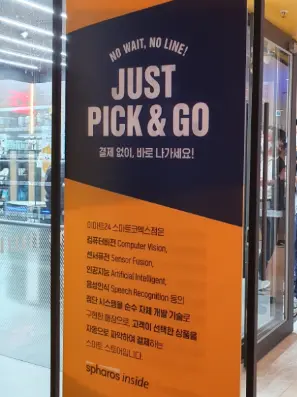
Seoul digital city life does not feel efficient only because the buildings look modern or the internet is fast. It feels efficient because many small daily problems are solved before people have time to complain.
A commuter checks the next train before leaving home.
A traveler leaves luggage inside a subway station instead of carrying it all afternoon.
A customer orders coffee through a kiosk without needing a long conversation.
A package waits at a pickup point after work.
Individually, these moments seem small.
Together, they create the feeling many visitors notice in Seoul: daily life often moves with less friction than expected.
But convenience is not always simple.
I was born in Seoul and lived there for many years before moving to the metropolitan area. I know how convenient the city can be. I use digital systems often, and I understand why they save time.
Still, even as someone used to Korean city life, I sometimes pause when I meet an unfamiliar kiosk screen.
The difficult part is not always the technology itself.
Sometimes it is finding the right button at the right moment while people are waiting behind me.
That small moment says a lot about Seoul today.
This is not only a question of technology.
It is a question of how daily life is organized.
Over the past two decades, South Korea has invested heavily in broadband networks, mobile technology, public transport infrastructure and digital public services.
The result is a city where technology often works quietly in the background.
It does not always announce itself.
It simply shortens the wait.
For someone who has lived in and around Seoul for most of her life, these small systems are not abstract. They are part of ordinary days: ordering coffee, finding a bus, tapping a card, standing behind someone at a kiosk and wondering whether to offer help.
A good digital city is not the one that looks the most futuristic.
It is the one that helps people finish an ordinary task without feeling embarrassed or left behind.
Quick Guide to Seoul’s Everyday Digital Systems
Seoul’s convenience is built through many connected systems.
| Daily situation | Seoul system visitors often notice |
|---|---|
| Checking trains and buses | Real-time public transport information |
| Paying for small purchases | Cards, transport cards and mobile payments |
| Carrying luggage before hotel check-in | Subway luggage storage and T-Luggage |
| Ordering food or coffee | Kiosks and multilingual menu screens |
| Finding routes | Mobile maps and station information |
| Using public programmes | Apps, online forms and digital public services |
| Digital difficulty | Kiosk guides and digital inclusion programmes |
The simple idea is this:
Seoul digital city life is not one big invention.
It is a thousand small adjustments.
But those adjustments have to work for real people, not only for people who are young, confident and already familiar with every screen.
Why Seoul Digital City Life Feels Efficient
Many travelers expect to be impressed by famous landmarks, food markets or shopping districts.
What often surprises them instead is how smoothly ordinary tasks can be completed.
Checking transport schedules, transferring between subway lines, making payments, collecting deliveries and finding directions can usually be done quickly through mobile devices.
This convenience becomes more noticeable during longer stays.
People visiting Seoul for several days often realize they spend less time waiting and more time doing what they planned to do.
In a city with nearly ten million residents, reducing small delays has a significant impact on daily life.
Rather than relying on one major innovation, Seoul’s efficiency comes from many connected systems working together.
That is the first lesson.
Convenience is rarely one big invention.
It is a thousand small adjustments.
Seoul Public Transport Makes Daily Travel Predictable
One of the strongest examples of Seoul digital city life is public transport.
The Seoul Metropolitan Subway connects Seoul with surrounding cities throughout the metropolitan area. For many residents and visitors, it is the easiest way to move across the city without depending on traffic.
Real-time train and bus information is available through station displays, transport apps and official information systems.
Riders can check arrival times, transfer information and route options before entering the platform.
For foreign visitors, this reduces uncertainty.
Instead of guessing when the next train will arrive, travelers usually know how long they need to wait.
The same principle applies to buses.
Bus arrival information is shown at many stops and through mobile applications, helping passengers plan journeys more accurately.
Transport delays can still happen.
Crowded trains, rush-hour pressure, weather and service changes can affect travel.
But the availability of real-time information makes the system easier to use than in cities where passengers must rely mainly on printed schedules.
Predictability is a form of service.
It does not remove every delay.
It helps people plan around it.
For people who live in the Seoul metropolitan area, this predictability becomes part of daily rhythm. Even when the commute is tiring, it helps to know when the next train or bus is coming.
Cashless Payments in Seoul Are Fast but Not Always Simple
Another thing visitors often notice is the widespread use of cashless payments.
Credit cards, transport cards and mobile payment services are accepted in many shops, restaurants, convenience stores and public facilities.
For local residents, tapping a card or paying through a smartphone has become ordinary.
The convenience is especially clear in small purchases.
Buying a bottle of water, coffee, snack or subway ticket rarely requires cash handling. This reduces transaction time throughout the day.
In a café or convenience store, a few seconds matter.
If hundreds of customers pass through a counter each day, faster payment changes the whole rhythm of the shop.
But foreign visitors should still prepare carefully.
Some payment apps may require a Korean phone number, local bank account or resident registration information.
International credit cards may not work in every small shop, kiosk or online booking system.
Transportation payments can also require a separate transport card or visitor-friendly payment option.
Carrying a small amount of cash or having more than one payment method is still practical.
Seoul is very cashless.
It is not completely cash-free.
That difference matters.
A fast payment system feels convenient when it works.
When it does not work, the speed of the city can suddenly make the person standing at the screen feel more pressured.
T-Luggage and Smart Lockers Solve a Travel Problem
One feature many travelers appreciate is the availability of luggage storage services.
Large subway stations across Seoul provide luggage storage or delivery options. T-Luggage is one service that allows passengers to store luggage at selected subway stations or arrange delivery to another location.
This may sound simple.
But it solves a common travel problem.
Visitors often arrive before hotel check-in or need somewhere to leave luggage after checking out.
Instead of carrying bags through museums, cafés or shopping districts, they can store them and continue exploring the city.
This is a practical example of how Seoul often focuses on everyday inconvenience.
A good service does not need to be dramatic.
It only has to appear at the moment when people are tired of carrying something.
Visitors should still check station locations, operating hours, luggage size limits, payment options and same-day delivery rules before relying on the service.
Not every station has the same facilities, and availability can change.
Convenience works best when people check the conditions before they need it.
Kiosks in Seoul Show Both Convenience and Digital Anxiety
Kiosks have become a normal part of daily life in Korea.
Visitors will find them in cafés, bakeries, fast-food restaurants, cinemas, hospitals, railway stations and public offices.
The popularity of kiosks reflects several factors.
Businesses can process orders more efficiently during busy periods.
Labor shortages can be managed more easily.
Customers can browse menus and services at their own pace.
For foreign visitors, multilingual options have improved in many places.
Some kiosks offer English, Japanese or Chinese menus, making ordering easier for travelers who do not speak Korean.
But a kiosk is not successful just because it stands near the counter.
It is successful only when customers can finish the task without confusion.
A machine that saves labor for the business but creates anxiety for the customer has not solved the whole problem.
I feel this more clearly as I get older.
I am not elderly, and I am not unfamiliar with Korean daily life.
Still, when I face a new kiosk layout, I sometimes have to stop and search for the right button. There are moments when I worry that I am holding up the line behind me.
That feeling is small, but it is real.
I have also seen older customers stand in front of a café kiosk for a long time, trying to understand where to begin.
In that moment, it is not easy to step in too quickly.
I usually ask carefully:
“May I help you?”
before touching the screen.
That question matters.
Even help can feel embarrassing if it is given too suddenly.
Some older residents, people with disabilities and people with limited digital skills can find kiosks difficult.
Foreign visitors may also struggle when a machine requires a local phone number, domestic payment method or membership login.
This is why digital inclusion has become an important topic in Korea.
Seoul has introduced digital support programmes, including guides who help residents use kiosks, smartphones and public digital services.
These efforts show that convenience and accessibility must be discussed together.
Technology can improve daily life.
It should not leave people behind.
Ppalli-Ppalli Culture Is About Speed and Trust
To understand why convenience matters so much in Korea, it helps to know a well-known Korean phrase.
“Ppalli-ppalli” means “quickly, quickly.”
The phrase is often used to describe a cultural preference for speed, efficiency and reducing unnecessary delays.
This idea is sometimes simplified by foreign media, but it should be explained carefully.
It is not only about impatience.
It is connected to rapid industrialization, dense cities, competitive business culture and strong service expectations.
Today, traces of this mindset can be seen throughout daily life.
Food delivery is expected to be fast.
Banking services are increasingly digital.
Transport systems prioritize punctuality.
Businesses compete on customer convenience.
The expectation is not always that everything must happen immediately.
Rather, people expect systems to work smoothly.
When they do not, public frustration can appear quickly.
A customer may forgive a slow process if it is clear and honest.
But people become irritated when the system makes them repeat steps, wait without explanation or fail at the final payment screen.
That is where convenience becomes more than speed.
It becomes trust.
And for people who feel less confident with digital systems, trust is not built by speed alone.
It is built when the system gives enough time, clear choices and a way to ask for help.
Wrist Doctor 9988 and Digital Public Services in Seoul
Seoul’s digital infrastructure extends beyond transport and retail.
The city has explored digital tools in public administration, healthcare and community services.
One example is the Wrist Doctor 9988 programme.
Seoul describes it as a health-management programme that uses an app to help residents build healthier habits. The city has also reported that the programme surpassed two million users.
This kind of programme shows how digital services are expanding beyond convenience.
Technology is increasingly being used to support daily routines, health habits and public services.
This should still be explained carefully.
A city health app is not medical treatment.
It does not replace doctors, diagnosis or professional care.
It is better understood as a public wellness and behavior-support programme.
The broader point is that Seoul is experimenting with digital tools not only to save time, but also to help residents manage everyday life more effectively.
That direction is useful.
But public digital services need to be clear enough for ordinary people, not only for people who are comfortable with apps, passwords, identity checks and notifications.
Why Foreign Visitors Notice Seoul’s Digital Convenience
International visitors often describe Seoul using similar words.
Efficient.
Convenient.
Connected.
The reason is usually not one specific technology.
It is the accumulation of many small experiences.
Public transport information appears quickly.
Payments are simple when the system works.
Delivery systems are organized.
Mobile apps handle tasks that might require paperwork or waiting elsewhere.
Most importantly, these systems are widely used.
Technology becomes useful when people trust it enough to include it in daily routines.
In Seoul, many digital services have reached that point.
Residents use them not because they are new, but because they save time.
That is the difference between a gadget and infrastructure.
A gadget is noticed.
Infrastructure disappears into habit.
For visitors, that can feel impressive.
For residents, it can feel ordinary.
But even ordinary convenience can become stressful when the next update, next app or next machine appears before everyone has caught up.
Digital Inclusion Is Seoul’s Next Convenience Challenge
No system is perfect.
As Seoul becomes more digitally connected, concerns about privacy, data security, screen dependency and digital accessibility continue to grow.
Some residents worry that excessive automation reduces human interaction.
Others question how personal data is collected, stored and used.
Older people and digitally vulnerable groups may find daily life more difficult when services move too quickly to machines, apps and online forms.
These concerns are not unique to Korea.
Cities around the world are facing similar questions as they digitize public services, transport, payments and healthcare.
For Seoul, the next challenge is not simply becoming more digital.
It is making digital systems safer, fairer and easier for more people to use.
A city can be efficient and still need to be more humane.
A store can be automated and still need a person nearby.
That is the balance many people feel in daily life, even if they do not always say it directly.
When I talk with friends around my age, we sometimes say that the old way felt easier.
We know the new systems are convenient.
We use them every day.
Still, we also wonder what daily life will feel like when we become older and the screens become even more complicated.
That small worry is also part of Seoul’s digital story.
What Other Cities Can Learn from Seoul Digital City Life
Urban planners, technology companies and policymakers often look at Seoul when discussing digital infrastructure.
The city is not the only place experimenting with smart-city technology.
However, it is one of the places where many digital systems have already become part of everyday life.
Rather than focusing only on futuristic concepts, Seoul often shows how technology can improve ordinary experiences.
Finding directions.
Making payments.
Using public transport.
Storing luggage.
Ordering food.
Managing daily routines.
These are not dramatic innovations.
Yet they affect millions of people every day.
For visitors walking through Seoul, the future may not appear as flying vehicles or science-fiction architecture.
Instead, it often appears in quieter ways.
A train arrives when expected.
A payment takes only seconds.
A traveler stores luggage with minimal effort.
A resident manages daily tasks through a smartphone.
These moments may seem ordinary.
But together, they explain why Seoul leaves such a strong impression on many people from around the world.
Final Thoughts
Seoul digital city life is real.
Public transport is predictable.
Payments are fast.
Luggage storage can solve a tiring travel problem.
Kiosks can make ordering quicker.
Digital public services can make daily routines easier.
But the more digital a city becomes, the more carefully it has to think about people who hesitate in front of a screen.
That person may be an older customer.
It may be a foreign visitor.
It may be someone with a disability.
It may be a resident who is simply tired, rushed or unfamiliar with a new layout.
And sometimes, it may be someone like me: used to Seoul, grateful for its convenience, but still quietly worried about whether the next version of daily life will be easy enough to follow.
The lesson is simple.
A city becomes truly efficient when it removes small delays without making people feel lost.
Digital City Information Notice: This article is for general travel, culture and urban information only. It does not recommend any specific app, payment service, locker service, health programme or private company. Transport schedules, mobile payment access, kiosk languages, luggage-storage locations, public health programmes, privacy rules and digital services can change. Visitors should check official transport information, Seoul city notices, service websites and current local guidance before relying on any specific system.