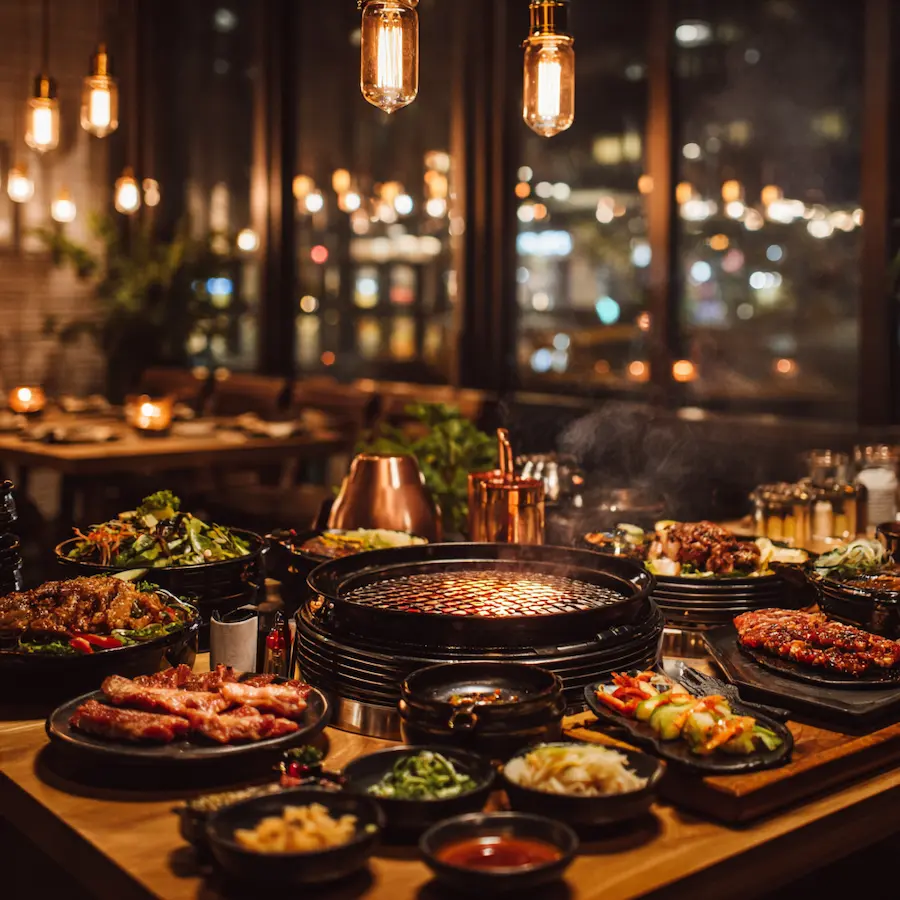
For many years, Korean food outside Korea was closely tied to Korean communities.
People often found it in Koreatowns, family-run restaurants, Asian grocery stores, or large cities with long immigration histories. For those who knew where to look, Korean barbecue, kimchi stew, cold noodles, fried chicken, tteokbokki and ramyeon were already part of daily life.
For many others, Korean food still felt distant.
That distance is becoming smaller.
Today, Korean barbecue, Korean fried chicken, ramyeon, kimchi, tteokbokki, sauces, snacks and seaweed products are appearing in more places. They are found not only in Koreatowns, but also in shopping centers, food courts, casual dining chains, supermarkets, delivery apps and social media food videos.
This change does not mean Korean food is replacing local cuisines.
North America and Latin America both have strong food cultures of their own.
A more accurate way to describe the shift is this:
Korean food has moved from a niche interest into a more visible part of everyday dining.
It is no longer only a food that people travel across town to find.
In more places, it is becoming one of the choices on the table.
Korean Food Exports Are Growing
One reason Korean food is more visible overseas is the growth of food exports.
South Korea’s food and agriculture-related exports reached a record high in 2025. Government and news reports said K-Food Plus exports reached about 13.62 billion U.S. dollars that year.
Ramyeon was one of the strongest categories, passing 1.5 billion U.S. dollars in exports for the first time.
The growth continued into 2026. In the first quarter of 2026, K-Food Plus exports reached about 3.35 billion U.S. dollars. Processed foods such as ramyeon, snacks, beverages, rice-based products, sauces and seaweed continued to support overseas demand.
These numbers matter because Korean food is no longer only restaurant-based.
Packaged foods help introduce Korean flavors to people who may not live near a Korean restaurant.
A person may first try Korean ramyeon at home, then later become curious about Korean barbecue, fried chicken or street food.
That path is important.
Food culture does not always travel first through a restaurant table.
Sometimes it begins with a packet, a sauce, a snack, or a meal seen in a short video.
Korean Restaurants Are Moving Beyond Koreatown
Korean restaurants in North America are becoming more visible outside traditional Korean neighborhoods.
Large cities such as Los Angeles, New York, Chicago, Toronto, Vancouver and the San Francisco Bay Area have long had Korean dining options.
What has changed is that Korean food is appearing more often in smaller cities, suburban areas and mainstream shopping districts.
Restaurant-industry research reported in 2024 found that the number of Korean restaurant locations in the United States increased by about 10 percent over the previous year. The same research noted that hundreds of Korean restaurant locations had opened since 2018.
This does not mean Korean restaurants are everywhere.
They are not.
Some regions still have few Korean dining options. Some cities may have only one or two restaurants. Others may have Korean food mainly through supermarkets or packaged products.
But the direction is visible.
Korean food is no longer confined to the places where people once expected to find it.
Korean fried chicken, kimchi, Korean barbecue sauces, ramyeon and Korean-style casual dining have helped introduce Korean flavors to a wider group of consumers.
This expansion is not limited to traditional restaurants.
Food trucks, modern Korean bars, Korean fusion kitchens, quick-service shops and Korean barbecue chains are all part of the wider picture.
The Chain-Restaurant Side of Korean Dining
One visible example is the growth of Korean barbecue and hot pot chains.
KPOT Korean BBQ & Hot Pot, for example, has expanded in the United States and announced its 100th location in 2025. Its model combines Korean barbecue with hot pot, creating an interactive dining experience that is familiar enough for new customers while still connected to Korean-style grilling.
This kind of restaurant works well in the American market because it is social.
Diners cook at the table, share food, try different sauces and treat the meal as an experience rather than only a quick dinner.
That social quality matters.
Korean barbecue is not only a dish.
It is a way of eating together.
However, chain expansion should be discussed carefully.
Opening more locations does not guarantee long-term success. Restaurants still need good management, stable staffing, consistent food quality, local demand and fair pricing.
Some locations may perform well.
Others may struggle.
A chain can spread a cuisine, but it can also flatten it if the food becomes only a formula.
The challenge is to grow without losing the feeling that made the meal attractive in the first place.
Why Korean Food Appeals to New Diners
Korean food has several features that help it travel well.
First, it has strong flavors.
Gochujang, doenjang, soy sauce, garlic, sesame oil, fermented vegetables, spicy broths, grilled meat and pickled side dishes make Korean meals memorable.
Second, many Korean meals are social.
Korean barbecue, hot pot-style dining, shared fried chicken and side dishes work well for groups.
Third, Korean food connects naturally with social media.
Cheese tteokbokki, sizzling barbecue, colorful banchan, fried chicken, ramyeon recipes and convenience-store-style meals are easy to photograph and film.
Fourth, Korean popular culture has helped make the food more familiar.
K-dramas, variety shows, K-pop content and online food videos often show Korean meals. Viewers may become curious and look for the food in their own cities.
Still, popularity does not come only from entertainment.
A dish has to survive after the video ends.
It needs taste, price, access, explanation and repeat demand.
That is where food becomes culture rather than a passing image.
Latin America Is Not One Market
Korean food is also becoming more visible in parts of Latin America.
Cities such as São Paulo, Mexico City, Buenos Aires, Santiago, Bogotá and Lima have Korean communities, Asian markets, Korean restaurants or growing interest in Korean food.
Korean cultural content has helped introduce more people to dishes such as kimchi, ramyeon, Korean barbecue, tteokbokki and Korean fried chicken.
Reports from Latin America describe rising interest in Korean culture, including K-pop, dramas, skincare and food. Korean markets and restaurants in some cities are gaining attention from both Korean communities and local consumers.
However, Latin America should not be described as one single market.
That would be careless.
Each country has different food habits, income levels, import rules, restaurant costs and consumer expectations.
A Korean restaurant strategy that works in Mexico may not work the same way in Brazil, Chile, Argentina, Colombia or Peru.
In some places, Korean food may grow first through restaurants.
In others, it may grow through instant noodles, sauces, snacks, cultural events or small food businesses connected to Korean communities.
For Korean food companies and restaurants, the opportunity is real.
But success requires local adaptation.
Local Adaptation Matters
Korean food does not enter a new market unchanged.
Restaurants often adjust spice levels, portion sizes, menu descriptions, service style and ingredient sourcing.
In some markets, halal certification may matter.
In others, beef prices, import costs, labor costs or local food preferences may shape the menu.
A Korean barbecue restaurant in the United States may offer familiar cuts of meat, English menu explanations and sauces adjusted for local customers.
A restaurant in Latin America may need to consider local grilling traditions, family dining habits and price sensitivity.
Adaptation does not automatically mean losing identity.
It can mean making the food understandable and practical for the local market while keeping the core of the cuisine intact.
The important question is not whether every dish stays unchanged.
The better question is whether the food still carries its own memory.
The Challenges Behind the Growth
The expansion of Korean food also faces real challenges.
Supply chains are important.
Restaurants need reliable access to Korean sauces, seasonings, noodles, kimchi, seaweed and other ingredients.
Packaged food companies need stable distribution through supermarkets, importers, online platforms and local retailers.
Labor is another issue.
Korean barbecue and many Korean dishes require trained kitchen staff and careful preparation. A restaurant must maintain quality even when it opens in a city without many workers familiar with Korean cooking.
Competition is strong as well.
Korean restaurants are entering markets where Japanese, Chinese, Thai, Vietnamese, Mexican, Italian, American and local cuisines are already well established.
Korean food needs to earn repeat customers, not just attract first-time curiosity.
There is also a risk of overexpansion.
A trend can bring attention quickly, but restaurants survive through consistency.
Good food, service, cleanliness, pricing and location still matter more than online buzz.
What Korean Food’s Growth Really Means
The growth of Korean food in North America and parts of Latin America does not mean one cuisine is taking over another.
Food culture rarely works that way.
Instead, Korean food is becoming part of a wider dining landscape.
Many consumers now mix different food cultures in their everyday lives.
A person may eat tacos one day, sushi the next, Korean fried chicken on the weekend and pasta later in the week.
That is the real meaning of Korean food’s growth.
It is becoming one more familiar choice.
For Korea, this creates export opportunities.
For restaurants, it creates new business possibilities.
For consumers, it creates more variety.
For local food cultures, it adds another layer to an already diverse dining scene.
The shift is not about victory.
It is about arrival.
Korean food is entering more ordinary places: the mall, the freezer aisle, the casual dinner plan, the delivery app, the weekend group meal.
That is where culture often becomes durable.
Not when it is admired from far away, but when it becomes useful, repeatable and shared.
Conclusion
Korean food is becoming more visible in North America and in parts of Latin America.
The growth is supported by several forces: record food exports, the popularity of ramyeon and snacks, the spread of Korean barbecue and fried chicken, social media food content and the wider influence of Korean entertainment.
But the trend should be described with balance.
Korean food is growing.
It is not replacing other cuisines.
Korean restaurants are expanding.
They still face competition, supply challenges, staffing issues and the need to adapt to local markets.
The strongest conclusion is simple:
Korean food has moved beyond a niche audience.
It is now part of mainstream global dining conversations, especially in markets where consumers are already familiar with Korean culture through music, dramas, food videos and packaged products.
That growth is meaningful, but it is not automatic.
Korean food will continue to succeed only if restaurants and brands offer good taste, fair prices, reliable quality and respect for local food cultures.
Food Culture Information Notice: This article discusses K-food, restaurant culture and grocery trends for general information only. Export data, restaurant availability, product availability, prices and local details can change, so readers should check official statistics and current local sources for the latest information.
Sources / Further Reading
Ministry of Agriculture, Food and Rural Affairs — 2025 K-Food Plus export results
Ministry of Agriculture, Food and Rural Affairs — Q1 2026 K-Food Plus export data
Yonhap News Agency — South Korea’s 2025 food and agriculture-related exports
Circana — South Korean restaurant location growth in the United States
KPOT Korean BBQ & Hot Pot — official company information
National Restaurant News — KPOT growth and restaurant strategy coverage
Korea.net — Korean food chains overseas and Korean food events in Mexico
Google Search Central — Creating helpful, reliable, people-first content