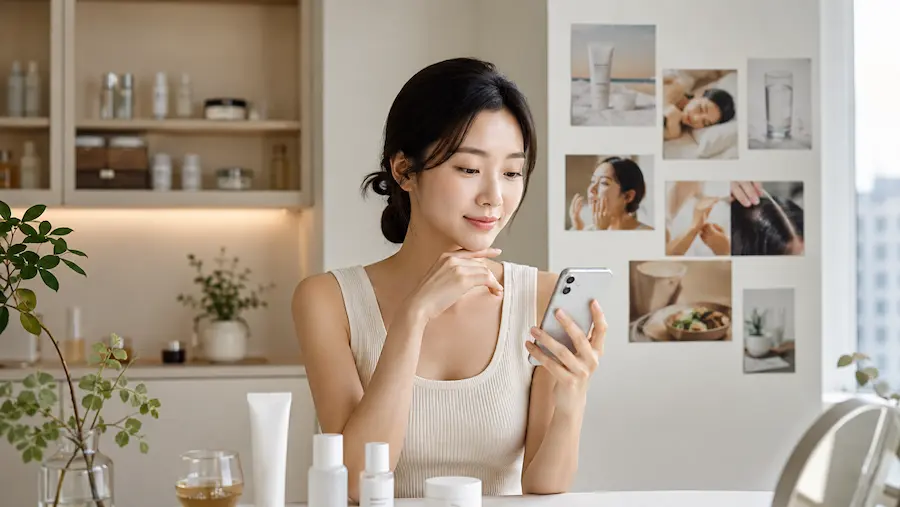
Korean beauty is often introduced through sheet masks, cushion compacts, sunscreens, serums and fast-changing trends.
But inside Korea, beauty is not only about new products.
It is also about how people compare, test, question and adjust their routines.
This everyday approach is one reason Korean beauty has grown beyond short-lived trends. Many consumers do not simply buy a product because it is popular. They read reviews, check textures, ask whether it will irritate the skin, and think about whether it fits their daily routine.
In recent Korean beauty retail and trend coverage, one phrase has become easier to notice: slow-aging.
The phrase needs careful explanation.
Slow-aging does not mean stopping age. It does not mean reversing the body’s biological clock. It should not be understood as a promise that a cream, supplement, treatment or device can keep someone young.
A safer way to understand it is this: slow-aging is a softer beauty language for steady care.
It is about paying attention earlier to sunscreen, skin barrier, irritation, cleansing, moisturising and routines that can be repeated without overwhelming the skin.
In that sense, slow-aging is not a miracle idea.
It is closer to maintenance.
What Slow-Aging Means in Korean Beauty
Older anti-aging marketing often used stronger language.
It talked about fighting wrinkles, reversing signs of age or looking younger quickly. That kind of language can make ageing sound like a problem that must be corrected.
Slow-aging sounds quieter.
It does not remove the commercial side of beauty. It is still a marketing term, and marketing terms should always be read carefully.
But the tone is different.
Instead of promising a sudden change, slow-aging focuses more on habits, prevention-minded care and products that fit daily life.
The useful part of slow-aging is not the promise of youth.
The useful part is the reminder that skincare usually works better when it is realistic.
A strong product is not always the best product.
A famous ingredient is not always suitable.
A complicated routine is not always better than a simple one.
Skin changes with age, genetics, hormones, climate, stress, sleep, health and daily habits. No single product can control all of that.
That is why the slow-aging conversation is safest when it stays close to practical care: sun protection, gentle cleansing, moisturising and avoiding unnecessary irritation.
A Personal View From Korea
Living in Korea, I often notice that beauty conversations are not as simple as “everyone wants to look young.”
Among women around me, especially those in their 40s and 50s, interest in skin and ageing is common. But the way each person responds is different.
Some people enjoy regular skin care treatments.
Some are interested in cosmetic procedures.
Some prefer exercise, sleep, simple skincare and diet.
Some buy new products often, while others use only a few trusted items for years.
Economic conditions, personal values, skin sensitivity, time, family responsibilities and comfort with medical procedures all make a difference.
This is why I do not see slow-aging only as a beauty trend.
It also reflects a more ordinary question many people ask as they get older:
How much care feels right for me?
That question is more useful than asking how to look younger as quickly as possible.
From Anti-Aging to Maintenance
The change in language matters.
“Anti-aging” can sound like a fight against age. “Slow-aging” gives consumers a less aggressive way to talk about care.
This fits a wider shift in modern K-beauty.
Many consumers are no longer interested only in dramatic before-and-after results. They also ask whether a product feels comfortable, whether it irritates the skin, whether it layers well under sunscreen and whether it can be used consistently.
That practical thinking is important.
A beauty routine is not useful just because it is popular. It is useful only when the person can actually keep it and the skin can tolerate it.
This is one reason Korean beauty often moves quickly. Consumers compare, review, test and comment. Brands respond with new textures, gentler formulas, smaller product categories and more specific claims.
But speed also creates noise.
Not every trend deserves to be copied.
Not every product that becomes popular in Korea will suit every person outside Korea.
Slow-aging is helpful only when it reduces that noise, not when it becomes another reason to buy more.
Korean Consumers Ask Detailed Questions
Korean beauty shoppers are often careful comparison shoppers.
Many look at ingredients, product texture, reviews, rankings, short videos, dermatologist content and social media reactions before buying.
Some enjoy trying new releases.
Others prefer fewer steps and less irritation.
The common point is not that everyone follows the same routine.
The common point is that many consumers ask practical questions.
Can I use this every day?
Will it feel heavy under sunscreen?
Is it too strong for my skin?
Does this fit my real routine?
Is this trend useful, or is it just popular?
These questions are a useful part of Korean beauty culture because they move the conversation away from blind trend-chasing.
They also explain why Korean brands often pay close attention to texture, packaging, user reviews and fast product feedback.
For foreign consumers, this is one of the more useful lessons from K-beauty.
The goal is not to copy every Korean routine.
The goal is to become a more careful reader of products.
Beauty Is Moving Beyond the Face
Slow-aging has become a flexible phrase partly because beauty conversations now reach beyond facial skincare.
In Korean retail spaces, beauty can sit close to scalp care, body care, sunscreen, cleansing, supplements, wellness drinks, sleep-related products and small home beauty devices.
This does not mean these categories all have the same evidence.
It also does not mean they should be treated as medical solutions.
It simply shows how beauty retail has widened.
A consumer may buy sunscreen, shampoo, body lotion, collagen drinks and a facial device from the same retailer. The shopping experience can make these categories feel connected, even when they need to be judged differently.
That distinction is important.
A moisturiser is not the same as a supplement.
A supplement is not the same as medicine.
A beauty device is not the same as a clinic treatment.
A wellness product should not be treated as proof of better skin or slower ageing.
The safest way to understand this shift is as a retail and lifestyle trend, not as a medical claim.
Supplements and Inner Beauty Need Caution
Korea has used the phrase “inner beauty” for years.
In beauty retail, it can refer to collagen drinks, vitamins, probiotics, functional drinks and other health-food products. Some consumers use them as part of a wider routine. Others are sceptical. Many simply see them as one category in the beauty and wellness market.
This area must be handled carefully.
Supplements are not universal beauty solutions.
A product that is popular in Korea is not automatically suitable for every reader.
Effects can vary by person, and marketing language can sound stronger than the evidence behind it.
For readers outside Korea, the safest way to understand inner beauty is as a consumer category.
It shows how Korean beauty culture often connects appearance with daily habits, food, rest and routine.
It does not mean a drink or supplement can replace skincare, sleep, medical care or a balanced diet.
Anyone who is pregnant, taking medication, managing a chronic illness, dealing with sleep problems or unsure about an ingredient should speak with a qualified professional before using supplements.
Home Beauty Devices Are Visible, But Not Shortcuts
Home-use beauty devices are also part of the current K-beauty conversation.
LED masks, microcurrent devices, facial massage tools and other at-home beauty technology have attracted attention in Korea and abroad. These products sit between beauty, electronics and personal care.
The appeal is easy to understand.
Some consumers want a more structured routine at home.
Others like the idea of bringing clinic-inspired habits into daily life.
But popularity is not the same as suitability.
A device may look convincing in a video, but that does not mean it is right for every skin type.
Instructions, usage time, skin sensitivity, product quality, certification and medical history all matter.
Foreign consumers should check whether a device is officially sold in their country, read the instructions carefully, avoid exaggerated claims and avoid damaged or uncertified devices.
Anyone with a skin condition, recent cosmetic procedure, photosensitivity, medical device implant or other medical concern should ask a qualified professional before use.
A home beauty device should not be treated as a guaranteed shortcut.
Hanbang Beauty Is a Cultural Language, Not a Guarantee
Slow-aging also overlaps with interest in hanbang-inspired beauty.
Hanbang refers to Korea’s traditional herbal medicine culture. In skincare, hanbang-inspired products may use ingredients such as ginseng, mugwort, green tea, fermented extracts, licorice root or other botanical ingredients.
These ingredients often give Korean skincare a softer and more traditional image. They also connect beauty with ideas of balance, seasonality and long-term care.
But traditional does not always mean better.
Natural does not always mean gentle.
Some people react badly to botanical extracts, fragrance, essential oils, alcohol or strong active ingredients. A product should still be judged by its full formula, not by a traditional image alone.
The safest way to understand hanbang beauty is as one cultural language within K-beauty.
It can be meaningful, but it is not a guarantee of safety or results.
What This Says About K-Beauty Exports
K-beauty is now a large global industry.
South Korea’s cosmetics exports reached a record level in 2025, according to Korean government data reported in 2026. Korea was also reported as one of the world’s leading cosmetics exporters.
This matters because overseas interest is no longer limited to sheet masks or cute packaging.
Foreign consumers now pay attention to Korean sunscreens, cleansing products, ampoules, barrier creams, scalp care, body care, beauty devices and wellness-adjacent products.
Slow-aging fits this broader export story because it gives K-beauty a message that is easy to understand: steady care, daily maintenance, prevention-minded habits and routines that feel less aggressive than old anti-aging language.
Still, it should not be treated as a miracle concept.
The strongest lesson is simple.
A routine is useful only when it suits the person using it.
What Foreign Consumers Should Take From This
For readers outside Korea, the slow-aging trend can be useful if it is understood realistically.
Start with the basics. Sunscreen, gentle cleansing, moisturising and avoiding unnecessary irritation usually matter more than chasing every new product.
Read claims carefully. Words such as clean, natural, medical-grade, repair, recovery, anti-aging and lifting can sound convincing. Formula, evidence, safety and personal suitability matter more.
Be careful with supplements. Collagen, vitamins, probiotics, sleep-related ingredients and wellness drinks are not universal beauty answers.
Do not assume Korean products are automatically better. Korea has many strong beauty products, but it also has ordinary products, overhyped products and products that may not suit your skin.
Use social media carefully. Short videos can show texture and user reaction, but they cannot prove long-term results for everyone.
Keep the routine realistic. A product that cannot be used comfortably and consistently is unlikely to remain useful.
A Quieter Beauty Trend
Korean slow-aging beauty is not about stopping time.
It is about a quieter change in how people talk about care.
Instead of treating beauty as a last-minute correction, many consumers are thinking earlier about sunscreen, skin barrier, irritation, texture, routine and daily comfort.
That is why the phrase feels different from older anti-aging language.
It is less dramatic, but more practical.
For foreign readers, the point is not to copy every Korean trend.
The point is to understand the thinking behind it.
Good skincare does not have to be complicated.
It does not have to promise transformation.
It should fit real life, respect the skin and leave room for age to be something handled with care rather than feared.
Medical and Consumer Information Notice
This article is for general beauty, culture and consumer information only.
It is not medical advice, diagnosis, treatment guidance, supplement advice or product recommendation.
Anyone with a skin condition, sleep problem, pregnancy, chronic illness, medication use, recent cosmetic procedure or questions about beauty devices or supplements should consult a qualified professional.
Beauty products, supplements, home-use devices and skincare trends can affect people differently. Readers should check ingredients, instructions, local regulations and professional guidance before making health-related decisions.
Sources / Further Reading
Ministry of Food and Drug Safety / Korea.net — 2025 cosmetics export data
Korea.net — Korea cosmetics export ranking report
Korean beauty retail trend coverage — slow-aging, wellness and recovery-care categories
Google Ads Healthcare and Medicines Policies
Google Search Central — Creating helpful, reliable, people-first content