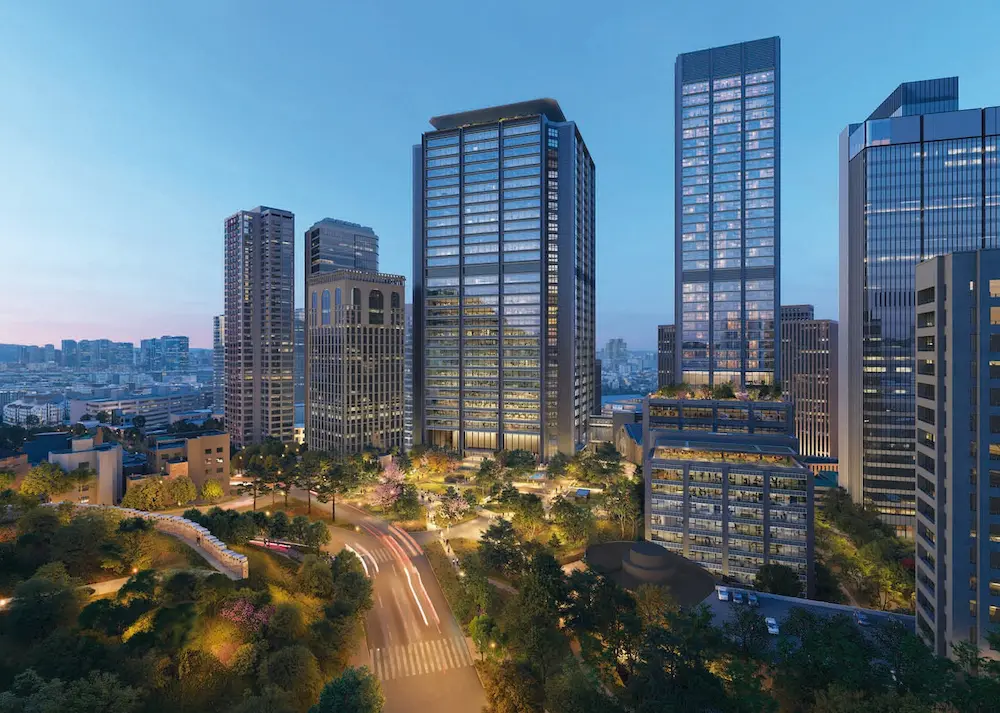
Subway lines, express bus terminals, airport rail links and major roads have long shaped how people understand Seoul.
A district in Seoul is rarely judged by buildings alone. People also ask how easy it is to reach, which subway lines pass through it, how close it is to the airport, how quickly people can move to Gangnam, Yeouido, Jamsil or central Seoul, and whether the area can handle heavy flows of commuters and visitors.
Anyone who has lived in or moved around Seoul knows this feeling.
A short distance on the map does not always mean a short trip. A ride across the Han River can feel different depending on the time of day. A transfer at a busy station can change the mood of a whole journey. Around major business districts, stadiums, terminals and airports, the city often feels as if it is constantly negotiating with its own movement.
Now another form of mobility has entered Seoul’s long-term planning: Urban Air Mobility, often shortened to UAM.
UAM refers to electric aircraft that can take off and land vertically, usually described as eVTOL aircraft. These vehicles are not yet part of ordinary daily transport in Seoul. They are still being tested, regulated and planned.
That point needs to be clear from the beginning.
UAM is not currently changing daily life in Seoul.
It is not yet a normal commuting option.
It is not a proven real estate factor.
The more realistic question is this: if Seoul continues to prepare UAM routes and vertiports over the next decade, what does that reveal about how the city is thinking about future transport?
What Seoul Has Actually Announced
Seoul Metropolitan Government has presented UAM as part of a long-term mobility plan.
The city has discussed demonstration flights around Yeouido and the Han River area, along with future early-stage facilities in locations such as Yeouido, Gimpo Airport, Suseo and Jamsil.
The direction is gradual.
Public materials have discussed demonstration projects in the mid-2020s, pilot operation around 2026, commercialisation goals around 2030 and a broader UAM network over the longer term.
This matters because many online discussions make UAM sound much closer than it really is.
As of 2026, Seoul should not be described as a city where regular UAM passenger services are already transforming the transport system or the property market.
A more accurate description is that Seoul is preparing test routes, possible vertiport locations and long-term mobility plans.
That difference matters.
Planning is not the same as daily use.
A future route is not the same as a confirmed market effect.
Why Vertiports Matter
A vertiport is a take-off and landing facility for UAM aircraft.
In simple terms, it is the air-mobility version of a station.
This is why urban planners pay attention to possible vertiport locations. Seoul has already shown how strongly stations, terminals and airport links can shape the way people understand a district.
A subway station can make a neighbourhood feel closer.
An airport rail link can change the role of a district.
An express bus terminal can turn one area into a national movement point.
In the same way, future vertiports may one day influence how people think about access, convenience and urban importance.
But this influence remains mostly a future possibility.
Vertiports need strict safety standards, flight control systems, noise management, weather monitoring, charging facilities, emergency procedures and easy passenger access. They also need public acceptance.
In a dense city like Seoul, these questions are not small.
That is why UAM should be discussed as infrastructure planning, not as a finished transport revolution.
Yeouido: Finance, Offices and the Han River
Yeouido is one of the most important districts in Korea’s financial system.
It is home to major securities firms, financial institutions, broadcasters, office towers and the National Assembly area. It is also located beside the Han River, which makes it relevant to Seoul’s UAM demonstration plans.
For people who know Seoul, Yeouido already feels like a district shaped by pressure.
Office workers arrive in large numbers. Traffic around bridges and main roads can be heavy. The area is connected, but it is also busy. On weekdays, the district feels different from ordinary residential neighbourhoods because so much business, finance and public activity are concentrated there.
That is why Yeouido is worth watching in the UAM discussion.
It already has three conditions that matter for future mobility: business demand, symbolic value and transport pressure.
But there is one point to be clear about.
It would be misleading to say that Yeouido buildings are already receiving a measurable UAM-based rent premium.
Current public information does not support that claim.
The safer conclusion is that if UAM becomes commercially viable, Yeouido could be one of the districts where its practical effects are first tested.
Jamsil: Events, Sports and Visitor Movement
Jamsil is another district closely linked to Seoul’s future planning.
The Jamsil Sports and MICE Park project is a major public-private development planned around the existing sports complex area. Seoul has announced that construction is scheduled to begin in 2026, with completion targeted for 2032.
The project is expected to include sports, convention, hotel, commercial, office and public facilities.
Separately, Jamsil has also been mentioned in Seoul’s UAM planning as one of the important southern Seoul locations.
For anyone who has visited Jamsil on a game day, concert day or weekend, the reason is not difficult to understand. Jamsil is not only a residential or shopping area. It is a place where large groups of people can arrive at once.
That makes transport planning especially important.
Yeouido is mostly about finance, offices and government-related activity.
Jamsil is more about events, tourism, sports, conventions and large-scale visitor movement.
If UAM becomes part of Seoul’s transport system in the future, a district like Jamsil could become more relevant because major events create concentrated demand for fast connections.
But this remains a future scenario.
It should not be presented as a current property-market fact.
Gimpo Airport: A Practical Mobility Hub
Among the proposed UAM-related locations, Gimpo Airport may be the easiest to understand.
Airports already have aviation infrastructure, passenger systems and transport connections. Gimpo Airport is also connected to subway and rail networks, making it more than a place where flights arrive and depart.
For many people in Seoul, Gimpo Airport already feels like a transfer point between air, rail, subway and road movement.
That makes it a practical example of how Seoul may think about UAM.
UAM is not only about short flights inside the city. It is also about how airports, business districts and major transport nodes might be connected more efficiently in the future.
Still, this should be described as planning, not as a completed transformation.
Gimpo Airport may be important in Seoul’s UAM plans, but ordinary passengers are not yet using UAM as a regular airport transfer service.
Suseo: Rail Links and Southern Seoul Access
Suseo is also important because it already functions as a major transport node in southern Seoul.
It is connected to high-speed rail, subway lines and road networks. That makes it relevant to any future mobility system that tries to link air, rail and ground transport.
Suseo is not as symbolic as Yeouido or as event-focused as Jamsil, but it has a different kind of importance.
It is practical.
It helps connect southern Seoul with wider regional travel.
If UAM develops, Suseo could be useful because it already has a transport role.
But again, careful wording matters.
Suseo should not be described as a confirmed real estate winner because of UAM. It is better described as a transport node that appears in Seoul’s long-term mobility planning.
Why UAM Should Not Be Treated as a Property Shortcut
UAM is an interesting idea, but it should not be turned into a simple real estate slogan.
There is no reliable public evidence that buildings near planned Seoul vertiports are already receiving a fixed rent premium because of UAM.
There is also no reliable public evidence that land values near active Seoul vertiports have risen by a specific percentage because regular UAM passenger services have not yet become part of the city’s daily transport system.
The better way to read the trend is more cautious.
UAM may become one of several factors shaping the future importance of certain districts. But it will sit alongside older and more proven factors:
subway access, airport connectivity, office demand, hotel and convention demand, zoning policy, public infrastructure, district branding, tenant quality, environmental rules, noise concerns, safety regulation and public acceptance.
For now, UAM is best understood as a long-term mobility signal rather than an immediate investment trigger.
This point is important for reader trust.
A city plan can be meaningful without becoming a buying signal.
Why Seoul Is Still Worth Watching
Even with these cautions, Seoul remains an important city to watch.
South Korea has a visible record of adopting infrastructure, digital services and transport systems quickly in daily life. The country also has major companies working in mobility, telecommunications, batteries, aviation systems and smart-city technology.
This does not guarantee UAM success.
But it does mean Korea has many of the industrial pieces needed to test the idea seriously.
Seoul is dense, highly connected and constantly looking for ways to reduce travel friction. That makes it a meaningful test case for how future air mobility could fit into an existing megacity.
The important point is not that Seoul has already solved UAM.
It has not.
The important point is that Seoul is preparing for the possibility that future transport may use the air above the city as part of a wider mobility network.
What Could Slow UAM Down
UAM faces major challenges.
Aircraft certification takes time.
Battery performance matters.
Noise could become a public concern.
Weather can affect operations.
Vertiport locations require safety planning.
Air traffic control must be reliable.
Emergency procedures must be clear.
Ticket prices may be too high for ordinary use at first.
Public acceptance is not guaranteed.
These problems are not small technical details. They will decide whether UAM becomes a practical transport option or remains a limited demonstration service.
For that reason, Seoul’s UAM plans should be read carefully.
They are important, but they are not proof that flying taxis will soon become normal daily transport.
What Foreign Readers Often Miss
Foreign readers may see UAM as a futuristic technology story.
In Seoul, it is also an urban-planning story.
The city already depends heavily on transport connections. Subway lines, airport access, express rail, bus terminals and road networks all influence how districts grow and how people use the city.
UAM fits into that larger pattern.
It is not replacing the subway.
It is not replacing airports.
It is not replacing roads.
If it works, it may become another layer added to Seoul’s existing transport system.
That is why districts such as Yeouido, Jamsil, Gimpo Airport and Suseo are worth watching. They already have transport, business or event-related importance. UAM planning may add another layer to their future role.
The Real Lesson
The story of Seoul’s UAM plans is not that flying taxis are already reshaping the skyline.
They are not.
The real story is that Seoul is preparing for a future in which transport may become more three-dimensional.
If that future arrives, districts with strong business demand, airport links, event infrastructure and planned mobility access may become more strategically important.
For now, the most honest conclusion is simple.
Urban Air Mobility is not yet a real estate revolution in Seoul.
It is a long-term planning signal.
And for anyone watching Korea’s next stage of urban development, that signal is still worth following as an urban-planning issue.
Information Notice
This article is for general informational and urban-planning analysis purposes only.
It does not provide real estate, financial, investment, legal or transport policy advice.
UAM plans, vertiport locations, demonstration schedules, commercialisation timelines and district development projects may change depending on regulation, safety testing, public policy, technology, financing and local acceptance.
Readers should check official government sources and qualified professional advice before making any real estate, investment or business decision.