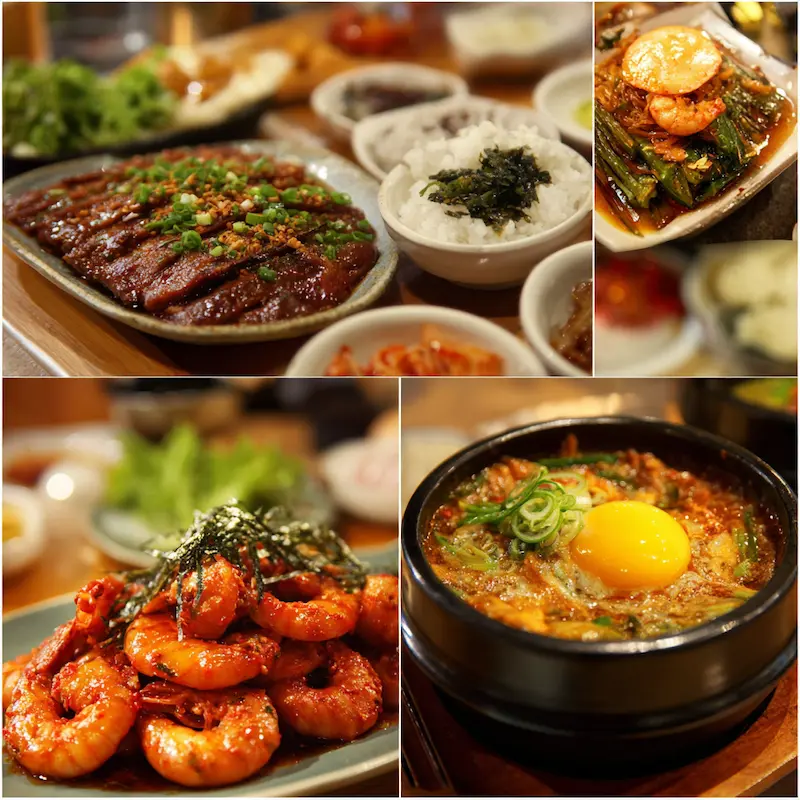
Travelling in Korea as a Muslim is becoming easier, especially in Seoul and major tourist areas.
This Muslim-friendly Korea guide explains how to find halal food, understand restaurant categories, locate prayer rooms and plan meals more confidently.
However, Korea should not be described as a fully halal-friendly destination.
Halal-certified restaurants are still limited, prayer facilities are easier to find in some areas than others, and terms such as Muslim Friendly or Pork Free do not automatically mean that a restaurant is halal-certified.
The safest approach is simple:
check the restaurant category, confirm ingredients and alcohol use, locate prayer spaces before you need them, and use official tourism information whenever possible.
With that preparation, Muslim travellers can enjoy Korea with considerably less uncertainty.
Muslim-Friendly Korea at a Glance
| Situation | What to check |
|---|---|
| Halal food | Confirm the restaurant’s exact category or certification |
| Muslim-friendly restaurant | Check whether only some dishes are halal and whether alcohol is sold |
| Pork-free restaurant | Do not assume pork-free means halal |
| Meat dishes | Ask whether the meat is halal-certified |
| Broths and sauces | Check for alcohol, pork and other ingredients |
| Shared cooking equipment | Ask when separation matters to you |
| Prayer | Check prayer-room locations before starting the day |
| Regional travel | Plan food and prayer options in advance |
| When unsure | Ask directly or choose another option |
The most important rule is:
Do not use “halal”, “Muslim-friendly” and “pork-free” as if they mean the same thing.
They do not.
Understand Korea’s Four Muslim-Friendly Restaurant Categories
The Korea Tourism Organization classifies selected Muslim-friendly restaurants into four categories.
Understanding these categories is one of the easiest ways to avoid confusion.
Halal Certified
These restaurants have certification from an accredited halal certification organisation.
For travellers who require formal third-party halal certification, this is the clearest category to look for.
Certification status can change, so check current information before visiting.
Self-Certified
According to the Korea Tourism Organization’s classification, these restaurants provide halal food and are certified as halal by Muslim restaurant owners themselves.
This is different from certification by an external halal certification body.
Whether this category meets your personal requirements is an individual religious decision.
Muslim Friendly
A Muslim-friendly restaurant may provide some halal dishes.
However, alcohol may also be sold.
The entire menu or kitchen should therefore not automatically be treated as halal.
Check the individual dishes and restaurant information.
Pork Free
A pork-free restaurant does not use pork under the KTO classification, but it does not offer a halal menu simply because it is pork-free.
Alcohol may also be sold.
This distinction is particularly important because avoiding pork alone does not answer questions about meat sourcing, alcohol, broth, sauces or preparation.
The Korea Tourism Organization’s Muslim-Friendly Travel guide provides current restaurant and prayer-room information.
Do Not Rely Only on a Restaurant Name or Old Blog Post
Restaurant conditions can change.
A restaurant that appeared in an old travel article may:
- move
- close
- change its menu
- change ownership
- stop offering a particular halal dish
- begin or stop selling alcohol
- change its certification status
Before making a special journey, check current information.
Useful sources include:
- the Korea Tourism Organization’s Muslim-Friendly Travel information
- the restaurant’s current official page
- recent menu information
- current certification information where relevant
- direct confirmation from the restaurant
This is especially important if eating at a formally halal-certified restaurant is essential to you.
Seoul Is Usually the Easiest Starting Point
Seoul generally offers the widest range of Muslim-friendly travel information and dining options.
Itaewon is particularly well known because of the Seoul Central Mosque and the concentration of Muslim-owned and Muslim-oriented businesses in the surrounding area.
Other major tourist districts may also have suitable options, but travellers should check individual restaurants rather than assuming that every restaurant in a tourist area can accommodate halal requirements.
If you are planning several days in Seoul, it can be useful to save a few dining options in different parts of the city rather than relying on one neighbourhood for every meal.
That gives you more flexibility when sightseeing.
Travelling Outside Seoul Requires More Planning
Muslim-friendly travel is possible outside Seoul, but options can be more limited and spread farther apart.
Major destinations such as Busan, Jeju and other popular tourism areas may have Muslim-friendly restaurants or prayer facilities.
Smaller cities and rural destinations can require more advance planning.
Before a regional trip, check:
- where you expect to eat
- whether the restaurant is still operating
- its current Muslim-friendly category
- whether reservation is required
- the nearest prayer space
- transport time between your itinerary and those facilities
Do not assume that information available for Seoul applies across the country.
A flexible backup meal can be useful when travelling beyond major tourism centres.
Halal Korean Food Requires More Than Removing Pork
One of the most important things for Muslim travellers to understand is that Korean food can contain ingredients that are not obvious from the finished dish.
Questions may involve:
- meat source
- broth
- sauces
- marinades
- cooking wine
- alcohol-containing seasonings
- prepared seasoning powders
- shared grills
- frying oil
- cooking utensils
For example, a dish that contains no visible pork may still use a broth or sauce that requires checking.
Likewise, replacing one meat ingredient does not automatically make an entire dish halal.
When the details matter to you, ask about the whole preparation, not only the visible meat.
Useful Questions Before Ordering
You do not need to interrogate every restaurant.
A few clear questions can help.
You may want to confirm:
- Is the restaurant halal-certified?
- Is this particular dish halal?
- Is the meat halal-certified?
- Is pork used in this dish?
- Is alcohol used in the sauce or broth?
- Are cooking utensils or grills shared?
- Does the restaurant serve alcohol?
If staff cannot answer clearly, that uncertainty is useful information.
Choosing another restaurant is completely reasonable.
For general advice on restaurant ordering systems, payment and self-service customs, see our Korean Restaurant Guide.
Travellers who also need to confirm specific allergens can use our Food Allergies in Korea guide for additional ingredient-checking strategies.
Vegetarian and Seafood Options Can Help, but Still Require Checking
Some Muslim travellers use vegetarian or seafood dishes when a halal-certified restaurant is unavailable.
This can sometimes be practical, but the dish still needs checking.
A vegetarian-looking Korean dish may contain:
- fish sauce
- anchovy broth
- meat stock
- alcohol-based seasoning
Seafood dishes may also contain sauces, broth or other ingredients that need confirmation.
The safest approach is not to assume.
Ask what is actually used in the dish.
Packaged Food Can Be a Useful Backup
Packaged food can be useful during:
- long train journeys
- regional travel
- late-night arrivals
- days when suitable restaurants are difficult to reach
Some Korean food products carry halal certification, but certification and ingredients can vary between products and markets.
Do not assume that every version of a familiar Korean brand has identical certification.
Check:
- the individual package
- ingredient list
- certification mark
- country-specific product information
Carrying a few suitable snacks can also reduce pressure when your itinerary changes unexpectedly.
Finding Prayer Rooms in Korea
Prayer facilities have become easier to locate in major airports, tourist facilities and some commercial or institutional spaces.
The Korea Tourism Organization maintains prayer-room information as part of its Muslim-Friendly Travel resources.
Its official guide includes a Prayer Rooms Map, which is much more useful than relying only on an old list copied into a travel article.
Check the location again before visiting because access conditions and operating arrangements can change.
Prayer Rooms at Incheon International Airport
Incheon International Airport currently lists several prayer rooms across its passenger facilities, including locations in Terminal 1, Terminal 2 and the concourse.
This makes the airport one of the easier places for Muslim travellers to plan prayer around arrival, departure or transit.
For the latest exact locations, check the Incheon International Airport Information & Services directory.
Airport facilities can change, so confirm the current terminal and prayer-room location rather than relying on an old screenshot.
Plan Food and Prayer Together
A Muslim-friendly itinerary becomes much easier when meal planning and prayer planning are treated as part of the day’s route.
For example, before leaving your accommodation, check:
- where you will be around lunch
- your likely dinner area
- the nearest suitable restaurant
- the nearest available prayer room
- how long transportation between them takes
- your backup option
This is particularly useful on regional day trips.
It prevents a situation where you reach an attraction easily but discover that your preferred dining or prayer option is far away.
Use Official Maps Instead of Memorising Lists
One reason I would not recommend memorising a long list of individual restaurants in advance is that restaurant information changes.
A more reliable starting point is the VISITKOREA Muslim-Friendly Travel portal.
It provides access to:
- Muslim-friendly restaurant information
- restaurant maps
- prayer-room information
- prayer-room maps
- Muslim-friendly travel resources
- 1330 Korea Travel Helpline support
Use these resources as a starting point, then confirm important details directly.
When You Need Travel Assistance
If you need general tourism information or help finding visitor services, Korea’s 1330 Travel Helpline can be useful.
For an immediate emergency:
112 — Police
119 — Fire, rescue and ambulance
For a broader explanation of emergency numbers and visitor support, see our Help & Safety guide.
A Simple Muslim-Friendly Korea Checklist
Before travelling, consider saving:
- KTO Muslim-Friendly Travel page
- several suitable restaurants near your accommodation
- one or two backup meal options
- nearby prayer-room locations
- Korean addresses of important places
- accommodation information
- 1330
- 112 and 119
Before eating, check:
- exact restaurant category
- halal certification if required
- meat source
- pork
- alcohol
- broth and sauces
- shared preparation when relevant
Before a regional trip, check food and prayer options again.
Final Thoughts
Korea is becoming easier for Muslim travellers, but careful planning still matters.
The biggest mistake is assuming that every Muslim-friendly or pork-free restaurant is halal-certified.
It is not.
Use the Korea Tourism Organization’s categories carefully.
Check ingredients and preparation when they matter to you.
Use current prayer-room information rather than relying on an old list.
Plan more carefully outside major tourist areas.
And keep a backup meal option when your itinerary is uncertain.
Muslim travellers do not need every restaurant in Korea to be halal.
What matters is having clear, accurate information and enough reliable options to make informed choices.
That is where Korea has improved, and it is also where careful checking remains important.
Information note: This guide provides general travel information. It does not provide religious rulings, halal certification decisions or dietary guarantees. Restaurant classifications, certification, menus, ingredients, alcohol policies, kitchen practices and prayer-room access can change. Travellers should verify requirements through official tourism resources, relevant certification organisations and individual businesses.
Last fact-checked: September 2026