The Numbers Tell the Story
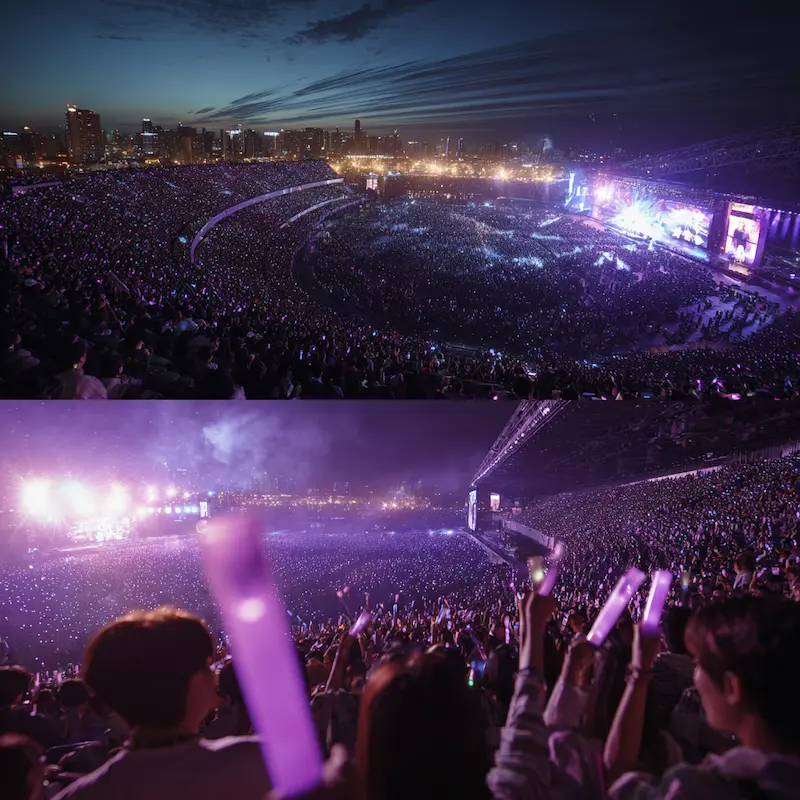
When BTS took the stage at Goyang Stadium on 9 April 2026, something remarkable happened. South Korea’s tourism apparatus didn’t just welcome fans back—it welcomed a new era of cultural influence that would ripple across Southeast Asia for months to come.
The statistics are staggering. In March 2026 alone, South Korea welcomed 2.06 million foreign visitors, marking the highest single-month tourist arrival in the country’s recorded history. This wasn’t a gradual climb. According to government data released in April, the surge was directly tied to anticipation surrounding BTS’s comeback concert and the broader ARIRANG World Tour announcement. The first quarter of 2026 saw 4.76 million foreign arrivals—a figure that fundamentally reshapes how the world views Korean tourism.
But here’s what makes this moment different: BTS isn’t just bringing fans to Seoul. They’re bringing them to Busan, Bangkok, Kuala Lumpur, Singapore, Jakarta, and Manila. For the first time, a single K-pop tour is creating a coordinated tourism boom across an entire region.
The Comeback That Changed Everything
BTS’s return wasn’t gradual. After years of focusing on solo projects and military service preparations, the seven members announced their full-group comeback through HYBE in early April 2026. The ARIRANG World Tour—named after Korea’s national anthem—would span 34 cities across 23 countries with 82 shows, running from April 2026 through March 2027.
The scale is unprecedented. The tour kicked off with three sold-out nights in Goyang (9, 11, 12 April), followed by Tokyo (17-18 April), and then a relentless North American schedule through September. But for Southeast Asia, the real story unfolds in the final quarter of 2026 and early 2027.
Southeast Asia Tour Dates (Official Schedule):
•Thailand: Bangkok (3, 5-6 December 2026)
•Malaysia: Kuala Lumpur (12-13 December 2026)
•Singapore: Four shows (17, 19-20, 22 December 2026)
•Indonesia: Jakarta (26-27 December 2026)
•Philippines: Manila (13-14 March 2027)
This isn’t just a concert schedule. It’s a tourism infrastructure challenge that hotels, airlines, and local governments are scrambling to accommodate.
Why Southeast Asia Matters for BTS
Southeast Asia represents one of the fastest-growing markets for K-pop consumption globally. The region’s combined population exceeds 700 million, with a median age well below 30 and rising disposable incomes. More importantly, the region has become a testing ground for how Korean cultural products can scale beyond East Asia.
HYBE’s Q1 2026 earnings report—released in late April—revealed revenues of 698.3 billion won ($468 million USD), up 39.5% year-on-year. The company explicitly attributed this record quarter to BTS’s comeback and tour ticket sales. For context, this single quarter’s revenue rivals the annual GDP of some smaller nations. The economic machinery behind BTS is operating at full capacity, and Southeast Asia is a primary beneficiary.
The region’s tourism infrastructure is already feeling the pressure. Airlines operating routes to Bangkok, Manila, and Singapore are adding flights. Hotels in these cities are raising rates and implementing booking restrictions to manage demand. Local governments are preparing for what they anticipate will be the largest single cultural event in their cities’ recent history.
The Tourism Multiplier Effect
Here’s where the story becomes genuinely interesting for Southeast Asian economies. BTS fans don’t just buy concert tickets. They stay longer, spend more, and explore beyond the concert venue.
According to reporting from Korean tourism authorities, foreign visitors who attended BTS’s Goyang concerts in April stayed an average of 5.2 days—significantly longer than the typical tourist stay of 3.1 days. More tellingly, they spent approximately 20% more on accommodation, dining, and shopping than non-concert tourists. These aren’t casual visitors. They’re committed consumers of Korean culture who view the concert as a gateway to deeper engagement with Korea.
When this pattern replicates across Southeast Asia, the economic implications are substantial. A single concert in Manila could generate an estimated $50-80 million in direct tourism spending (hotels, restaurants, transport, shopping). Multiply that across five Southeast Asian cities, and you’re looking at a regional tourism boost exceeding $300 million for the final quarter of 2026 and early 2027.
But the indirect effects matter equally. BTS fans document their experiences obsessively on social media. Every concert becomes a marketing event for the host city. Bangkok’s street food scene, Singapore’s luxury shopping, Manila’s nightlife—these become part of the BTS narrative, amplified across TikTok, Instagram, and YouTube to millions of viewers who may never attend a concert but are influenced by what they see.
Southeast Asia’s K-Pop Fandom Infrastructure
What distinguishes Southeast Asia from other regions is the maturity of its K-pop fandom infrastructure. Fan clubs in the Philippines, Thailand, and Indonesia aren’t casual interest groups—they’re sophisticated organisations with dedicated fundraising, coordinated merchandise distribution, and established relationships with local media.
The Philippines, in particular, has emerged as one of the world’s most engaged K-pop markets. Manila’s BTS fanbase—known locally as “ARMY”—has organised stadium-scale viewing parties for major announcements and maintains active coordination with international fan networks. When BTS announced their Manila dates (13-14 March 2027), speculation about venue capacity and ticket allocation dominated Philippine entertainment media for weeks.
Thailand’s Bangkok fanbase operates similarly. The city has become a de facto Southeast Asian hub for K-pop culture, hosting multiple K-pop-themed cafes, merchandise shops, and fan meetup spaces. BTS’s December dates are expected to draw fans not just from Thailand but from neighbouring Laos, Cambodia, and Myanmar—creating a regional tourism effect that extends beyond Thailand’s borders.
Singapore represents a different dynamic. As a wealthy, cosmopolitan hub with strong English-language media presence and high disposable incomes, Singapore’s BTS fanbase tends toward older demographics (late 20s to early 40s) with significant purchasing power. The four Singapore shows are expected to attract not just local fans but affluent BTS enthusiasts from across the region willing to travel for premium concert experiences.
The Broader K-Culture Moment
BTS’s comeback isn’t occurring in isolation. It’s part of a broader K-culture expansion across Southeast Asia that includes K-drama streaming dominance, K-beauty retail proliferation, and Korean food market growth. The timing matters.
In April 2026, just as BTS was launching their tour, South Korea’s government released data showing that Korean content exports rose 5.9% to $14.91 billion in 2024, with music leading the growth. The Korean content industry overall posted revenues of 161.48 trillion won—a 2.6% increase—with K-pop music agencies driving disproportionate growth.
This context matters because it reveals something fundamental: BTS isn’t an anomaly. They’re the flagship product of an industry that’s systematically scaling across Southeast Asia. When BTS fans travel to Bangkok or Manila, they’re not just consuming music. They’re entering an ecosystem of Korean cultural products—streaming services, cosmetics brands, food products, fashion—that have all positioned themselves to capture this moment.
The Challenges Nobody’s Talking About
Not everything about this tourism boom is straightforward. Southeast Asian cities are grappling with infrastructure constraints that a sudden influx of concert tourism exposes.
Bangkok’s hotel capacity, while substantial, faces seasonal pressure during December. Kuala Lumpur’s public transport system, though modern, isn’t dimensioned for the kind of surge a four-night BTS residency creates. Manila’s venue situation remains unsettled—as of early May 2026, the exact concert location hadn’t been officially confirmed, creating uncertainty for fans and local authorities alike.
There’s also a cultural integration question. BTS fandom, particularly in Southeast Asia, skews young and digitally native. Local authorities are learning to manage the social media dynamics of a global fanbase coordinating in real-time. Concert security, crowd management, and post-concert celebration spaces require planning that goes beyond traditional event management.
Currency fluctuations add another layer. The Thai baht has strengthened significantly against the Korean won and US dollar, making Bangkok concerts relatively expensive for regional fans. This could shift the demographic composition of attendees in ways that affect local economic impact.
What Happens After the Concerts End
The real question isn’t whether BTS will draw massive crowds to Southeast Asian cities in late 2026 and early 2027. They will. The question is whether this tourism surge creates lasting infrastructure and economic benefits or remains a temporary spike.
Some indicators suggest the former. Airlines are adding permanent routes. Hotels are expanding capacity. Local governments are investing in concert venue infrastructure. In Manila, the venue uncertainty itself has sparked broader discussions about the city’s need for world-class concert facilities.
More subtly, BTS’s tour is establishing Southeast Asia as a legitimate market for major K-pop tours going forward. If ARIRANG succeeds—and current indicators suggest it will—other K-pop agencies will follow. BLACKPINK, NewJeans, Stray Kids—all have significant Southeast Asian fanbases. BTS isn’t just bringing tourism to the region. They’re signalling to the entire K-pop industry that Southeast Asia is worth investing in.
The Bigger Picture
What’s actually happening here is a shift in how cultural influence flows. For decades, tourism followed entertainment. Fans watched K-dramas on Netflix and then travelled to Korea to visit filming locations. BTS is inverting that model. The tour itself becomes the primary draw, and everything else—the city, the food, the culture—becomes secondary content.
This matters because it suggests a maturation of K-pop fandom. Early K-pop tourism was driven by dedicated enthusiasts willing to travel significant distances for niche experiences. BTS’s Southeast Asia tour is attracting mainstream audiences—people who might not identify as hardcore K-pop fans but are drawn by cultural momentum, social media visibility, and the sheer scale of the event.
For Southeast Asian tourism boards, this is both opportunity and challenge. The opportunity is obvious: millions of visitors, billions in spending, global media attention. The challenge is ensuring that this tourism boom translates into sustainable economic development rather than temporary congestion.
Looking Forward
By the time BTS concludes their Manila shows in March 2027, they will have performed in front of millions of fans across Southeast Asia. The economic impact will be measurable in hotel occupancy rates, airline revenue, retail sales, and social media engagement metrics. The cultural impact will be harder to quantify but potentially more significant—a generation of Southeast Asian young people will have experienced a global cultural moment that positioned their region as central to the future of K-pop.
For now, the countdown is on. Bangkok in December. Manila in March. And across Southeast Asia, the infrastructure of fandom—fan clubs, merchandise networks, social media coordination—is preparing for what many believe will be the defining cultural event of 2026-2027 in the region.
The numbers suggest they’re right to prepare. When 2.06 million people visit a country in a single month for one cultural phenomenon, you’re not looking at a trend. You’re looking at a transformation.