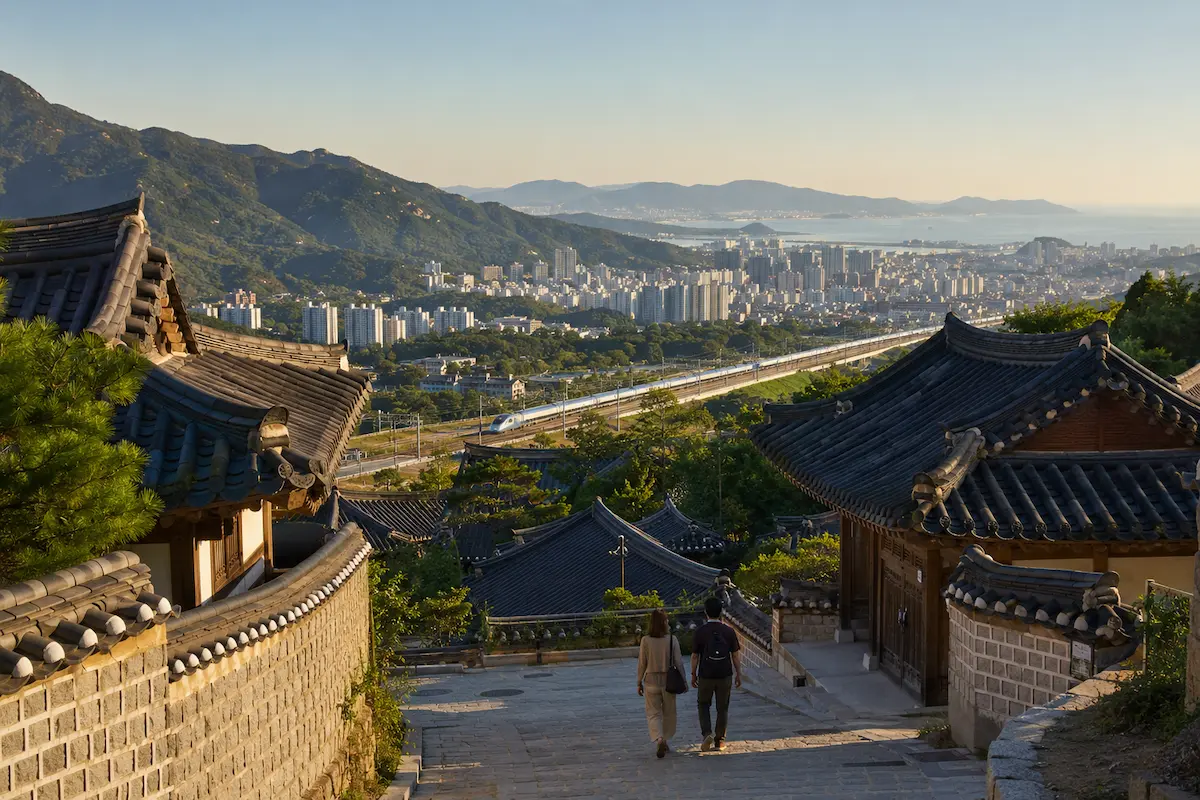
Planning 14 days in Korea gives first-time visitors enough time to experience Seoul, Gyeongju, Busan and Jeju without turning every day into a race. This itinerary combines historic landmarks, modern neighbourhoods, coastal scenery, traditional markets and practical travel time between regions.
The route assumes that you will enter Korea through the Seoul area and depart from Seoul or Incheon International Airport. If your international flight leaves early on Day 14, return to Seoul on Day 13 and stay near the airport.
14-Day Korea Itinerary at a Glance
- Day 1: Arrive in Seoul and settle into your neighbourhood
- Day 2: Gyeongbokgung Palace, Bukchon, Insadong and Gwangjang Market
- Day 3: Bongeunsa, COEX and modern Seoul
- Day 4: Choose a Seoul neighbourhood that matches your interests
- Day 5: A flexible Seoul day for shopping, museums or a slower pace
- Day 6: Travel from Seoul to Gyeongju
- Day 7: Bulguksa, optional Seokguram and central Gyeongju
- Day 8: Travel from Gyeongju to Busan
- Day 9: Explore eastern Busan and the coast
- Day 10: Discover historic and central Busan
- Day 11: Fly from Busan to Jeju
- Day 12: Explore eastern Jeju
- Day 13: Choose western, southern or mountain Jeju
- Day 14: Return to Seoul and depart Korea
Check destination information through the official Korea Tourism Organization website before travelling. Opening hours, admission arrangements, transport schedules and seasonal restrictions can change.
Before Starting Your 14 Days in Korea
Book accommodation and long-distance transport around the structure of the route rather than treating every attraction as fixed.
A practical accommodation plan is:
- Five nights in Seoul
- Two nights in Gyeongju
- Three nights in Busan
- Three nights in Jeju
This arrangement reduces hotel changes while still giving each region enough time. Travellers with an early international departure should consider spending the final night near Seoul or Incheon Airport instead of Jeju.
Use Naver Map or KakaoMap for local navigation. Save the Korean names and addresses of hotels, stations and major attractions before each transfer day.
Days 1–5: Seoul
Day 1: Arrive in Seoul and Keep the Evening Simple
Keep your first day deliberately light. Immigration, baggage collection, airport transport and hotel check-in may take longer than expected, particularly after a long flight.
Choose airport transport according to your luggage, arrival time and hotel location:
- AREX for convenient access to Seoul Station or Hongdae
- Airport limousine bus when a stop is close to your hotel
- Taxi for groups, late arrivals or travellers carrying several bags
After check-in, stay close to your accommodation. Have a relaxed meal, locate the nearest convenience store and station, and confirm the route for the following morning.
If you arrive late, skip sightseeing completely. Rest is more valuable than beginning a 14-day itinerary exhausted.
For airport facilities and current passenger information, use the official Incheon International Airport website.
Day 2: Historic Seoul, Bukchon and Gwangjang Market
Begin your first full sightseeing day at Gyeongbokgung Palace. Arrive near opening time when possible and allow enough time to explore the main palace grounds without trying to enter every building.
Opening days and visitor arrangements can change because of holidays, maintenance or special events. Confirm current Seoul tourism information through the official Visit Seoul website.
Continue towards Bukchon Hanok Village, but remember that it is also a residential neighbourhood. Keep your voice low, follow access signs and avoid photographing residents without permission.
Walk towards Insadong for lunch, tea houses, crafts and traditional streets. Finish with an early dinner at Gwangjang Market.
At the market, walk through the food area before ordering. Choose stalls that clearly display menus and prices, and order only a few dishes at a time.
Day 3: Bongeunsa, COEX and Modern Seoul
Spend Day 3 in southeastern Seoul, combining an active Buddhist temple with the modern shopping and business districts around COEX.
Begin at Bongeunsa Temple. Dress respectfully, speak quietly and avoid photographing people during worship. Allow approximately one hour unless you are attending a scheduled programme.
Cross towards COEX for lunch and an indoor break. Choose one main activity:
- Visit Starfield Library
- Explore the surrounding shops
- Book the aquarium if it is a priority
- Attend a scheduled exhibition or event
After lunch, stay near Samseong or choose one additional Gangnam stop. Avoid moving repeatedly between distant neighbourhoods south of the river.
For an evening view, consider Jamsil or another viewpoint only when the weather is clear. Cloud, rain, fine dust and glare can significantly reduce visibility.
Day 4: Choose One Seoul Neighbourhood
Use Day 4 to explore a neighbourhood that matches your interests instead of combining several distant areas.
Good choices include:
Hongdae and Yeonnam
Choose this area for cafés, independent shops, casual restaurants and a lively evening atmosphere. It is also convenient for travellers staying near the airport railway corridor.
Seongsu and Seoul Forest
Choose Seongsu for design shops, cafés, converted industrial spaces and a walk through Seoul Forest. Individual businesses change frequently, so save several options instead of building the day around one café.
Myeongdong and Euljiro
Choose this area for central shopping, restaurants and convenient transport. Compare prices before purchasing cosmetics or tourist products.
Itaewon and Hannam
Choose this area for international dining, galleries and shops. The terrain includes hills, so check walking routes before starting.
Keep all activities geographically close. One well-planned neighbourhood is more enjoyable than spending the day changing subway lines.
Day 5: A Flexible Final Day in Seoul
Use Day 5 for anything you missed, but do not automatically fill it with major attractions.
Possible plans include:
- A museum or indoor activity in poor weather
- Final shopping in Myeongdong or a department store
- A slower return to a favourite neighbourhood
- A riverside walk when conditions are suitable
- Laundry, packing and preparation for the regional journey
Confirm your Seoul hotel checkout time and the route to your departure station for Day 6. Pack a smaller day bag if possible so that the transfer to Gyeongju is easier.
If you would prefer a shorter Seoul-focused route, see the internal guides for 3 days in Korea and 5 days in Korea.
Days 6–7: Gyeongju
Day 6: Travel from Seoul to Gyeongju
Travel by KTX from Seoul Station to Singyeongju Station, then continue to central Gyeongju by local bus or taxi.
Check train schedules and ticket availability through the official KORAIL website. Reserve popular travel times in advance, especially during weekends and Korean public holidays.
Do not confuse Singyeongju Station with central Gyeongju. The high-speed rail station is outside the historic centre, so allow time for the local connection.
After checking in, begin with a compact central route:
- Daereungwon Tomb Complex
- Hwangnidan Street
- Cheomseongdae
- Donggung Palace and Wolji Pond
Choose the final stop according to your energy and sunset time. There is no need to complete every attraction on the first afternoon.
Gyeongju contains multiple archaeological and historic sites rather than one enclosed attraction. For heritage context, see UNESCO’s official page for the Gyeongju Historic Areas.
Day 7: Bulguksa and Central Gyeongju
Morning: Bulguksa Temple
Start at Bulguksa Temple. The journey from central Gyeongju takes time, so check the complete local route the previous evening.
Bulguksa is an active temple and UNESCO World Heritage property. Follow posted restrictions, dress respectfully and allow enough time to explore without rushing.
Use UNESCO’s official information about Seokguram Grotto and Bulguksa Temple for historical background. Confirm current opening hours, admission and local access through on-site notices or the local tourist information centre.
Optional Addition: Seokguram Grotto
Add Seokguram only when the weather, transport and mobility conditions are suitable. It is located on the mountain above Bulguksa and should not be treated as a quick walk from the temple.
Road conditions, shuttle arrangements and access rules may change. Confirm locally before travelling uphill. If conditions are poor, spend more time at Bulguksa and return to central Gyeongju.
Afternoon and Evening
Return to central Gyeongju and choose one or two activities that you did not complete on Day 6.
A relaxed afternoon might include:
- Gyeongju National Museum
- More time around Daereungwon
- Cafés and small shops near Hwangnidan Street
- A second visit to the Wolseong or Cheomseongdae area
Avoid scheduling a late night because the following day includes another hotel transfer.
Days 8–10: Busan
Day 8: Travel from Gyeongju to Busan
Travel from Gyeongju to Busan by train or intercity bus. Compare the complete journey from your Gyeongju hotel to your Busan accommodation rather than selecting transport based only on the advertised travel time.
After arrival, check in and keep the afternoon simple.
Choose one area close to your hotel:
- Seomyeon for convenient transport and dining
- Nampo for markets and older central Busan
- Haeundae for the eastern coast
- Gwangalli for beach access and evening bridge views
Do not cross the entire city immediately after arrival. Busan is geographically spread out, and travel between neighbourhoods can take longer than the map suggests.
Use the official Visit Busan website to check current destination and event information.
Day 9: Eastern Busan and the Coast
Spend Day 9 in eastern Busan.
Begin with Haedong Yonggungsa Temple if it is a priority. It is popular and can become crowded, so an earlier visit is generally easier. Wear supportive shoes because the site includes steps and sloping paths.
Continue towards Haeundae. Choose activities according to the weather:
- Walk along Haeundae Beach
- Visit a nearby market for lunch
- Explore coastal paths
- Use an indoor attraction during rain or extreme heat
Finish at Gwangalli Beach if visibility is good. The bridge view is attractive after dark, but allow enough time for the return journey to your hotel.
Avoid combining too many distant coastal attractions. Busan’s eastern shoreline is better experienced at a comfortable pace.
Day 10: Historic and Central Busan
Use Day 10 for the older central districts.
Begin around Gamcheon Culture Village if you want hillside streets, viewpoints and colourful buildings. It remains a residential area, so respect signs and private property.
Continue towards Nampo and choose from:
- Jagalchi Market
- BIFF Square
- Gukje Market
- Yongdusan Park
- Nearby shopping streets
Markets can be busy and individual vendors operate their own hours. Compare prices and confirm the cost before ordering seafood or purchasing goods.
Keep the evening flexible. Pack for the flight to Jeju and confirm your airport route, airline baggage allowance and departure terminal.
For a more detailed route covering Seoul, Gyeongju and Busan, see the internal 10 days in Korea itinerary.
Days 11–13: Jeju
Day 11: Fly from Busan to Jeju
Fly from Gimhae International Airport to Jeju International Airport. Allow enough time for the journey from your Busan hotel, baggage check and airport security.
After arriving in Jeju, collect a rental car only if you are legally eligible, properly insured and comfortable driving under local conditions. Travellers without a car should base themselves near convenient bus routes or use organised day tours selectively.
Check in and keep the remaining day easy. Depending on your hotel location, consider:
- A walk near Jeju City
- A local market
- A coastal café
- An early dinner and route planning for Day 12
Jeju’s attractions are spread across the island. Group each day by region instead of crossing the island repeatedly.
Use the official Visit Jeju website to confirm current attraction, weather and regional information.
Day 12: Explore Eastern Jeju
Use Day 12 for eastern Jeju. Choose a realistic combination based on transport, weather and mobility.
Possible stops include:
- Seongsan Ilchulbong
- Seopjikoji
- A nearby beach
- A local museum or indoor attraction
- Coastal villages and cafés
Start early if Seongsan Ilchulbong is your main priority. Access conditions may change during severe weather, and the climb requires suitable footwear.
Do not attempt to add every attraction in eastern Jeju. Select one major landscape, one secondary stop and a comfortable meal break.
If travelling by public transport, verify the return route before leaving the final stop. Bus frequency can be lower than in Seoul or Busan.
Day 13: Choose Western, Southern or Mountain Jeju
Do not try to cover the entire island on the final full day. Choose one regional plan.
Option 1: Western Jeju
Choose western Jeju for coastal scenery, beaches, cafés and a slower final day. Keep the route compact and avoid adding distant southern attractions.
Option 2: Southern Jeju
Choose the Seogwipo area for waterfalls, coastal walks, markets and a more urban base in southern Jeju. Confirm trail and waterfall access after heavy rain or strong wind.
Option 3: Hallasan
Attempt Hallasan only if your fitness, equipment, weather and available daylight are appropriate. Some routes or summit access may require advance arrangements, and restrictions can change.
Check official notices before departure and never rely solely on a general itinerary for mountain conditions. If the weather is unsuitable, choose a coastal or indoor route instead.
Preparing for Day 14
If your international flight from Incheon leaves early or is booked on a separate ticket, fly back to Seoul on Day 13 and stay near the airport.
A same-day Jeju-to-Seoul flight followed by a separate international ticket carries significant risk. Weather, delays, baggage collection and airport transfers can cause a missed connection.
Day 14: Return to Seoul and Depart Korea
Confirm your airport, terminal and airline before leaving Jeju. Flights from Jeju commonly arrive at Gimpo Airport, while many international flights depart from Incheon International Airport.
Gimpo and Incheon are separate airports. Include the transfer between them when planning your connection.
Allow generous time for:
- Domestic flight delays
- Baggage collection
- Travel between airports
- International check-in
- Security and immigration
- Unexpected traffic or queues
If your international flight is late and all tickets are safely connected, a same-day return may be possible. If the bookings are separate, travelling to Seoul the previous day is the safer plan.
Do not schedule sightseeing between airports unless you have an unusually long and carefully calculated connection.
Estimated Pace and Transport Notes
This itinerary involves five hotel bases or travel stages: Seoul, Gyeongju, Busan, Jeju and the final airport connection.
To make the route manageable:
- Reserve long-distance transport before busy weekends or holidays
- Avoid changing hotels within the same city
- Pack light enough to handle stations and local transfers
- Confirm the full door-to-door route, not only the train or flight duration
- Leave optional attractions out when weather or fatigue affects the schedule
- Keep digital and offline copies of important reservations
A transport pass is not automatically the best value for every traveller. Compare the journeys you will actually take before purchasing any rail or regional pass.
How to Adjust This 14-Day Korea Itinerary
If You Prefer a Slower Trip
Remove one destination instead of reducing rest on every day.
For example:
- Spend more time in Seoul, Gyeongju and Busan, and skip Jeju
- Visit Seoul, Busan and Jeju, and skip Gyeongju
- Keep Jeju but replace one sightseeing day with a completely flexible rest day
If You Have Less Time
Use a shorter itinerary rather than forcing the complete route into fewer days:
- Follow the 5 days in Korea itinerary for Seoul and one straightforward day trip
- Use the 7 days in Korea itinerary for Seoul, Gyeongju and Busan
- Follow the 10 days in Korea itinerary for a more complete three-city journey
If You Have More Time
Add extra nights instead of adding more attractions to the existing days.
Useful additions include:
- Another Seoul neighbourhood
- A slower second day in Gyeongju
- An additional coastal day in Busan
- More time in Jeju
- An overnight stay near Incheon Airport before departure
Final Thoughts on Spending 14 Days in Korea
Fourteen days in Korea gives first-time visitors enough time to experience several distinct sides of the country without changing accommodation every night. Seoul introduces historic and modern urban Korea, Gyeongju provides archaeological and cultural context, Busan adds markets and coastal scenery, and Jeju creates a slower final stage.
Treat this itinerary as a flexible framework rather than a checklist. Check official information shortly before each visit, keep geographically related attractions together and remove optional stops whenever the schedule begins to feel rushed.
The most successful 14 days in Korea will not be the trip with the greatest number of attractions. It will be the trip that leaves enough time to understand each destination, manage transfers safely and enjoy the journey without constant pressure.