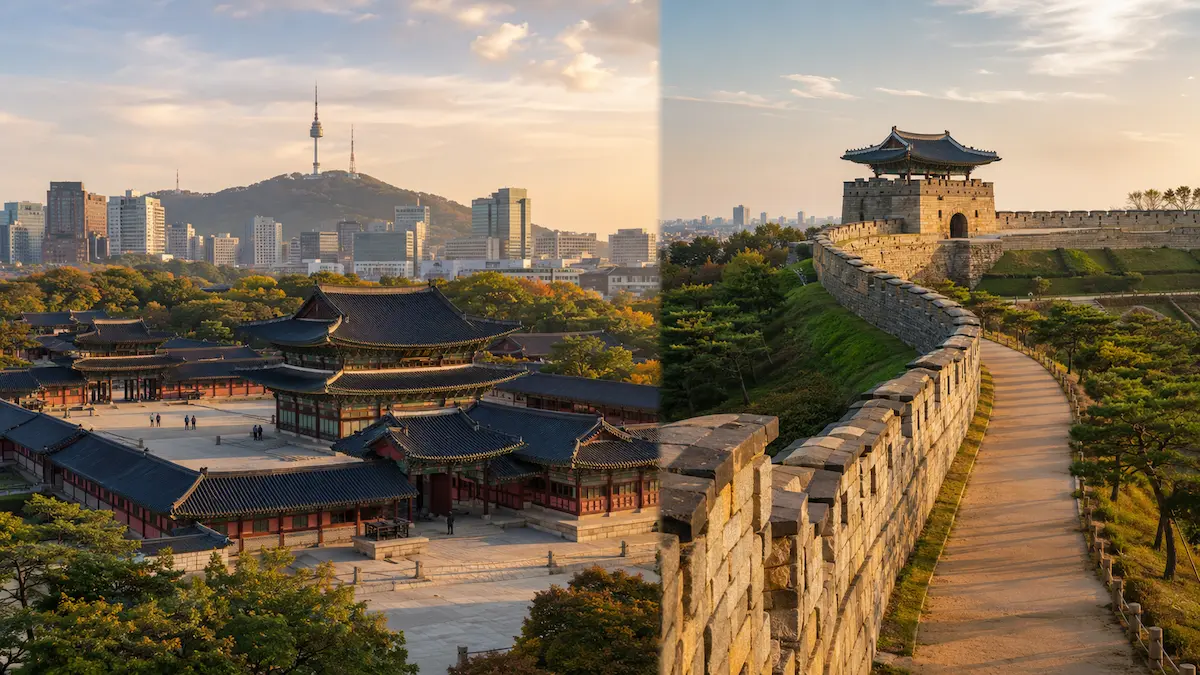
Planning 5 days in Korea gives first-time visitors enough time to explore Seoul at a comfortable pace and take one straightforward day trip to Suwon. This itinerary combines historic palaces, traditional neighbourhoods, markets, modern Seoul and a full day around Suwon Hwaseong Fortress.
The plan assumes that you will stay in one hotel in Seoul and have five usable sightseeing days. If your arrival or departure takes up most of a day, move the optional stops to another day or shorten the final day.
5-Day Korea Itinerary at a Glance
- Day 1: Arrive in Seoul and keep the first evening simple
- Day 2: Gyeongbokgung Palace, Bukchon, Insadong and Gwangjang Market
- Day 3: Modern Seoul, including Gangnam, COEX and an evening viewpoint
- Day 4: Suwon day trip for Hwaseong Fortress, the temporary palace and Haengnidan Street
- Day 5: Choose a relaxed Seoul neighbourhood, complete your shopping and prepare for departure
Who This Itinerary Is For
This route is designed for first-time visitors who want to use Seoul as their base, avoid changing hotels and experience both historic and modern Korea. It works best for travellers who are comfortable using public transport and walking for several hours each day.
Day 1: Arrive in Seoul and Keep the First Evening Simple
Your first day should be deliberately light. Immigration, baggage collection, airport transport and hotel check-in can take longer than expected, especially after a long flight. The aim is to settle in, solve the basic practical tasks and avoid starting the trip exhausted.
Getting from the Airport to Seoul
Choose your airport transport according to your luggage, arrival time and hotel location.
• AREX: A practical option for travellers staying near Seoul Station or Hongdae.
• Airport limousine bus: Often convenient when a bus stops close to your hotel and you have large luggage.
• Taxi: The simplest door-to-door option, particularly for a group, a late arrival or several suitcases.
Before leaving the airport, make sure your phone has working mobile data. Use our Korean map apps guide to set up Naver Map or KakaoMap for local navigation, because Korean addresses and public transport information may not always appear accurately in overseas map services.
What to Do After Check-in
Stay close to your accommodation rather than travelling across the city. Have a relaxed Korean meal, locate the nearest convenience store and station, and check the route you will use the following morning.
If you still need a transport card, purchase one from a convenience store or subway station and add enough balance for your first journeys. Keep a small amount of Korean won available because some card purchases or top-ups may require cash.
Choose One Easy Evening Area
Select only one area based on where you are staying:
• Myeongdong or Euljiro: Convenient for dinner, basic shopping and an evening walk near central Seoul.
• Hongdae or Yeonnam: Suitable for cafés, casual dining and a livelier first evening.
• Insadong or Ikseondong: A gentler introduction to traditional streets, small restaurants and tea houses.
If you arrive late, skip sightseeing completely. Eat near the hotel, prepare what you need for the morning and rest. The main itinerary begins on Day 2.
Day 2: Historic Seoul, Bukchon and Gwangjang Market
Begin your first full sightseeing day in central Seoul, where several major historic areas can be combined without repeatedly crossing the city. Start at Gyeongbokgung Palace, continue through Bukchon and Insadong, and finish with an early dinner at Gwangjang Market.
Morning: Gyeongbokgung Palace
Arrive near opening time if possible, particularly at weekends and during peak travel seasons. Allow around two hours for the main palace grounds without trying to see every building.
Opening days and hours can change because of holidays, seasonal schedules, special events or maintenance. Check the official palace website shortly before your visit. If the palace is closed on your chosen day, swap Day 2 with another Seoul day rather than rebuilding the entire itinerary.
Late Morning: Bukchon Hanok Village
Continue towards Bukchon after leaving the palace. Bukchon is a living residential neighbourhood, not an open-air museum. Keep your voice low, avoid blocking entrances and follow all signs restricting visitor access.
Access to certain alleys is limited to visitors between 10:00 and 17:00. Stay within the permitted areas, follow on-site instructions and never treat private homes as photo locations.
Lunch and Afternoon: Insadong
Continue towards Insadong for lunch, traditional tea, crafts and small shops. This is a useful point to slow down after the palace and Bukchon rather than adding another major attraction.
Choose only one optional stop nearby, such as a tea house, a small gallery or Jogyesa Temple. Leave enough time and energy for the market later in the day.
Evening: Gwangjang Market
Finish at Gwangjang Market for an early dinner. Walk through the food area once before ordering, choose stalls with clearly displayed menus and prices, and order only a few dishes at a time.
A simple order for two people might include:
- One mung bean pancake or another savoury pancake to share
- One noodle or rice dish
- One additional snack only if you still want it
Opening times differ by market section, individual vendor and day. Check current information before relying on a particular shop or food stall.
Practical Notes for Day 2
- Wear comfortable shoes because the palace grounds and Bukchon involve long periods of walking and some uneven surfaces.
- Keep Bukchon optional if you are tired, the weather is poor or visitor access is restricted.
- Do not schedule a distant evening attraction after Gwangjang Market. Return to your hotel or take a short walk along Cheonggyecheon.
Day 3: Modern Seoul, COEX and an Evening View
Spend Day 3 in the south-eastern part of Seoul, combining a traditional temple with the modern shopping, business and entertainment districts around COEX and Jamsil. The route is deliberately compact so that you can spend less time changing lines and more time exploring at a comfortable pace.
Morning: Bongeunsa Temple
Begin at Bongeunsa Temple before the COEX area becomes busy. The temple sits directly opposite the modern convention and shopping district, creating one of Seoul’s clearest contrasts between old and new.
Bongeunsa is an active Buddhist temple. Dress respectfully, keep your voice low, avoid photographing people during worship and do not enter restricted spaces. Allow around one hour unless you are joining a scheduled programme.
Late Morning and Lunch: COEX
Cross towards COEX and use the underground complex for lunch, shopping or a weather-proof break. COEX is large, so save the exact entrance and restaurant location in Naver Map or KakaoMap rather than relying only on signs.
Choose one main activity instead of trying to complete everything:
- Visit Starfield Library and explore the surrounding shops
- Book the aquarium if it is a priority for your group
- Have a relaxed lunch and leave enough time for Jamsil later
Starfield Library is a public space inside COEX Mall, but exhibitions, events and individual shop hours can change. Check current information before your visit.
Afternoon: Choose One Gangnam Stop
After lunch, choose only one additional Gangnam stop. Travelling between every famous neighbourhood south of the river can consume more time than expected.
- Samseong and COEX: Stay nearby for shopping, cafés or an exhibition
- Gangnam Station: Choose this for busy streets, shops and an urban atmosphere
- Seonjeongneung: Choose this for a quieter outdoor break, subject to current opening conditions
Skip this optional stop if you want a slower day or need more time at COEX.
Evening: Jamsil and Seoul Sky
Travel to Jamsil in the late afternoon. If visibility is good, Seoul Sky offers a high-level view across the city from Lotte World Tower. Reserve a timed ticket in advance when necessary and arrive before your allocated entry time.
Cloud, rain, fine dust and glare can reduce the view. Check the weather and air quality before paying for the observatory. If conditions are poor, use the shopping centre, lakeside area or another indoor activity instead.
Practical Notes for Day 3
- Keep Bongeunsa and COEX together because they are directly opposite each other.
- Do not add both Gangnam Station and several other distant neighbourhoods unless your group moves quickly.
- Treat Seoul Sky as weather-dependent and confirm current hours, ticket conditions and last admission before travelling.
- If you prefer not to pay for an observatory, skip Seoul Sky and take a short walk around Seokchon Lake instead.
Day 4: Suwon Hwaseong Fortress and Haengnidan Street
Use Day 4 for one straightforward day trip from Seoul to Suwon. The historic centre combines the fortress walls, Hwaseong Haenggung Palace and the cafés and small shops around Haengnidan Street, so you can explore several highlights without changing accommodation.
Getting from Seoul to Suwon
Travel to Suwon Station by subway or train, then continue to the fortress area by local bus or taxi. Journey times vary considerably according to your starting district and service, so check the complete door-to-door route in Naver Map or KakaoMap the night before.
Do not confuse Suwon Station with the fortress itself. The main historic area is several kilometres from the station, and you will need a local connection.
Morning: Hwaseong Haenggung Palace
Begin at Hwaseong Haenggung Palace, the temporary palace used by King Jeongjo during visits to Suwon. Starting here provides useful historical context before you walk along the surrounding fortress.
Opening hours, admission arrangements and cultural programmes can change. Check the official Suwon Hwaseong guide shortly before your visit and arrive earlier if you are travelling at a weekend or during a festival.
Late Morning: Walk a Manageable Fortress Section
Suwon Hwaseong is a UNESCO World Heritage Site, but you do not need to walk the entire fortress wall. Choose one manageable section according to the weather, your energy and the direction of your lunch stop.
Good first-time options include:
- Janganmun Gate and the nearby wall section for an accessible introduction.
- Hwahongmun Gate and Banghwasuryujeong Pavilion for water and pavilion views.
- Paldalsan and Seojangdae for a higher viewpoint, with a steeper climb.
Wear supportive shoes and avoid the steepest sections in heavy rain, snow, ice or extreme heat.
Lunch and Afternoon: Haengnidan Street
Continue towards Haengnidan Street for lunch, cafés and small independent shops. The area lies close to the palace and fortress, making it an easy place to rest without adding another distant attraction.
Choose a restaurant with clearly displayed prices and recent opening information. Individual businesses change frequently, so treat specific café recommendations as optional rather than essential to the route.
Optional Addition: Suwon Museum of Art
If you finish the historic route early or need an indoor break, consider Suwon Museum of Art near Hwaseong Haenggung Palace. Check the current exhibition schedule, admission details and closing day before visiting.
Returning to Seoul
Return to Suwon Station before the evening rush if you prefer an easier journey. If you stay for dinner, check the last convenient train or subway connection to your accommodation rather than assuming every service runs late.
Keep the evening in Seoul free. A full day around the fortress involves more walking than the compact map may suggest.
Practical Notes for Day 4
- Save the Korean names and addresses of Suwon Station, Hwaseong Haenggung Palace and your chosen fortress gate.
- Do not attempt the complete fortress circuit unless everyone in your group is prepared for a long walk.
- Carry water and allow extra time for slopes, stairs and photo stops.
- Check for festival road closures, temporary access restrictions and seasonal opening changes.
- Use one Seoul hotel as your base; there is no need to move accommodation for this day trip.
Day 5: A Flexible Seoul Day Before Departure
Keep the final day flexible. Your available time will depend on your flight schedule, hotel checkout time, luggage arrangements and airport transfer. Avoid adding a distant attraction that could make the journey to the airport stressful.
First: Confirm Your Departure Plan
Before leaving the hotel, confirm your departure time, airport terminal, airline check-in requirements and transport route. Store your luggage at the hotel or another secure facility if you still have time to explore.
Check the complete route from your accommodation to the correct airport terminal. Allow extra time for traffic, transfers, queues and finding the correct check-in counter.
Choose One Seoul Neighbourhood
Choose only one area according to your hotel location and available time:
- Myeongdong or Euljiro: Convenient for central Seoul hotels, final shopping and a relaxed meal.
- Hongdae or Yeonnam: Suitable for cafés, independent shops and travellers planning to use the airport railway corridor.
- Seongsu or Seoul Forest: A good choice for design shops, cafés and an easy walk when you have enough time before departure.
Do not try to visit all three areas. Check current business hours before travelling because many independent shops and cafés open later in the morning or close on different days.
Complete Your Final Shopping
Use the final day for items you deliberately postponed rather than browsing without a plan. Keep enough luggage space and check your airline’s baggage restrictions before buying liquids, fragile products or bulky souvenirs.
If you plan to claim a tourist tax refund, read our Korea tax refund guide and keep your passport, eligible receipts and purchased goods accessible. Requirements and airport procedures can change, so confirm the current instructions before departure.
Have One Last Korean Meal
Choose a restaurant close to your hotel, luggage storage location or departure route. A simple meal is safer than crossing the city for a famous restaurant on your final day.
Allow enough time for ordering, eating and returning for your luggage. If you have dietary restrictions, use the same precautions that worked during the rest of your trip rather than experimenting with an unfamiliar dish immediately before a long flight.
Collect Your Luggage and Leave Early
Return to collect your luggage earlier than necessary. Before leaving, check that you have your passport, wallet, phone, charging cable, travel documents, tax refund receipts and all bags.
Confirm the airport terminal again using your airline information or the official airport flight search. Terminals, check-in counters, gates and departure conditions can change.
If You Have a Late Flight
Travellers with a late flight can spend more time in their chosen neighbourhood, but should still keep the route simple. Use a café, department store, museum or another weather-proof place rather than starting a complicated cross-city journey.
If you are tired, skip additional sightseeing. A calm final afternoon and an early airport arrival are usually more valuable than adding one last attraction.
Practical Notes for Day 5
- Choose one neighbourhood and keep all activities close together.
- Store your luggage securely before sightseeing.
- Confirm your airport terminal and departure route on the same day.
- Keep passports, receipts and essential travel documents accessible.
- Leave enough time for unexpected traffic, queues and transfers.
- Do not schedule a distant attraction immediately before departure.
How to Adjust This 5-Day Korea Itinerary
This 5-day Korea itinerary is designed as a practical first visit rather than a checklist of every famous attraction. Adjust it according to your arrival time, interests, mobility, weather and accommodation location.
If You Have Less Time
If you have only three days, use our 3-day Korea itinerary for first-time visitors.
For a four-day trip, remove either the modern Seoul day or the Suwon day trip. Keep the historic Seoul route because it introduces several of the city’s most important landmarks in one compact area.
If You Prefer a Slower Trip
Reduce each day to one main area and one optional stop. Spend more time near your accommodation, take longer meal breaks and avoid crossing Seoul several times in one day.
If You Have More Time
Add extra days instead of expanding the existing schedule. Good additions include another Seoul neighbourhood, a second day trip or an overnight stay in a regional destination. Keeping the original five days manageable will make the entire journey more enjoyable.
Final Thoughts on Spending 5 Days in Korea
Five days in Korea gives first-time visitors enough time to experience historic Seoul, modern neighbourhoods, traditional markets and one straightforward day trip without changing hotels. The most important part of the plan is not completing every stop, but keeping each day geographically realistic.
Use this itinerary as a flexible framework. Check current opening information shortly before each visit, leave room for weather and unexpected delays, and remove optional stops whenever the schedule begins to feel rushed.