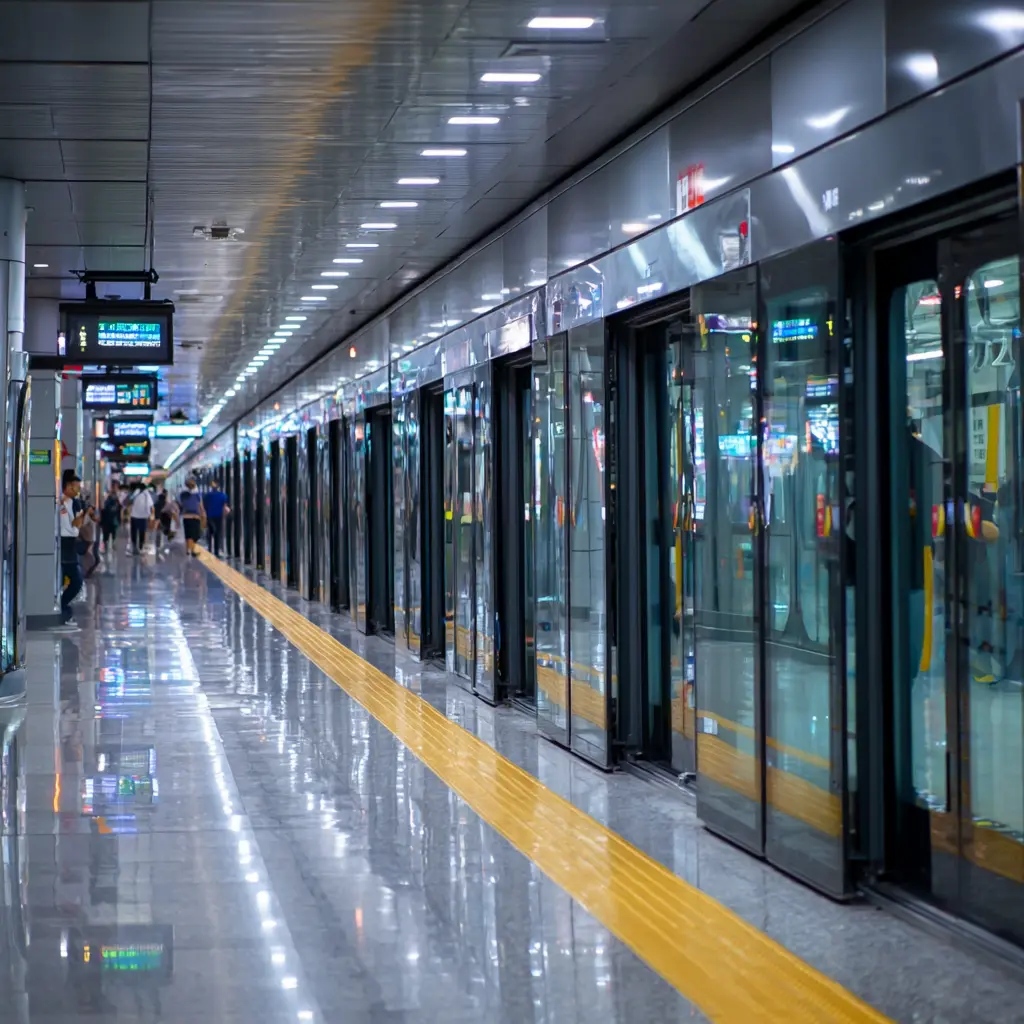
Visitors who use the Seoul subway for the first time often notice something that many local passengers no longer think about: platform screen doors.
At most stations, glass doors stand between passengers and the tracks. When the train arrives, the platform doors and train doors open together. When the train leaves, both close again. The system feels ordinary to people who use it every day, but for visitors from cities without this feature, it can leave a strong impression.
Seoul’s subway screen doors are not only a technical feature. They show how a crowded city can reduce everyday risk through infrastructure, planning, and long-term maintenance.
Why Platform Screen Doors Were Installed
Platform screen doors were introduced in Seoul to reduce accidents on subway platforms. Before they became common, passengers could fall, be pushed, or enter the track area. Crowded platforms, distraction, alcohol, and mental health crises all created risk.
The important point is that platform screen doors do not depend only on passenger caution. They change the physical environment. Instead of asking every passenger to remain perfectly alert at all times, the system adds a barrier between people and danger.
This is why the feature matters. It reduces the chance that one mistake, one crowded moment, or one crisis becomes fatal.
The Safety Impact in Seoul
Official Seoul data shows a major change after platform screen doors were installed.
According to Seoul Metropolitan Government reporting, the annual average number of subway-related deaths was 37.1 between 2001 and 2009. After platform screen doors were widely installed, the annual average fell to 0.4 between 2010 and 2024.
That is a significant safety improvement. It does not mean every subway risk disappeared, but it shows that infrastructure can make public transportation much safer.
The doors also improved the platform environment. Reports note that they helped reduce wind from the tracks and lowered fine dust levels inside stations. For passengers, the most visible benefit is safety, but the system also changed the comfort of the subway experience.
Why This Feels So Normal in Korea
One interesting part of Seoul’s platform screen doors is how ordinary they feel to local passengers. Many people in Seoul do not stop to admire them. They simply expect them to work.
That expectation says something about modern Korean urban life. In dense cities, convenience and safety are often built into everyday systems. Subway transfers, digital signs, transport cards, platform markings, and screen doors all work together to make movement smoother.
This does not mean Korea is perfect in every area of safety. It means Seoul made a clear decision in one important public space: the subway platform should be physically safer, not only monitored after accidents happen.
Safety Is Not Only About Individual Caution
Platform screen doors are useful because they recognize a simple truth: people are not perfect.
People get tired. People look at their phones. Platforms get crowded. Children move suddenly. Someone may feel dizzy. Someone may be pushed accidentally. A person in crisis may approach the tracks.
A safer system does not rely only on warning signs or announcements. It changes the environment so that dangerous outcomes become less likely.
This is the strongest lesson from Seoul’s subway screen doors. Good safety design protects people even when they are distracted, rushed, or vulnerable.
How Seoul Compares With Other Cities
Platform screen doors are used in many cities, but their coverage differs.
Singapore introduced platform screen doors early in its MRT system and later expanded barriers to above-ground stations. Tokyo has also expanded platform doors across many busy stations. Newer metro systems often include this feature from the beginning because it is easier to design platforms and train doors together.
Older subway systems face more difficulty. London and New York have long histories, older tunnels, narrow platforms in some stations, mixed rolling stock, and high retrofit costs. These factors can make full installation more complicated.
This comparison is important because it prevents a simple conclusion. Cities without full platform screen doors are not necessarily ignoring safety. Some face technical, financial, and historical barriers. Seoul’s case is notable because the city applied the system broadly across one of the world’s busiest urban rail networks and made it part of daily subway life.
What the Doors Reveal About Korean Public Infrastructure
Seoul’s platform screen doors reflect several features of Korean urban infrastructure.
First, Korea often moves quickly once a public problem becomes urgent. Large-scale projects can be planned and completed at a speed that surprises visitors from countries with slower public works systems.
Second, Korean public services often focus on convenience. Subway passengers expect clear signs, regular service, fast transfers, and working equipment. Platform screen doors fit into that broader expectation.
Third, the system shows how technology becomes invisible when it works well. The doors are impressive to first-time visitors, but local passengers rarely notice them unless something goes wrong.
That is the sign of successful infrastructure. It becomes part of daily life.
A Balanced View of Safety in Korea
It would be wrong to use subway screen doors as proof that every part of Korean society is equally safe. Korea has faced serious safety failures in other areas, including workplace accidents, building-related incidents, transport disasters, and emergency management failures.
That contrast matters. Seoul’s subway doors show what Korea can achieve when risk is clearly identified, public pressure is strong, and infrastructure investment follows.
They should be understood as a successful example of safety design, not as a complete summary of Korean safety culture.
Why Visitors Notice Them
Visitors often notice platform screen doors because they are easy to understand. No explanation is needed. A person sees the barrier, watches it open with the train, and immediately understands the purpose.
That visual simplicity makes the system memorable. It also explains why subway screen doors often appear in travel videos and social media posts about Seoul. They represent a kind of public safety that can be seen in a few seconds.
For people from cities where passengers stand directly beside open tracks, Seoul’s subway platforms can feel unusually calm and controlled.
The Larger Lesson
The most useful lesson from Seoul’s subway screen doors is not that every city should copy Seoul exactly. Each city has its own system, budget, platform design, train type, and maintenance challenge.
The larger lesson is that safety can be designed into daily life.
When a city builds safer systems, it reduces the burden on individuals. Passengers still need to be careful, but the environment helps protect them. That is especially important in crowded public spaces where one mistake can have serious consequences.
Seoul’s platform screen doors are simple to use, easy to understand, and highly effective. That is why they matter.
They are not only doors. They are a reminder that public safety improves when cities invest in prevention before accidents happen.
Sources
Seoul Metropolitan Government, report on 20 years of Seoul subway platform screen doors.
Korea Herald, report on Seoul subway fatalities after platform screen door installation.
Asia Economy, report on subway accident deaths before and after platform screen door installation.
Platform screen doors have also been discussed in research on subway safety and station design.
MTA, reports on track intrusions and platform safety discussions in New York.
Singapore Ministry of Transport, information on MRT platform screen doors.
Transport for London, public transport infrastructure references.
Today, platform screen doors are often viewed as a standard part of urban rail safety. However, their success in Seoul shows that infrastructure improvements rarely happen automatically. They require long-term planning, investment, maintenance, and public support. The subway doors themselves may look simple, but they represent years of policy decisions designed to make everyday travel safer.