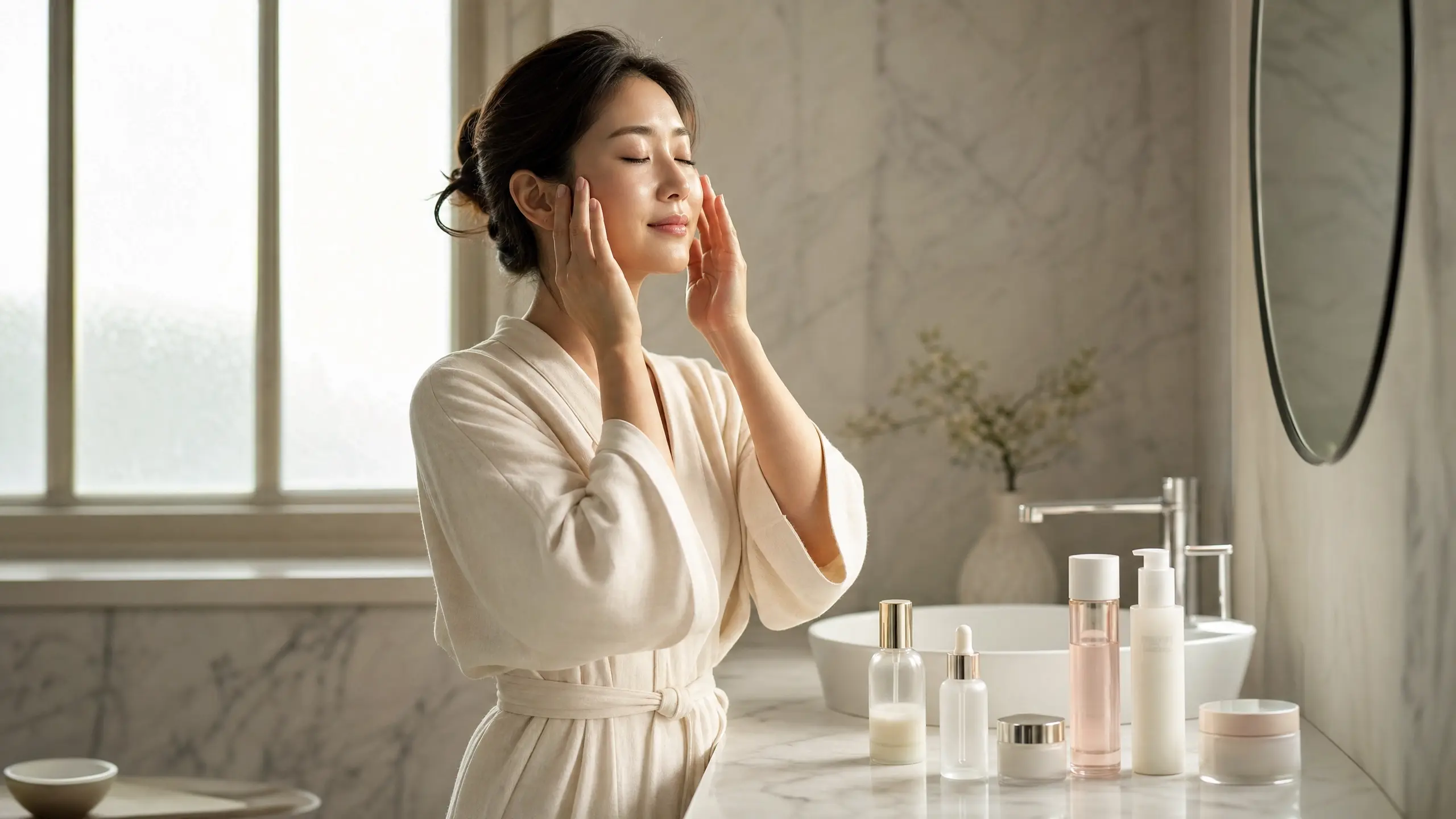
In many countries, skincare is often treated as a response to a visible problem.
A wrinkle appears, so a person looks for a product that promises to soften it.
A dark spot becomes noticeable, so they search for a serum.
Skin feels dry, so they buy a heavier cream.
Korean skincare culture is often discussed in a different way.
It places strong value on prevention, daily care and steady maintenance. The goal is not only to respond after skin concerns appear, but to build small habits that help the skin stay comfortable, hydrated and protected over time.
This does not mean every Korean person follows a complicated skincare routine.
It also does not mean Korean skincare is only about beauty or appearance.
At its core, it is connected to daily habits: gentle cleansing, hydration, sun protection, barrier care and the idea that small routines can matter when they are repeated consistently.
The most important lesson is not to use more products.
It is to understand what the skin actually needs.
The 10-Step Routine Is Famous, But It Is Not the Whole Story
The Korean 10-step skincare routine became famous overseas because it was easy to explain and easy to market.
It often includes oil cleanser, foam cleanser, exfoliator, toner, essence, serum, sheet mask, eye cream, moisturizer and sunscreen.
But daily life is usually more practical than that.
Not everyone uses ten products every morning and night.
Many people use fewer steps depending on their skin type, budget, age, season, climate and lifestyle. Some prefer a simple routine with cleanser, moisturizer and sunscreen. Others add essence, ampoule, masks or targeted products only when needed.
This is important because the real point of Korean skincare is not the number of steps.
The real point is consistency.
A short routine that suits the skin is usually more useful than a long routine that is difficult to maintain.
A routine should not become a burden.
If the skin feels irritated, tight or uncomfortable, doing more is not always the answer.
Sometimes the better choice is to do less, and do it more carefully.
Prevention Is the Main Idea
One reason Korean skincare became globally influential is its focus on prevention.
Instead of waiting until the skin becomes severely dry, irritated, uneven or damaged by sun exposure, Korean skincare encourages people to build regular habits early.
This includes gentle cleansing, hydration, barrier care and daily sunscreen.
These habits are simple, but they are also the foundation of basic skin care.
Sunscreen is especially important.
Many visible signs of premature skin aging are connected to sun exposure, so sunscreen is often treated as a daily step, not only something used at the beach or during summer.
Hydration is another key idea.
Korean skincare products often focus on light layers of moisture rather than one heavy cream. Toners, essences, serums, gels and creams may be used depending on the skin’s needs.
The goal is not to make the skin look perfect.
The goal is to keep the skin barrier comfortable and balanced.
When the skin barrier is uncomfortable, even expensive products may not feel helpful.
That is why the basic question should be simple:
Does this routine help my skin feel calm, protected and steady?
Skincare as a Daily Habit, Not a One-Time Fix
Korean skincare culture also reflects a wider belief in steady effort.
Skin does not usually change overnight.
It responds to sleep, stress, weather, diet, hormones, cleansing habits, sun exposure and product choice.
Because of this, many people see skincare as a daily routine rather than a quick solution.
The routine itself can also feel calming.
Washing the face, applying a light hydrating layer and finishing with moisturizer can become a small moment of care at the beginning or end of the day.
This does not need to be complicated.
A person with sensitive skin may need fewer products.
A person with oily skin may choose lighter textures.
A person with dry skin may focus more on barrier care.
A person who spends time outdoors may need to be especially careful with sun protection.
The routine works best when it fits the person, not when it copies a trend exactly.
Good skincare should feel livable.
If a routine is too expensive, too long or too irritating, it is unlikely to last.
Why Korean Skincare Products Became Popular Worldwide
Korean skincare did not become popular only because of packaging or social media.
Those helped, but they are not the whole reason.
Korean beauty companies are known for fast product development, competitive pricing and frequent use of textures that feel light and comfortable.
Many products are designed to be layered without feeling too heavy. This helped Korean skincare appeal to consumers who wanted hydration, glow and gentle daily care.
The global growth is also visible in trade data.
South Korea’s cosmetics exports reached a record high in 2025, supported by demand in markets such as the United States, Japan, Europe, Southeast Asia and other regions.
This shows that K-beauty is no longer a small niche trend. It has become a major part of the global beauty industry.
But export growth should not be confused with proof that every product works for every person.
A product can be popular and still not suit a particular skin type.
This is why readers should treat trends as information, not instructions.
The Global Appeal of K-Beauty
Korean skincare became popular overseas because it offered a different way of thinking.
Instead of presenting skincare only as correction, it introduced skincare as maintenance.
For many consumers, this felt practical.
They were not only buying a cream or serum.
They were learning a rhythm:
cleanse gently,
hydrate,
protect from the sun,
watch how the skin reacts,
and stay consistent.
Social media helped spread this idea quickly.
Short videos showing cleansing balms, sheet masks, essences, sunscreens and “glass skin” routines made Korean skincare visually attractive.
But the products continued to sell because many people found them affordable, accessible and easy to include in daily life.
Still, social media can also create pressure.
A routine that looks beautiful in a short video may not be right for every person.
The skin does not need to follow a trend.
It needs a routine it can tolerate.
The Routine Is Becoming Simpler
The image of Korean skincare as a long 10-step routine is changing.
Many consumers are moving toward simpler routines.
Some call this “skinimalism” or a skincare diet.
The idea is to use fewer products, avoid unnecessary irritation and focus on the steps that actually matter.
This change does not mean Korean skincare culture is disappearing.
It means it is becoming more practical.
People are choosing multi-functional products, gentle formulas and routines that fit busy lives.
A modern Korean-style routine may be as simple as:
cleanser,
hydrating toner or essence,
serum only if needed,
moisturizer,
and sunscreen in the morning.
For many people, this is enough.
The goal is not to use more products.
The goal is to use the right products regularly.
A More Balanced View of Aging
The original image of K-beauty was often linked to youthful skin, clear skin and a smooth complexion.
But aging should be discussed carefully.
Healthy skincare should not make people afraid of getting older.
Aging is natural.
Skin changes with time, and no cosmetic product can stop that completely.
A more balanced view is that skincare can help the skin stay comfortable, protected and cared for as it changes.
This is where Korean skincare can be useful.
Its strength is not the promise of perfect skin.
Its strength is the habit of prevention:
protecting the skin from sun exposure,
supporting the skin barrier,
responding to dryness or irritation early,
and avoiding routines that cause unnecessary stress.
Skin does not have to look flawless to be cared for.
What Korean Skincare Culture Reveals About Modern Korea
Korean skincare culture also says something about modern Korean society.
It reflects a market that pays close attention to trends, product texture, packaging, price, reviews and consumer feedback.
It is also connected to Korea’s beauty stores, cosmetics brands, online shopping habits and social media culture.
Products can become popular quickly.
They can also disappear quickly if consumers do not trust them.
This creates strong competition.
Brands must keep improving textures, ingredients, packaging, pricing and product claims. Consumers compare products carefully, read reviews and often look for products that suit their own skin rather than simply following one trend.
That competitive environment helped Korean skincare become one of the most active parts of the global beauty market.
But for readers, the lesson should stay practical.
Do not copy every step.
Do not buy every trending product.
Do not expect perfect skin from a routine.
Pay attention to how your own skin feels.
What Readers Should Remember
Korean skincare is not about copying every step.
It is not about buying every trending product.
It is not about trying to achieve perfect skin.
The most useful lesson is simpler:
care for the skin before problems become serious.
Cleanse gently.
Keep the skin hydrated.
Protect it from the sun.
Choose products that fit your skin type.
Stay consistent.
That is why Korean skincare continues to attract global attention.
Behind the products and trends, there is a practical idea that many people understand:
small daily habits can shape long-term care.
Information Notice: This article discusses Korean skincare culture and everyday beauty habits for general information only. Individual skin reactions may vary, so readers should use their own judgment when choosing products or routines.
Sources / Further Reading
Ministry of Food and Drug Safety — South Korea cosmetics export data
KBS World — South Korea cosmetics exports reaching record high in 2025
Korea.net — Korea becoming the world’s second-largest cosmetics exporter
Google Search Central — Creating helpful, reliable, people-first content