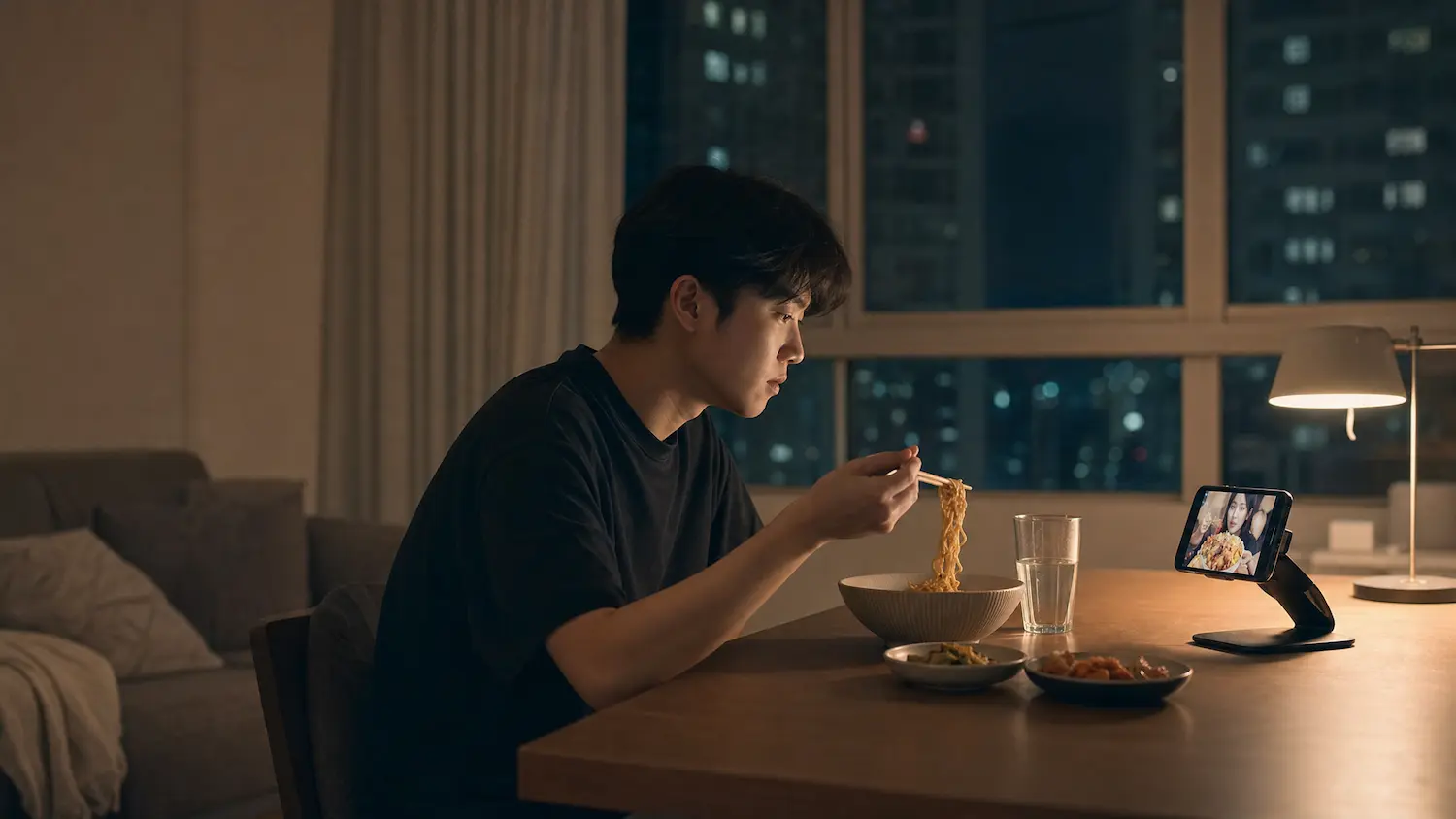
Mukbang is one of Korea’s most recognisable internet exports.
The word combines the Korean words for eating and broadcasting. In a typical mukbang video, a creator eats while speaking to viewers, reacting to comments or simply letting the sounds and visuals of food become part of the experience.
At first, it can look strange to people who are new to it. Why would millions of people watch someone else eat?
But mukbang became popular for reasons that go beyond food. It connects with loneliness, comfort, entertainment, online community and the way social media turns ordinary behaviour into performance.
That is why mukbang should not be understood only as a trend. It is also a window into modern life.
How Mukbang Started
Mukbang became popular in South Korea in the early 2010s.
At the time, more people were living alone, especially in cities. Eating alone was becoming more common, but Korean food culture still placed strong value on shared meals.
In Korea, meals are often social. People share side dishes, grill meat together, pour drinks for one another and talk while eating. For someone eating alone at home, an online eating broadcast could make the meal feel less lonely.
This was one of the early appeals of mukbang.
A viewer could open a livestream, eat at the same time and feel as if someone else was present. The connection was not the same as eating with a real friend, but it could still offer comfort.
Why People Watch Mukbang
People watch mukbang for different reasons.
Some watch because they enjoy food content. They want to see new dishes, restaurant meals, spicy noodles, seafood, fried chicken or home-cooked Korean food.
Some watch for sound. Many mukbang videos include ASMR-style eating sounds, such as chewing, crunching, stirring or pouring. For some viewers, these sounds feel relaxing.
Others watch because they are eating alone. A video can make a quiet room feel less empty.
There are also viewers who watch because they are curious about Korean food culture. Mukbang has introduced many international audiences to ramyeon, tteokbokki, Korean fried chicken, seafood, convenience store meals and Korean barbecue.
This is why mukbang became global. It is simple to understand, easy to share and strongly visual.
Mukbang and Loneliness
One of the most important reasons mukbang spread is loneliness.
Modern life has made solitary eating more common. People live alone, work irregular hours, move away from family or spend more time online than in face-to-face communities.
Mukbang offers a small form of companionship.
A creator looks into the camera, talks casually and eats as if the viewer is sitting nearby. Viewers may feel that they know the creator, even if the relationship is one-sided.
This is called a parasocial relationship. It can feel comforting, especially for people who are isolated.
That does not mean mukbang is harmful for everyone. Many people watch casually and enjoy it as entertainment.
But when a person depends on mukbang as their main source of comfort or connection, it may be a sign that they need more real-life support and interaction.
Why Mukbang Can Be Concerning
Mukbang becomes more complicated when videos focus on extreme amounts of food.
Some creators eat very large portions to attract attention. Platforms often reward content that looks dramatic, unusual or excessive. This can push some creators toward bigger portions, more intense challenges and more visually striking meals.
That creates two concerns.
The first concern is the creator’s health. Regularly eating extreme quantities can place stress on the body over time.
The second concern is the viewer. For some people, especially those with a history of binge eating, restrictive eating or body image struggles, mukbang can be uncomfortable or triggering.
Watching someone eat large amounts of food may feel comforting to one viewer but harmful to another.
That is why mukbang should be discussed carefully. It is not automatically dangerous, but it is not harmless for everyone either.
What Research Suggests
Research on mukbang is still developing.
Some studies suggest that people watch mukbang for entertainment, social connection, relaxation and food curiosity. Other studies raise concerns about links between frequent viewing, loneliness, food cravings and unhealthy eating patterns.
The important word is “link.”
Watching mukbang does not mean a person will develop an eating disorder. It does not mean every viewer is unhealthy. But for vulnerable viewers, frequent exposure to extreme eating content may reinforce unhealthy thoughts or behaviours around food.
A balanced view is needed.
Mukbang can be social and entertaining. It can also become problematic when it replaces real relationships, encourages extreme eating or affects a person’s relationship with food.
The Creator’s Side
Mukbang creators often face a difficult pressure.
The more dramatic the video, the more views it may receive. Bigger portions, spicier food, faster eating or unusual combinations can attract attention.
But creators are real people, not just entertainment.
If a creator repeatedly eats beyond comfort for views, their health may suffer. Even creators who do not eat extreme amounts can feel pressure to perform appetite, excitement and energy for the camera.
This is one of the hidden problems of online food entertainment.
The audience sees the finished video. It may not see the physical discomfort, preparation, editing pressure or long-term health concerns behind it.
Mukbang as Korean Cultural Export
Mukbang is also part of Korea’s wider cultural influence.
Like K-pop, K-dramas, Korean beauty and Korean street food, mukbang helped bring Korean everyday culture to international audiences.
Many viewers first learned about Korean instant noodles, tteokbokki, kimchi, fried chicken or convenience store meals through videos rather than restaurants.
This is one reason mukbang remains important.
It shows how ordinary Korean food habits can become global media content. A simple meal can become entertainment, cultural introduction and social connection at the same time.
But it is also important not to reduce Korean food culture to overeating.
Korean cuisine is much broader than extreme portions. It includes seasonal vegetables, fermented foods, soups, rice dishes, temple cuisine, seafood, home cooking and shared meals.
A responsible article about mukbang should make that distinction clear.
A Healthier Way to Understand Mukbang
The best way to understand mukbang is not to treat it as only good or bad.
It is both entertainment and a warning sign.
It can make lonely people feel less alone. It can introduce Korean food to the world. It can create online communities. It can also encourage unhealthy comparison, extreme eating or emotional dependence on digital companionship.
For viewers, the key is awareness.
Ask why you are watching. Are you relaxed and entertained? Or are you using the video to avoid hunger, loneliness, stress or difficult emotions?
For creators, the key is sustainability.
Food content does not need to rely on extreme portions. Smaller meals, cooking stories, cultural explanations, balanced tasting videos and shared dining experiences can be just as meaningful.
Why International Readers Should Care
Mukbang matters because it reflects something larger than Korean internet culture.
It shows how people are trying to find comfort in a lonely digital world. It shows how food becomes entertainment. It shows how social media can turn ordinary acts into performance.
It also raises a question that many countries now face.
What happens when the internet becomes a substitute for everyday companionship?
Mukbang began in Korea, but the feelings behind it are global. Many people eat alone. Many people feel isolated. Many people look online for warmth, routine and comfort.
That is why mukbang continues to spread.
It is not just about watching someone eat. It is about the need to feel accompanied, even through a screen.
The healthiest way forward is not to shame viewers or creators. It is to understand the need behind the trend, enjoy food content responsibly and remember that online companionship should not fully replace real human connection.