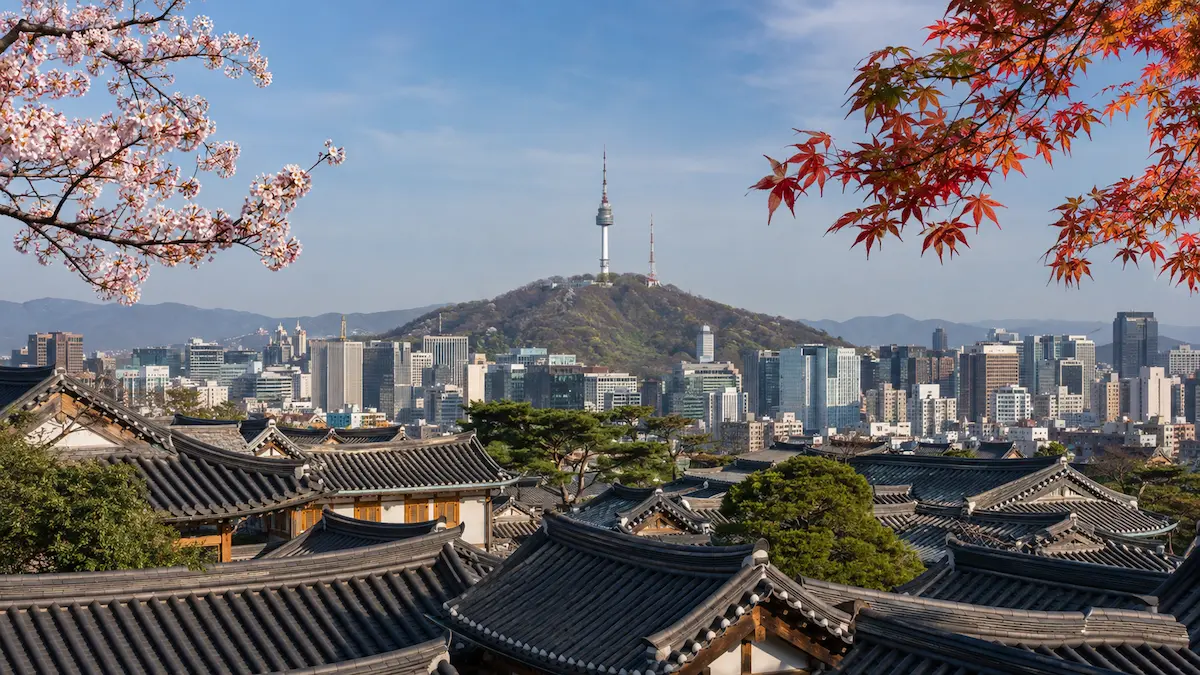
Choosing the best time to visit Korea depends on the weather you prefer, the places you want to see and how comfortable you are with crowds, heat or cold. Spring and autumn usually offer the easiest conditions for sightseeing, but every season has advantages for different types of trips.
This guide compares Korea’s seasons, typical weather, crowds, prices and seasonal highlights so you can choose travel dates that fit your itinerary. Conditions vary by region and year, so use seasonal patterns as a planning guide and check the latest forecast before departure.
Quick Answer: The Best Time to Visit Korea
For most first-time visitors, the best time to visit Korea is spring from April to May or autumn from late September to October. These periods usually offer mild temperatures, lower humidity and comfortable conditions for walking and sightseeing.
Choose spring for blossoms and fresh greenery, or autumn for clearer skies and colourful foliage. Summer suits travellers who can manage heat, humidity and seasonal rain, while winter is best for snow, skiing and quieter city travel.
Korea Weather and Travel by Season
Spring in Korea: March to May
Spring is one of the most popular times to visit Korea. Temperatures gradually become milder, flowers begin to bloom and outdoor sightseeing becomes more comfortable. April and May generally provide the most pleasant conditions for walking through cities, visiting palaces and exploring national parks.
Cherry blossom dates vary by region and year, and popular attractions can become crowded during the peak bloom period. Travellers visiting in spring should also check air-quality forecasts and pack light layers because mornings and evenings may still feel cool.
Summer in Korea: June to August
Summer in Korea is hot and humid, particularly from July to August. June is generally warmer but more manageable, while July often brings periods of seasonal rain. Rainfall patterns vary each year, so travellers should check the latest weather forecast rather than rely on fixed monsoon dates.
Summer can still be a rewarding time to visit Korea if you plan around the weather. Schedule outdoor sightseeing for the morning or evening, allow time for indoor attractions and carry water, sun protection and a compact umbrella. Coastal destinations such as Busan and Jeju are popular, but accommodation may be busier during the school holiday period.
For detailed planning around heat, heavy rain and indoor alternatives, see our Summer in Korea: Heat, Rain and Indoor Planning guide.
Autumn in Korea: September to November
Autumn is widely considered one of the best seasons to visit Korea. Humidity gradually falls, skies are often clearer and daytime temperatures become comfortable for city walks, hiking and regional travel. Late September and October usually provide the easiest overall conditions for first-time visitors.
Autumn foliage generally appears earlier in mountainous and northern areas before reaching central and southern regions. The timing varies with location and weather, so travellers planning a foliage-focused trip should check current forecasts. Popular destinations can also become crowded during weekends and public holidays.
Winter in Korea: December to February
Winter in Korea is cold and generally dry, with January usually bringing the lowest temperatures. Seoul and inland regions can feel particularly cold when the wind is strong, while southern coastal cities are often slightly milder. Snow is possible, but regular heavy snowfall should not be assumed in every city.
Winter suits travellers interested in skiing, seasonal food, illuminated streets and quieter sightseeing. Pack insulated outerwear, warm footwear, gloves and layers suitable for heated indoor spaces. The Lunar New Year holiday can affect transport, opening hours and accommodation, so check the relevant dates before finalising your itinerary.
Plan shorter outdoor stretches with warm indoor breaks between them rather than spending most of the day outside, especially during cold waves or icy conditions.
Korea Seasons at a Glance
| Season | Typical conditions | Best for | Watch for |
|---|---|---|---|
| Spring | Mild in April and May; cool mornings and evenings | Blossoms, palaces, walking and hiking | Peak-season crowds and variable air quality |
| Summer | Hot, humid and seasonally rainy | Beaches, festivals and indoor attractions | Heat, heavy rain and busy holiday periods |
| Autumn | Mild, less humid and often clearer | Foliage, hiking and regional travel | Weekend crowds and changing foliage dates |
| Winter | Cold and generally dry | Skiing, winter food and quieter sightseeing | Strong winds, icy paths and holiday closures |
Best Time to Visit Korea by Travel Style
Best Time for First-Time Visitors
April, May, late September and October are the easiest choices for most first-time visitors. The weather is usually comfortable enough for long sightseeing days, public transport is easier to manage without extreme heat or cold, and most major attractions operate normally.
Best Time for Cherry Blossoms
Cherry blossoms usually appear between late March and mid-April, depending on the region and weather. Southern areas generally bloom earlier than Seoul and northern regions. Exact dates change every year, so avoid booking a trip around a single predicted bloom date. If cherry blossoms are a priority, keep at least one flexible half-day in your itinerary so you can adjust for changing bloom dates, rain, wind or crowds.
Best Time for Autumn Foliage
October and early November are the main foliage periods, although mountain areas can change colour earlier. Travellers should check regional foliage updates shortly before departure because elevation, temperature and rainfall all affect the timing.
Best Time for Beaches and Coastal Travel
July and August are the main beach months, especially in Busan, Jeju and along the east coast. Expect hot, humid weather and higher demand during the school holiday period. June or early September may suit travellers who prefer fewer crowds.
Best Time for Skiing and Snow Activities
January and February usually offer the most reliable conditions for ski resorts. Snowfall in Korean cities is less predictable, so travellers seeking snow should plan around a mountain resort rather than expect consistently snowy streets in Seoul.
Is There a Bad Time to Visit Korea?
There is no single month when everyone should avoid Korea. The least suitable period depends on your tolerance for heat, cold, rain, crowds and holiday disruption. Travellers who prefer mild sightseeing weather may find July, August, January and early February more challenging.
Weather patterns and holiday dates vary, so use the following periods as planning cautions rather than fixed rules.
- July and August
:Hot, humid conditions and periods of heavy rain can disrupt outdoor plans. - January and early February
:Cold temperatures and strong winds may make long sightseeing days uncomfortable. - Lunar New Year
:Transport demand increases and some independently operated businesses may close or adjust their hours. - Chuseok
:Intercity transport can become heavily booked, while some attractions and businesses may operate on reduced schedules.
Major tourist attractions do not necessarily close throughout an entire holiday, but operating arrangements vary. Check official attraction, railway and transport notices before booking time-sensitive plans.
Korea Month-by-Month Planning Guide
| Month | What to expect | Planning note |
|---|---|---|
| January–February | Cold and generally dry | Best for skiing; check Lunar New Year dates |
| March | Cool and changeable | Pack layers and check air-quality forecasts |
| April–May | Mild with spring blossoms | Excellent for sightseeing; reserve popular stays early |
| June | Warm with increasing humidity | Often easier than peak summer; prepare for rain |
| July–August | Hot, humid and seasonally rainy | Plan indoor alternatives and stay hydrated |
| September | Warm early, usually milder later | Monitor forecasts for heavy rain or storm disruption |
| October | Mild with autumn foliage | One of the best months; weekends can be crowded |
| November | Cool, drier and increasingly cold | Good for city travel; bring warmer layers |
| December | Cold and generally dry | Suitable for winter events; early ski conditions vary |
Frequently Asked Questions
What Is the Best Month to Visit Korea?
October is often the easiest single month for first-time visitors because temperatures are generally mild, humidity is lower and autumn scenery begins to appear. May is another strong choice for comfortable sightseeing and spring greenery.
When Is the Cheapest Time to Visit Korea?
There is no consistently cheapest month for every route or destination. Flights and accommodation may be less expensive outside the main spring and autumn travel periods, but prices can rise around public holidays, festivals and major events. Compare total trip costs rather than choosing dates by season alone.
How Many Days Do You Need in Korea?
A five-day Korea itinerary or seven-day Korea itinerary is suitable for a first visit covering Seoul and one or two additional destinations. A ten-day Korea itinerary provides more time for Seoul, Gyeongju and Busan, while a fourteen-day Korea itinerary adds Jeju without rushing between destinations.
Is Korea Worth Visiting in Summer or Winter?
Yes, provided that the season suits your plans. Summer works well for coastal travel, festivals and indoor attractions, while winter suits skiing, seasonal food and quieter sightseeing. Both seasons require more careful packing and flexible daily schedules.
Final Recommendation
For most first-time visitors, the best time to visit Korea is April to May or late September to October. These periods generally provide the most comfortable balance of weather, sightseeing conditions and transport convenience.
Choose your dates according to the experience you value most, then confirm current weather, public holidays and attraction schedules before booking. A well-planned summer or winter visit can be just as rewarding as a trip during the more popular spring and autumn seasons.
For the rest of your planning, return to our Plan Your Trip guide.