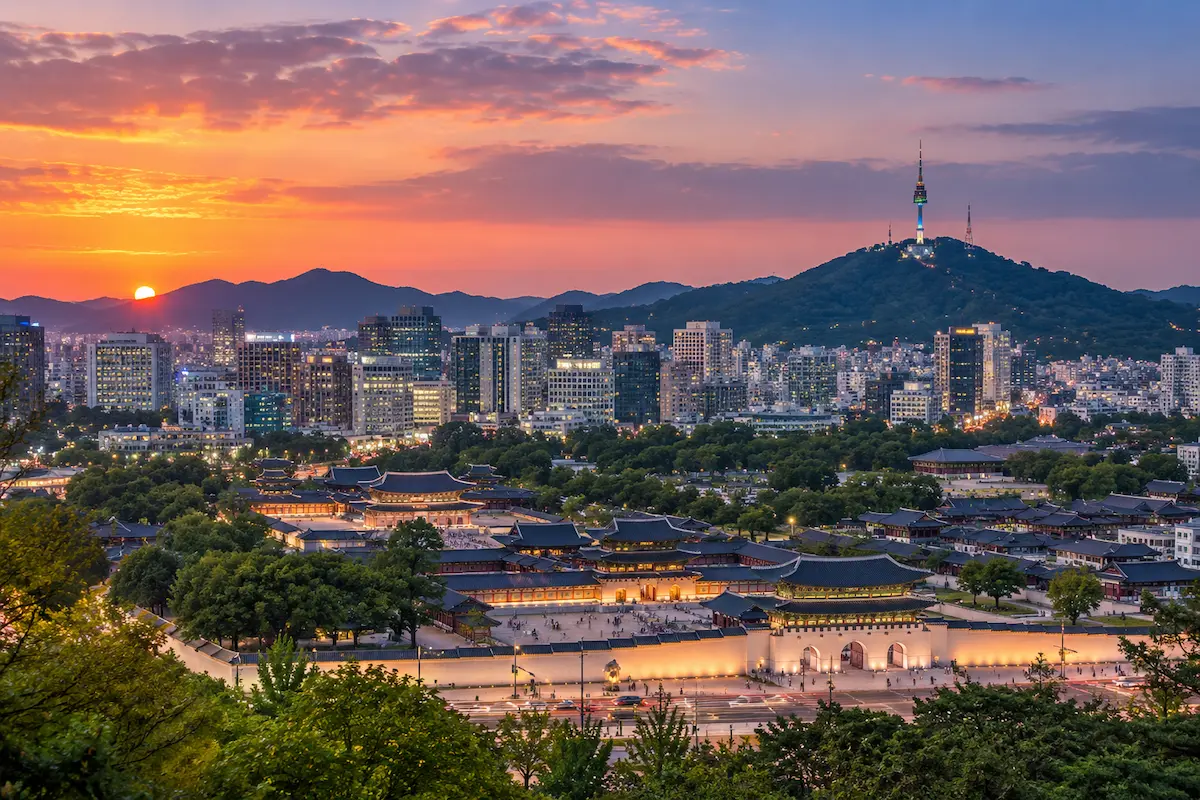
Seoul can feel enormous on a first visit, but you do not need to understand the whole city before you arrive.
For many first-time travellers, three to five full days provides a practical introduction to Seoul, although a shorter stay can still work if the itinerary is tightly focused.
Historic palaces and traditional neighbourhoods sit north of the Han River. Major shopping, nightlife and modern districts spread much farther across the city. Trying to cross Seoul several times in one day can waste more time than the sightseeing itself.
This guide explains how to organise a first Seoul trip: where the main areas are, how many days you need, what to prioritise and how to move around without overplanning.
Seoul at a Glance
| Question | Practical answer |
|---|---|
| How many days for a first visit? | 3–5 full days works well for most travellers |
| Best all-round area to stay | Myeongdong is convenient for many first-time visitors |
| Best for palaces and traditional Seoul | Jongno and Insadong |
| Best for nightlife and cafés | Hongdae |
| Best for airport and intercity transport | Seoul Station or Hongdae |
| Best for modern southern Seoul | Gangnam |
| Best for families and Lotte World | Jamsil |
| Main way to travel | Subway, with buses and taxis when useful |
| Do you need a car? | No. A car is usually unnecessary for sightseeing in Seoul |
| Main planning mistake | Putting distant neighbourhoods into the same day |
Seoul rewards travellers who organise by area rather than attraction ranking.
Three nearby places on one side of the city usually make a better day than five famous places scattered across Seoul.
How Many Days Do You Need in Seoul?
Three Days
Three full days is enough for a strong introduction.
You can usually fit in:
- one historic Seoul day;
- one central or shopping-focused day;
- one neighbourhood, market or modern Seoul day.
This is a good choice if Seoul is the beginning or end of a longer Korea itinerary.
Four to Five Days
Four or five days gives you more flexibility.
You can add:
- a slower neighbourhood day;
- museums or galleries;
- a longer market visit;
- Gangnam or Jamsil;
- cafés and shopping;
- a half-day outside your original plan;
- time to recover after a long flight.
For many first-time visitors, this is the most comfortable range.
A Week or More
A longer stay lets Seoul become less about major sights and more about neighbourhoods.
You can spend time in areas such as Seongsu, Yeonnam, Mangwon, Euljiro or different parts of the Han River without feeling that every hour needs to produce another famous landmark.
If Seoul is only one part of your Korea trip, compare your available time with our Korea Itineraries before deciding how many nights to book.
Understand Seoul Before Planning Your Days
Seoul is easier to plan when you think of it as several travel zones rather than one city centre.
Historic Seoul
This is where many first-time visitors spend their first major sightseeing day.
Key areas include:
- Gyeongbokgung Palace;
- Changdeokgung Palace;
- Bukchon;
- Insadong;
- Jongno;
- Gwanghwamun;
- Ikseon-dong.
Many of these places can be combined without repeatedly crossing the city.
Central Seoul
Myeongdong, City Hall, Namdaemun and the areas around Namsan form another useful cluster.
This part of the city works well for:
- shopping;
- food;
- evening walks;
- markets;
- central hotels;
- connections to other districts.
Western Seoul
Hongdae and nearby Yeonnam are popular for:
- cafés;
- restaurants;
- shopping;
- nightlife;
- a younger atmosphere.
Hongik University Station is also useful for airport access.
Southern Seoul
Gangnam is not simply one attraction or one street.
The wider southern part of Seoul includes areas associated with:
- COEX;
- Bongeunsa;
- Apgujeong;
- Cheongdam;
- shopping;
- business;
- restaurants and nightlife.
If most of your plans are around the palaces, do not choose Gangnam simply because the name is famous. The daily journey north can become repetitive.
Eastern Seoul
Jamsil is useful for:
- Lotte World;
- Lotte World Tower;
- Seokchon Lake;
- family activities;
- Olympic Park and nearby destinations.
It works particularly well when these places are a major part of your itinerary.
Where Should First-Time Visitors Stay?
There is no single best district for everyone.
For many first-time visitors, Myeongdong is the easiest all-round base because it sits conveniently between several major sightseeing areas.
But another neighbourhood may suit your trip better.
Choose:
- Myeongdong for central sightseeing and shopping;
- Hongdae for nightlife, cafés and airport access;
- Jongno or Insadong for palaces and traditional Seoul;
- Seoul Station for airport rail and intercity trains;
- Gangnam for business and southern Seoul;
- Jamsil for Lotte World and family attractions.
The exact hotel location matters more than the district name.
A property five minutes from a useful subway entrance can be considerably easier than one technically located in a famous neighbourhood but reached by steep roads or a long walk.
For detailed neighbourhood comparisons, read our Where to Stay in Seoul for First-Time Visitors.
What Should You See on a First Trip?
You do not need to visit every famous attraction.
A stronger first trip usually combines several different sides of Seoul.
1. See Historic Seoul
At least one palace belongs on most first itineraries.
Gyeongbokgung is the palace many visitors choose first, while Changdeokgung offers a different historic setting nearby.
The surrounding area also allows you to combine palaces with places such as Bukchon, Insadong and Gwanghwamun.
Do not assume all historic sights need separate days. Several can be grouped geographically.
2. Walk Through a Traditional Neighbourhood
Seoul is not only palaces.
Neighbourhoods such as Insadong, Bukchon and Ikseon-dong show different versions of the city’s older urban character.
They are also popular, commercial areas rather than preserved historical sets.
Visit with realistic expectations: cafés, shops and crowds exist alongside traditional architecture and cultural sites.
3. Experience a Market
Markets can add a very different rhythm to a Seoul itinerary.
Some visitors go primarily for food. Others enjoy the mixture of small shops, local routines and dense urban atmosphere.
Market conditions vary considerably. Permanent businesses may accept cards, while some smaller stalls can have different payment options.
Carry a backup payment method rather than assuming every stall works the same way.
4. See Modern Seoul
A first trip should not consist only of historic sites.
Depending on your interests, modern Seoul may mean:
- Gangnam;
- COEX;
- Jamsil;
- Seongsu;
- contemporary shopping districts;
- cafés;
- design spaces;
- entertainment districts.
The contrast between historic and contemporary Seoul is one of the reasons the city works well over several days.
5. Leave Time for an Ordinary Neighbourhood
Not every hour needs a landmark.
Some of the most enjoyable parts of Seoul can be:
- finding breakfast near your hotel;
- walking through a residential street;
- stopping at a convenience store;
- spending too long in a café;
- discovering a small restaurant;
- watching the city change after dark.
Leaving some space in the itinerary also makes it easier to respond to weather, tiredness or unexpected discoveries.
How to Get Around Seoul
For most visitors, the subway will handle the majority of longer journeys.
Buses are useful too, particularly when the subway route would require an awkward transfer or when your destination is not close to a station.
Taxis can help:
- late at night;
- with heavy luggage;
- during poor weather;
- when travelling between places that are inconvenient by public transport.
A rental car is usually unnecessary for a standard Seoul sightseeing trip.
Parking, congestion and navigation can make driving less convenient than public transport in many central areas.
For subway, bus, taxi and transport-card guidance, use our Getting Around guide.
Use Korean Map Apps
Do not rely on intuition alone when walking in Seoul.
Large stations may have many exits, and being on the wrong side of a major road can add considerable walking.
NAVER Map and KakaoMap are particularly useful for:
- subway routes;
- bus routes;
- station exits;
- walking directions;
- Korean addresses;
- checking entrances.
Save the Korean name and address of your accommodation before travelling.
For setup tips, address searching and route planning, see our guide to NAVER Map and KakaoMap for travellers.
This becomes especially useful when showing the destination to a taxi driver or searching for a building whose English name produces inconsistent results.
Do Not Underestimate Subway Stations
A station shown as one point on a map can be an enormous underground space.
Large stations may include:
- multiple subway lines;
- long transfer corridors;
- shopping areas;
- underground passages;
- many numbered exits.
When planning a journey, check the exit number, not just the station name.
Two people leaving the same station through different exits can emerge several streets apart.
Plan Seoul by Neighbourhood, Not by Checklist
One of the easiest ways to make a Seoul itinerary exhausting is to select attractions individually and then connect them afterwards.
Instead, build each day around one or two neighbouring areas.
For example:
Historic Day
Palace area → Bukchon or nearby streets → Insadong → Jongno or Ikseon-dong
Central Seoul Day
Myeongdong → Namdaemun or City Hall area → Namsan or an evening nearby
Western Seoul Day
Hongdae → Yeonnam → nearby cafés, restaurants and evening activity
Southern Seoul Day
COEX / Bongeunsa → another Gangnam-area destination
Jamsil Day
Lotte World or Lotte World Tower → Seokchon Lake → nearby eastern Seoul plans
These are planning patterns rather than fixed itineraries.
Use them to reduce unnecessary cross-city travel.
Food Planning in Seoul
You do not need to build every meal around a famous restaurant.
For a first visit, a practical food plan might include:
- one traditional Korean meal;
- one market or street-food experience;
- one casual neighbourhood restaurant;
- one convenience-store stop;
- cafés or bakeries;
- one meal chosen spontaneously.
Popular restaurants can have queues, minimum-order rules or waiting systems that assume a Korean phone number.
Having alternative restaurants saved nearby is often more useful than insisting on one specific place.
For broader dining guidance, use our Food & Drink section.
Payments, Phones and Internet
Seoul is highly card-oriented, but visitors should still carry a backup.
A practical setup is:
- one overseas-enabled card;
- a second card stored separately;
- a small amount of Korean won;
- mobile data;
- access to your bank or card issuer’s app.
Mobile data makes maps, translation, reservations and transport considerably easier.
A SIM or eSIM with only data may be enough for many visitors, while travellers needing restaurant messages or local calls should check whether their plan includes a Korean phone number.
For payment, SIM, eSIM, Wi-Fi and phone guidance, see Money, Phones & Apps.
What to Do on Your First Day in Seoul
Do not make your arrival day unnecessarily ambitious.
After a long flight, immigration, airport transport and hotel check-in can take more energy than expected.
A sensible first day may include:
- Reach your accommodation.
- Check that mobile data and maps work.
- Confirm your main payment method.
- Find the nearest useful subway station.
- Learn which station exit is closest to your hotel.
- Eat somewhere nearby.
- Take a short walk around the neighbourhood.
- Save major plans for the following morning.
If you arrive early and feel good, you can always add more.
Planning less for arrival day is easier than cancelling a complicated itinerary while exhausted.
For airport arrival, transport cards, maps, payments and mobile setup, read our First Day in Korea guide.
When Is the Best Time to Visit Seoul?
Seoul is a year-round city, but the experience changes considerably by season.
Spring
Spring can bring mild weather, blossom periods and high visitor demand.
Conditions can still change quickly, particularly earlier in the season.
Summer
Summer is hot, humid and affected by the rainy season.
Plan indoor alternatives and avoid designing every day around long outdoor walks.
Autumn
Autumn is popular for comfortable walking weather and seasonal colour.
Popular periods can also increase accommodation demand.
Winter
Winter can be cold and dry.
The city continues functioning normally, but outdoor sightseeing requires appropriate clothing and shorter exposure during very cold periods.
When choosing dates, consider weather and what you actually intend to do rather than choosing a season solely because it is considered the most beautiful.
For a broader month-by-month comparison, see our guide to the best time to visit Korea.
Common First-Time Seoul Mistakes
Trying to See Too Much
Seoul is too large for an efficient “top 20 sights in two days” approach.
Choose fewer areas and explore them properly.
Ignoring Travel Time
A journey that looks short on a city-scale map may include long walks, transfers and station exits.
Check the actual route.
Choosing a Hotel by District Name Alone
Always check the exact station, exit and walking route.
Planning Every Meal
Reservations and famous restaurants can be useful, but flexibility matters.
Keep alternatives nearby.
Assuming Every Foreign Card Will Work
Card use is widespread, but individual cards, kiosks and online systems can still fail.
Carry a second option.
Relying Only on Public Wi-Fi
Public Wi-Fi is useful but not ideal as your only connection while moving around the city.
Filling Arrival Day With Major Sightseeing
Jet lag and airport travel can make an ambitious first day unpleasant.
Keep it flexible.
A Practical Seoul Planning Checklist
Before departure:
- Choose how many full days you will spend in Seoul.
- Select your accommodation area according to the itinerary.
- Check the exact subway station and exit near your hotel.
- Save the hotel’s Korean address.
- Prepare mobile data.
- Prepare at least two payment options.
- Install the map and transport apps you intend to use.
- Group attractions by neighbourhood.
- Leave some unscheduled time.
- Check seasonal weather shortly before travel.
- Save important reservations offline.
- Know how you will travel from the airport to your accommodation.
For arrival preparation, emergency numbers and practical traveller support, keep our Help & Safety section available as well.
Frequently Asked Questions
Is Seoul easy for first-time visitors?
Generally, yes.
Public transport is extensive, major tourist areas are well connected and many travel tasks can be handled through mobile apps. The main challenge is Seoul’s size rather than a lack of infrastructure.
Is three days enough for Seoul?
Three full days can provide a good introduction if you organise sightseeing geographically.
Four or five days is more comfortable if Seoul is a major part of the trip.
Do I need a car in Seoul?
Most first-time visitors do not.
The subway, buses and taxis are usually more practical for standard sightseeing.
What is the best area to stay in Seoul?
Myeongdong is a convenient all-round choice for many first-time visitors, but Jongno, Hongdae, Seoul Station, Gangnam or Jamsil may suit a particular itinerary better.
Is Seoul walkable?
Individual neighbourhoods can be very walkable.
The city as a whole is too large to treat as one walking destination. Use public transport between areas and walk within each area.
Can I use English in Seoul?
English support is available in many tourist-facing environments, but it is not universal.
Translation tools and saved Korean place names are useful.
Should Seoul be the first stop on a Korea trip?
It often works well as the first stop because of transport connections and the range of practical services available.
It can also work well at the end of a trip, particularly if shopping or an international flight departure is part of the final days.
Final Recommendation
For a first Seoul trip, do not try to conquer the city.
Choose a convenient base, give yourself at least three full days, group sightseeing by neighbourhood and leave enough space for ordinary city life.
Spend one day seeing historic Seoul.
Spend another exploring a different side of the city.
Use the subway for longer journeys and walk once you reach the neighbourhood you want to experience.
Most importantly, choose an itinerary that fits your own pace rather than one designed to prove how many places can fit into a day.
Seoul becomes much easier once you stop treating it as one enormous checklist.
To compare Seoul with Busan, Gyeongju, Jeju and other parts of Korea, return to our Destinations guide.