The celestial topography of Seoul is undergoing a profound metamorphosis. As we traverse the first month of 2026, the K-UAM Vertiport Investment Outlook has transcended mere conceptual theorising to become a cornerstone of institutional portfolios. For the global investor, the integration of Urban Air Mobility (UAM) into South Korea’s smart city framework is the most significant infrastructure event since the expansion of the KTX high-speed rail.
Before diving into the regional hubs, it is essential to understand the synergy between physical infrastructure and digital asset valuation, which provides the long-term financial stability for these aerial networks.
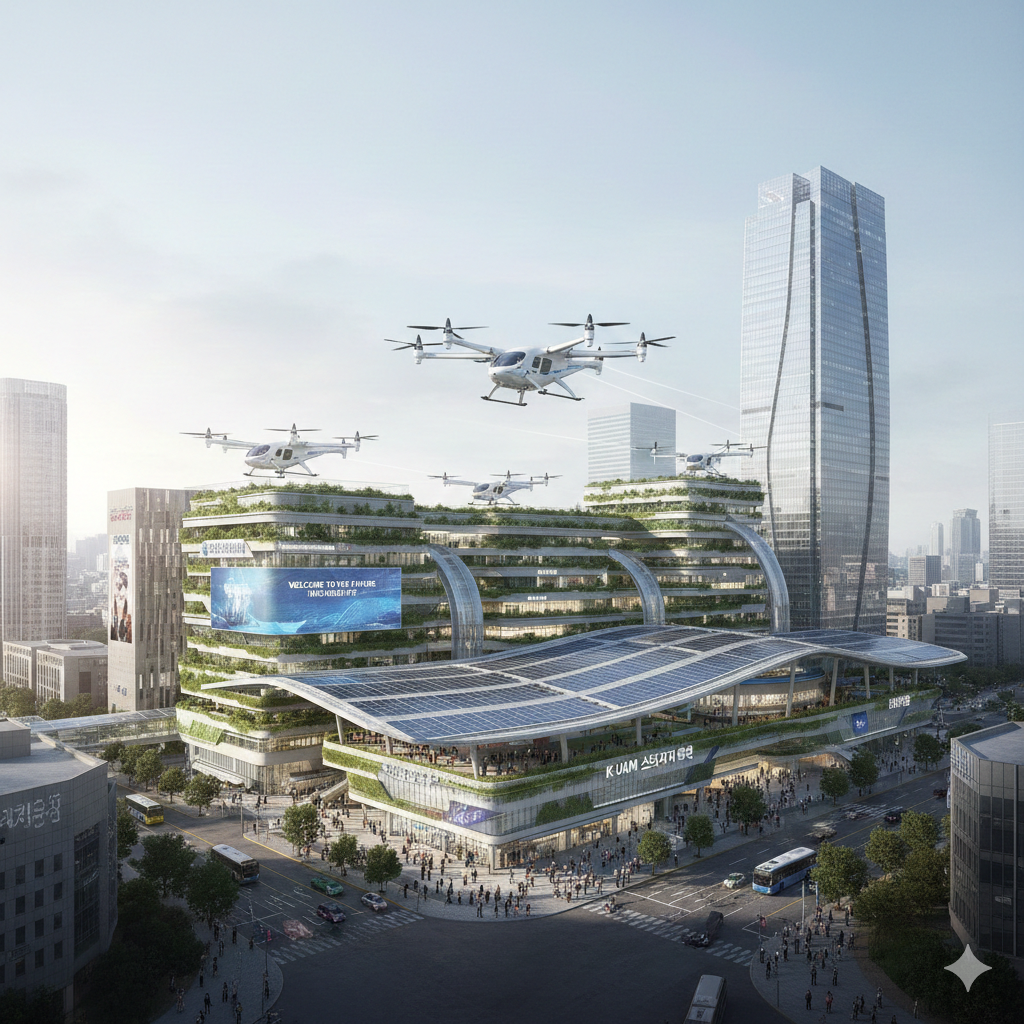
The 2026 Roadmap: Transitioning to Commercial Flight
The Ministry of Land, Infrastructure and Transport (MOLIT) has officially shifted from the “Grand Challenge” experimental phase to “Commercial Phase 1.” This marks the beginning of revenue-generating flight operations in the Seoul Metropolitan Area.
K-UAM Grand Challenge: Phase 2 Outcomes
The 2025-2026 urban flight trials have confirmed two critical factors:
- Acoustic Compatibility: eVTOL aircraft now operate at approximately 60dB, blending into the ambient noise of a typical business district.
- Operational Reliability: Testing in high-density corridors (Incheon to Jamsil) showed a 99.9% UTM (Traffic Management) success rate.
Primary Sky Corridors and Security Standards
The government has established “Fixed Sky Corridors” that connect Incheon International Airport to key nodes along the Han River. These corridors are strictly managed to avoid interference with traditional commercial aviation.
Vertiport Real Estate: The New Hub of Commercial Value
The physical landing site—the Vertiport—is the primary driver of the K-UAM Vertiport Investment Outlook (K-UAM 버티포트 투자 전망 및 인프라 구축 현황). Property values are no longer just determined by subway proximity; they are now influenced by “Air-zone” accessibility.
Gimpo ‘Verti-Hubs’ vs. Samsung Station ‘MaaS Nodes’
- Gimpo/Incheon Hubs: These are large-scale facilities focused on international transit and logistics, led by Hyundai Construction and Hanwha Systems.
- Samsung Station (Gangnam): As a premier Smart City Mobility Hub, Samsung Station integrates UAM with the GTX rail lines.
The Impact of ‘Vertistops’ on Property Premiums
Smaller “Vertistops” are being retrofitted onto existing Grade-A office towers in Yeouido and Pangyo. Research suggests that buildings with integrated vertistops are commanding a 15% premium on commercial lease rates.
2026 Market Analysis: Consortia and Investment Pillars
Navigating the UAM-related stocks requires an understanding of the dominant consortia in the Korean market.
| Consortium | Lead Entities | Core Strength |
|---|---|---|
| UAM Team Korea | Hyundai / KT / Hyundai E&C | Aircraft EPC & Hardware |
| K-UAM Dream Team | SKT / Hanwha / KAC | UTM & Air Traffic Control |
| UAM Future Team | Kakao / LG U+ / GS E&C | MaaS Platforms & Data |
Expert Conclusion: Navigating the 2026 Mobility Pivot
Investors must look beyond the novelty of “flying cars” and focus on the MaaS (Mobility-as-a-Service) integration. The true profit lies in the data generated by these flights and the commercial yield of the vertiports themselves. According to ICAO, South Korea’s proactive regulatory environment makes it the premier global sandbox for UAM investment.
FAQ: Frequently Asked Questions on K-UAM
Q1: When can the public start booking UAM flights?
A1: Commercial “Premium” services for specific routes (Airport to Gangnam) are launching in the latter half of 2026. Mass-market adoption is expected closer to 2030.
Q2: How does a vertiport affect nearby residential property?
A2: While commercial values rise, the real estate impact has been largely positive in current pilot zones due to noise mitigation technology.
Q3: Which companies are currently leading the infrastructure build?
A3: Hyundai Construction and GS Engineering & Construction are the primary builders, while Hanwha Systems dominates the navigational hardware.
The sky above Seoul is the next great economic frontier. The K-UAM Vertiport Investment Outlook confirms that the era of vertical transit has officially arrived.
The Strategic Inflection Point of 2026
The commercialisation of the Seoul skyline represents more than a logistical triumph; it is a fundamental revaluation of urban space. As we have analysed, the K-UAM Vertiport Investment Outlook is no longer a speculative venture but a structured asset class offering diversified yields across technology, energy, and real estate.
For the global investor, the “Korean Sandbox” provides a unique regulatory clarity that is currently unmatched in Western markets. Whether you are looking at 도심 항공 모빌리티 관련주 (UAM stocks) or direct infrastructure positioning, the window for early-mover advantage is narrowing as institutional capital begins to flood the sector.
Exclusive Biz Insight: Let’s Connect
Navigating the complexities of the South Korean regulatory environment and identifying the right consortia partners requires local expertise and strategic networking.
Are you considering adding K-UAM infrastructure to your 2026 portfolio? Or perhaps you have questions regarding the specific zoning laws for Vertiports in the Gangnam district?
Leave a comment below or inquire via our business channel. As your CoreaDesk partners, we are ready to facilitate high-level introductions with Korean infrastructure leads and provide bespoke market intelligence for your entry into the K-UAM ecosystem.
[Drop a comment below: Which K-UAM consortium do you believe holds the strongest competitive edge in 2026?]