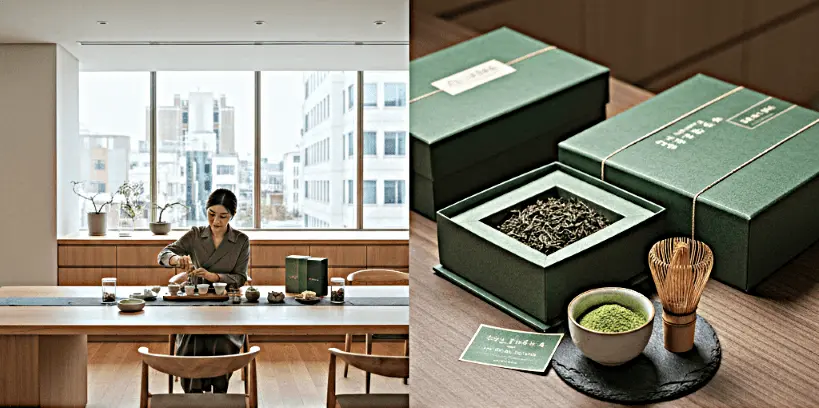
In the prestigious tea rooms of Mayfair or the minimalist ateliers of Seoul, a quiet but potent revolution is brewing. Whilst “K-Coffee” has long dominated the urban skylines of South Korea, a more refined, ancient protagonist is reclaiming its throne: Premium Korean Tea Business. For the discerning global investor and the wellness-conscious MZ generation, the shift from high-caffeine espresso culture to the “slow-living” ethos of traditional Korean tea is a burgeoning multi-million dollar market opportunity.

1. The Strategic Pivot: From Ritual to Global Commodity
Historically, Korean tea was a contemplative ritual reserved for scholars and monks. However, in 2026, the Premium Korean Tea Business has successfully modernised these traditions into luxury lifestyle products. Brands like Osulloc, utilising the nutrient-rich volcanic soils of Jeju Island, have redefined tea as a “functional luxury.”
The global tea market is projected to reach approximately $133.22 billion by 2026. Within this macro-trend, South Korea is uniquely positioned to capture the “Specialty” segment. Unlike mass-produced alternatives, Korean tea offers a narrative of provenance and artisan craftsmanship that resonates with the modern “quiet luxury” aesthetic.
2. Why Investors are Targeting the Premium Korean Tea Business
The commercial allure of Korean tea lies in its versatility and high profit margins. Below are the primary drivers making this a “Blue Ocean” for international entrepreneurs:
- The Wellness Premium: In a post-pandemic economy, “Functional Wellness” is the ultimate currency. Teas such as Hwangcha (yellow tea) and Omija (five-flavour berry) are being marketed globally for their exceptional antioxidant profiles and adaptogenic properties.
- The “Matcha-core” Evolution: The global obsession with Matcha has opened a strategic gateway for Korean Malcha. This has led to a surge in high-end “Tea Ateliers” replacing traditional dessert cafes in major financial hubs like London and New York.
- ESG and Sustainability: Premium tea production in regions like Boseong and Hadong follows traditional, low-impact farming methods, aligning perfectly with modern ESG (Environmental, Social, and Governance) investment criteria.
3. Market Analysis: Growth Drivers (2025-2026)
To understand the scale of the Premium Korean Tea Business, we must examine the diversification of the product range. Modern consumers seek transparency and a “story” behind their beverage.
| Tea Variety | Target Demographic | Primary Business Driver |
| Jeju Sejak (Green Tea) | Luxury Wellness Seekers | Single-origin volcanic terroir branding. |
| Boseong Matcha | Gen Z / MZ Generation | Aesthetic social media appeal & versatility. |
| Fermented Balhyo-cha | High-end Culinary / Chefs | Complex Michelin-tier food pairings. |
| Hadong Wild Tea | High-Net-Worth Collectors | Limited harvest rarity and artisanal value. |
4. The “Ditto Consumption” Effect and Soft Power
A significant catalyst for this global rise is the “Ditto Consumption” phenomenon. When global icons—from K-pop stars to international wellness influencers—are seen performing a tea ceremony or enjoying a Malcha latte, the market reacts instantaneously. This cultural leverage provides the Premium Korean Tea Business with a “soft power” marketing advantage that traditional Western brands simply cannot replicate.+1
For international distributors, this means reduced customer acquisition costs, as the “cool factor” of South Korean culture does the heavy lifting in brand awareness.
5. Opportunities for Global Business Partners
For international enterprises, the Premium Korean Tea Business offers manifold opportunities for collaboration:
- Direct-to-Consumer (DTC) Subscription Models: Delivering seasonal, first-flush harvests from Hadong directly to European households.
- Corporate Wellness Integrations: High-end law firms and tech hubs in the UK are increasingly replacing coffee stations with “Tea Meditation” corners to enhance employee focus and mental clarity.
- B2B Culinary Supply: Partnering with luxury hotel chains to incorporate Korean fermented teas into their signature beverage programmes.
Conclusion: Secure Your Place in the Supply Chain
The transition from a coffee-centric lifestyle to a tea-focused wellness ritual is reshaping the beverage landscape. As we look toward the remainder of 2026, the question for entrepreneurs is no longer if Korean tea will go global, but how quickly you can secure your position in this high-value supply chain.
Are you a business owner looking to source premium Korean tea, or an investor curious about the latest K-Business trends? Leave a comment below, and our team at CoreaDesk will connect you with the right industry partners.
“Premium Korean Tea Business: The Next Global Wellness Frontier”에 대한 2개의 생각