The cultural landscape of Seoul has taken a definitive turn in early 2026. As you plan The Blue House and Seochon Tour, you must note the government’s recent decision to return the Blue House (Cheong Wa Dae) to its original function as the presidential residence. This shift has not diminished the allure, but rather redefined how we experience The Blue House and Seochon Tour in this historic palace triangle.
~~~
1. The Power Triangle: Seochon’s Strategic Geography
To understand Seochon in 2026 is to understand its place within Seoul’s royal anatomy. While Seochon serves as the intimate, “west village,” it is part of a grander architectural symmetry.
A. Between the Great Palaces
Seochon sits in a position of historical privilege. Directly to its east lies the vast expanse of Gyeongbokgung Palace, the primary legal residence of the Joseon dynasty. Moving further east, the urban fabric is balanced by the UNESCO-listed Changdeokgung, the serene Changgyeonggung, and the ancestral Jongmyo Shrine. This concentration of royal energy creates a “Palace Belt” that effectively insulates Seochon from the chaotic pace of modern Seoul.
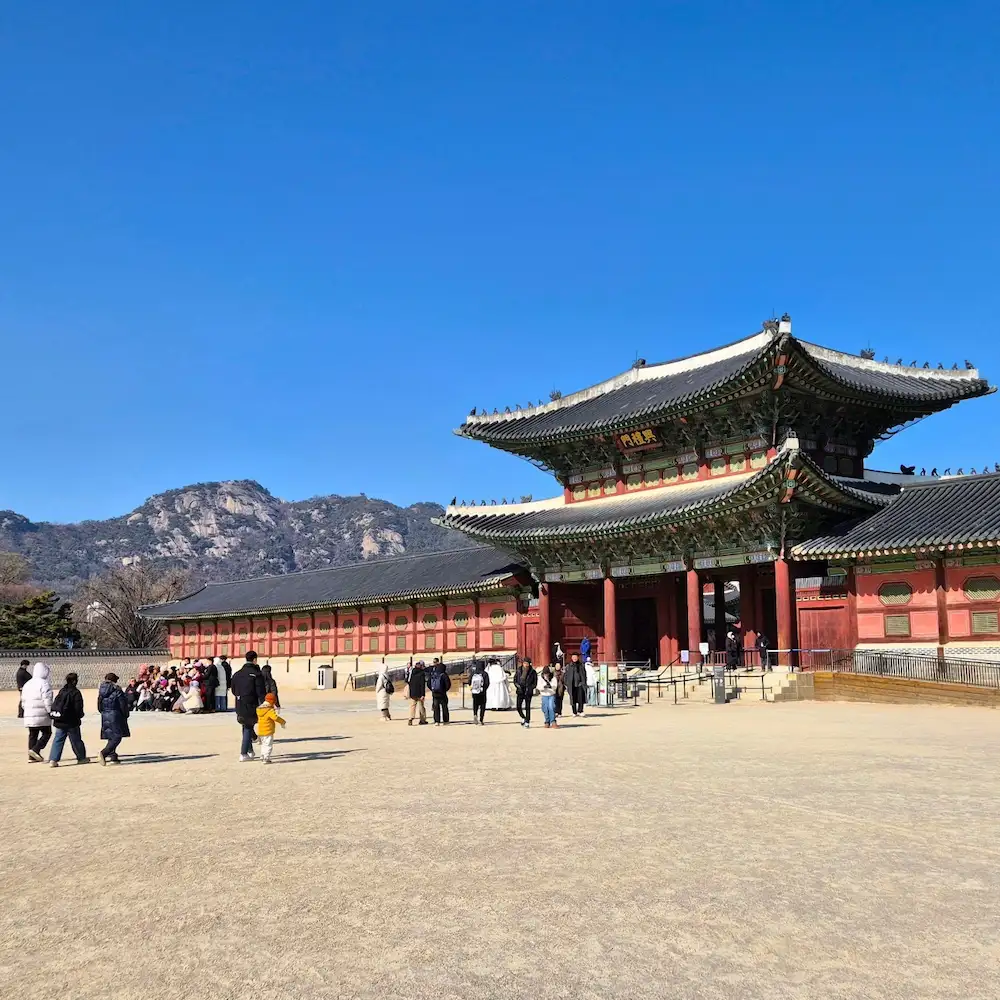
B. The “Power Edge” Landscape
As the Blue House returns to an active executive role, the boundary between Seochon and these historic palaces has become the “Power Edge” of the city. Walking these streets, one feels the weight of centuries of governance, from the monarchical era to the modern presidential republic.
2. The Restoration of Authority: The “Closed” Blue House
As of February 2026, the blue-tiled roofs are once again a symbol of active national governance. While internal access is restricted, the perimeter remains a masterclass in modern security and traditional aesthetics.
A. External Grandeur and Professional Guides
A The Blue House and Seochon tour now offers a more intellectual narrative. Professional guides focus on the external architecture and the symbolic transition of the site. The view from the Hyoja-ro stone walls, with the shadows of Gyeongbokgung falling nearby, provides a sober reflection on South Korea’s political evolution.
B. Visual Synergy from the Peaks
From the trails of Bugaksan, the entire palace layout becomes clear. One can see how Seochon nestles between the mountain and the palace walls, serving as the bridge between the sovereign’s domain and the people’s artistic sanctuary.
~~~
3. Seochon: The Resilient Heart of K-Artistry
Despite the restricted access to the Blue House grounds, Seochon’s identity as a sanctuary for the creative elite has only strengthened.
A. The “Silent” Galleries of 2026
With the thinning of mass-market crowds, Seochon’s galleries have reclaimed their quiet prestige. The district caters to a discerning audience that appreciates the “slow-living” philosophy, offering a refined contrast to the hyper-digital districts of Gangnam.
B. Gastronomy Amidst the Palace Walls
The culinary scene in Seochon remains an essential pillar of the tour. From the traditional brass-coin experience at Tongin Market to Michelin-noted dining, the gastronomy here is a testament to quality that thrives under the protection of the surrounding palace walls.
~~~
The Beauty of the Boundary
In 2026, the boundary between the restricted Blue House, the grand Gyeongbokgung, and the artistic Seochon defines the modern Korean identity. It is a place where royal history, executive power, and avant-garde art coexist. The The Blue House and Seochon tour remains a vital experience because it allows one to stand at the centre of a historical axis that has defined the Korean peninsula for over six centuries.
~~~
💡 Reclaiming Focus Beyond the Palace Walls
If the historical tension of The Blue House and Seochon Tour has piqued your interest, you may find the ultimate contrast in the silent mountains of the south. [Read our 2026 Guide to Digital Detox Temple Stays here] — discover how to balance your urban exploration with a dose of monastic peace.
“The Blue House and Seochon 2026: Navigating the Intersection of Power and Art”에 대한 1개의 생각