When many international readers think about South Korea, they usually imagine music videos, cafés, beauty products, smartphones or fast internet.
That image is not wrong.
It is only incomplete.
Far from the streets most visitors know, another part of Korea continues to shape the global economy in a quieter way: shipbuilding.
This industry is not as visible as entertainment or tourism.
It does not move through short videos or fashion trends.
It moves through ports, steel, engines, dry docks, specialised workers, engineering schedules and contracts measured in years.
For anyone trying to understand modern Korea, shipbuilding is an important variable.
It shows that Korea is not only a cultural exporter.
It is also a manufacturing country with deep industrial capacity.
The Average Number Does Not Tell the Whole Story
Shipbuilding is often discussed through market share.
That can be useful, but it can also mislead.
A country may win many vessel orders by volume.
Another country may receive fewer orders but concentrate on more technically difficult ships.
Those two outcomes are not the same.
This is why Korea’s shipbuilding position should be read carefully.
China is highly competitive in global shipbuilding by volume. Japan remains an important shipbuilding nation. Korea does not control every part of the market.
But Korean shipbuilders have remained important in selected high-value segments, especially vessels where engineering difficulty, delivery experience, safety systems and quality control matter.
That distinction is the statistical point.
The mean is not enough.
The distribution matters.
A simple bulk carrier and a high-value LNG carrier are both ships.
They do not represent the same level of industrial difficulty.
A Strength Built Over Decades
Korea’s shipbuilding industry grew rapidly during the late 20th century.
Cities such as Geoje, Ulsan and Busan became closely connected to shipyards, steel, marine engineering, logistics and export industries.
For many Korean families, shipbuilding was not an abstract business sector.
It was a source of jobs, regional identity and national pride.
Major Korean shipbuilders learned to compete not only by building large vessels, but by building technically difficult vessels.
That distinction matters.
High-value vessels require more than steel and labour.
They require design knowledge, project management, skilled workers, supplier networks, safety systems, software, regulation and experience with global clients.
This is one reason Korean shipyards have remained important even as global competition has increased.
Why LNG Carriers Matter
Liquefied natural gas carriers are among the more technically demanding commercial vessels.
LNG must be transported at extremely low temperatures, around minus 162 degrees Celsius. This requires specialised containment systems and careful engineering to keep the cargo stable during long voyages.
For energy-importing countries, LNG carriers are a vital part of supply chains.
They connect gas-producing regions with power plants, industries and households in countries that depend on imported energy.
For shipbuilders, LNG carriers are valuable because they require advanced technology and strong construction experience.
This is where Korean shipbuilders have built a strong reputation.
Hanwha Ocean, HD Hyundai Heavy Industries and Samsung Heavy Industries are widely associated with high-value vessel construction, including LNG carriers.
This does not mean Korea dominates the whole shipbuilding market.
It means Korea remains statistically important in the part of the market where difficulty is high and delivery failure is costly.
Hanwha Ocean and the Geography of Industry
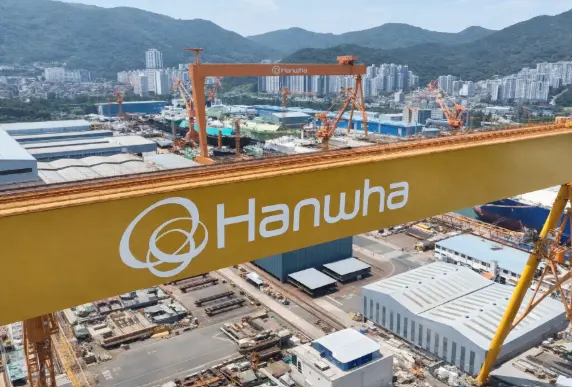
Hanwha Ocean, formerly known as Daewoo Shipbuilding & Marine Engineering, operates a major shipyard in Geoje, South Gyeongsang Province.
The Geoje site is associated with large commercial ships, LNG carriers and other advanced vessels.
For visitors who only know Seoul, Geoje may feel like a different Korea.
The city is shaped by the sea, shipyards, offshore engineering, subcontractors, technical workers and port-related businesses.
Large shipbuilding projects affect not only corporate earnings, but also restaurants, housing markets, local suppliers, transport firms and families living nearby.
This is important for foreign readers.
Modern Korea is not only built in offices, studios, cafés and technology parks.
It is also built in shipyards.
Geoje is a reminder that industrial Korea has a geography.
It is not evenly distributed.
It is concentrated in places where ports, workers, suppliers and heavy industry meet.
Arctic Vessels Need Cautious Language
In recent years, interest in Arctic shipping and ice-class vessels has grown.
Some energy projects in cold regions require specialised ships that can operate in harsh weather and icy waters.
These vessels need reinforced structures, advanced propulsion systems and strong safety design.
Arc7-class LNG carriers are one example of such specialised vessels.
They are designed for Arctic conditions and have been used in projects connected to northern energy routes.
However, Arctic shipping should not be overhyped.
A route that looks shorter on a map is not automatically cheaper, safer or more reliable in real life.
The Northern Sea Route can reduce sailing distance between parts of Asia and Europe in certain conditions, but it remains difficult, seasonal, politically sensitive and environmentally controversial.
Sanctions, insurance, ownership issues, maritime services and safety concerns can all affect whether specialised vessels are actually useful.
For that reason, it is more accurate to say that Korean shipbuilders are important in specialised vessel technology.
It is not accurate to say that Arctic shipping is already becoming a mainstream global route.
The Northern Sea Route Is Not a Simple Shortcut
The Northern Sea Route is often described as a shorter alternative to the Suez Canal route between Asia and Europe.
In theory, it can reduce sailing distance during certain seasons.
In practice, the route is complicated.
Arctic weather is difficult to predict.
Ice conditions vary.
Environmental concerns are serious.
Geopolitical tensions can affect access, insurance, fuel decisions and customer confidence.
Specialised vessels are expensive.
Supporting infrastructure is limited compared with traditional shipping corridors.
This is why many major shipping companies remain cautious.
The route may be important for specific energy projects.
It is not yet a simple replacement for existing global shipping routes.
This distinction is important for readers.
A shorter distance is only one variable.
A shipping route also depends on time, risk, cost, regulation, insurance, fuel, customers and political conditions.
Korea’s Advantage Is Engineering Complexity
Korean shipbuilders are strongest when vessels are difficult to build.
LNG carriers, offshore platforms, naval vessels and specialised ice-class ships require more than basic manufacturing capacity.
They require design knowledge, project management, skilled labour, safety systems and long experience with global clients.
This is where Korea’s shipbuilding industry still matters.
Although China has become highly competitive in global shipbuilding by volume, Korea remains strong in selected high-value categories.
Korean companies often focus on vessels where quality, reliability, regulation and delivery experience are especially important.
That strategy reflects a broader pattern in Korea’s economy.
The country rarely competes only by being the cheapest producer.
In many industries, it tries to compete through precision, speed, technology and complex manufacturing know-how.
In statistical terms, Korea’s value is not explained only by counting ships.
It is explained by looking at what kind of ships are being built.
Green Shipping Is Changing the Baseline
The maritime industry is also facing pressure to reduce emissions.
International regulations and customer expectations are pushing shipbuilders to improve fuel efficiency, develop alternative-fuel vessels and reduce environmental impact.
This affects Korean shipbuilders directly.
Companies are investing in energy-saving devices, cleaner propulsion systems, digital ship-management tools and vessels designed to meet future environmental standards.
The transition will not be easy.
Alternative fuels such as ammonia, methanol and hydrogen involve technical, safety, cost and infrastructure challenges.
Shipping companies must decide which technologies will be commercially realistic over the long term.
LNG also needs careful explanation.
It can reduce some air pollutants compared with older marine fuels, but it is still a fossil fuel.
It should not be described as a complete climate solution.
Still, the direction of the industry is clear.
Future competitiveness in shipbuilding will depend not only on size and price, but also on environmental performance, safety, fuel flexibility and technical reliability.
Why Shipbuilding Matters Inside Korea
Large shipbuilding orders often receive attention in Korea because they affect real communities.
A major vessel contract can support jobs across shipyards, suppliers, logistics companies, steel manufacturers, design firms and service businesses.
In cities such as Geoje and Ulsan, shipbuilding is part of everyday life.
When the industry is strong, local restaurants, housing, schools and small businesses can feel the benefit.
When orders decline, the effect can be painful across the region.
This is why shipbuilding news matters beyond investors.
It affects workers, families, subcontractors and local economies.
For many Koreans, shipbuilding is connected to the country’s industrial rise and export identity.
A vessel order is not only a number in a company announcement.
In a shipbuilding city, it can become work hours, subcontractor activity, household income and local confidence.
A Different Side of Modern Korea
Foreign readers often see Korea through culture and lifestyle.
That is understandable.
K-pop, Korean dramas, beauty products, food and tourism are highly visible.
But Korea’s global influence also comes from industries that most tourists never see.
Semiconductors.
Batteries.
Automobiles.
Shipbuilding.
Steel.
Industrial machinery.
These sectors may not appear in travel photos, but they help explain how Korea became a major export economy.
Shipbuilding is especially useful for understanding this balance.
It shows that Korea’s modern identity is not only soft power.
It is also industrial capability.
The country’s image may travel through music and drama.
Its economic weight still travels through manufactured goods, energy infrastructure and industrial systems.
Why This Story Is Worth Following
Korea’s shipbuilding industry is entering a new period of change.
Global competition is intense.
Environmental regulations are becoming stricter.
Energy routes are affected by geopolitics.
Demand for LNG carriers, naval vessels and specialised ships continues to shift with global markets.
Korean shipbuilders are trying to remain competitive by focusing on higher-value vessels, advanced engineering and cleaner shipping technologies.
That strategy will not guarantee success in every project.
Ship prices, fuel choices, labour conditions, financing, regulation, delivery schedules and geopolitical risks can all affect the industry.
This is why the sector should be followed carefully, not romantically.
It is a strong industry.
It is also exposed to cycles.
It depends on global energy demand, trade flows, regulation, capital spending and political risk.
What Foreign Readers Should Remember
Korea’s shipbuilding industry tells a broader story about the country.
It shows how a country with limited natural resources became globally influential through engineering, exports and industrial discipline.
It also shows why modern Korea cannot be understood only through Seoul or cultural exports.
To understand the full picture, readers need to look at places such as Geoje and Ulsan, where large-scale manufacturing still shapes local life.
The future of Korean shipbuilding will depend on many factors:
global energy demand,
environmental rules,
ship prices,
labour conditions,
technology,
financing,
and geopolitics.
One conclusion is safe.
Korea’s industrial story is not finished.
Behind the music videos, cafés, beauty brands and digital platforms, there are still shipyards building some of the most complex vessels on the sea.
That quiet industrial strength remains one of Korea’s important global variables.
Industry and Energy Information Notice: This article is for general industrial and economic information only. It does not provide investment advice, stock analysis, energy policy advice, company recommendations or environmental certification. Shipbuilding orders, LNG demand, Arctic shipping conditions, fuel regulations, vessel technology and company performance can change. Readers should check official company disclosures, maritime regulators, independent industry research and current energy-market information before making business, investment or policy decisions.
Sources / Further Reading
Hanwha Ocean — Geoje shipyard and commercial shipbuilding
HD Hyundai Heavy Industries — shipbuilding and marine engineering
Samsung Heavy Industries — LNG, offshore and specialised vessel information
U.S. Energy Information Administration — LNG shipping and storage basics
U.S. Department of Energy — LNG temperature and transport explanation
Clarksons Research / maritime industry reports — global shipbuilding orders and market share
Reuters — shipbuilding, Arctic vessel contracts and alternative-fuel shipping
CBS Maritime — Northern Sea Route and geopolitical constraints
Financial Times — Arctic route adoption and shipping caution
International Maritime Organization — greenhouse gas and shipping regulation updates
Google Search Central — Creating helpful, reliable, people-first content