The global luxury sector in 2026 prioritises Material Sovereignty—the strategic control over a textile’s origin, lifecycle, and afterlife—over ostentatious design. Leading conglomerates like LVMH and Kering are navigating tightening environmental regulations by turning to South Korea’s Hanbok archives, transforming ceremonial silks into upcycled, high-performance fabrics that blend ESG compliance with cultural exclusivity.
ESG Imperative for Heritage Fabrics
Sustainability now defines luxury market viability, with the global sustainable fashion segment expanding rapidly amid Gen Z’s dominance in driving purchasing growth. Upcycled Hanbok textiles, repurposed from vintage Nobang silks and Saekdong patches, deliver Circular Heritage: discarded garments dismantled and rewoven with bio-fibres for biodegradability and storytelling appeal.
LVMH’s recent sustainability forums underscore consumer demands for transparency, positioning these K-textiles as a narrative-rich alternative to synthetic alternatives. The fusion of tradition and tech ensures that every fibre carries a legacy while meeting the rigorous standards of modern eco-conscious luxury.
Environmental and Economic Metrics: The K-Tech Advantage
Traditional Korean natural dyes—indigo, persimmon, and safflower—offer functional advantages over chemical processes, including observed antibacterial properties that enhance product longevity. These metrics align with EU eco-design directives targeting microplastics and resource efficiency in textiles.
| Metric (2026 Data) | Conventional Synthetic Silk | Upcycled Hanbok Textile (K-Tech) | Strategic Impact |
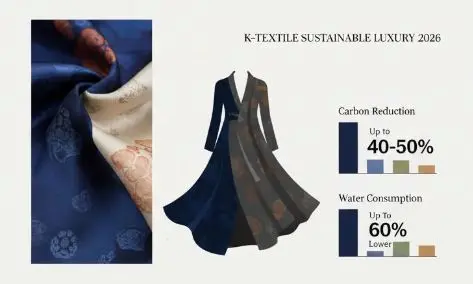
| Carbon Footprint | 100% (Baseline) | Up to 40-50% Reduction | ESG Reporting Gains |
| Water Consumption | Industry Avg. (High) | Up to 60% Lower per Unit | EU Green Deal Alignment |
| Microbial Stability | Low (Chemical-dependent) | High (Natural Dyes) | Extended Garment Lifespan |
| Market Positioning | Saturated Mass-market | Rarity-driven Premium | Significant Pricing Power |
Scaling via Seoul’s Innovation Hubs
Seoul’s Dongdaemun and Gyeonggi-do hubs—now an AI-wired ‘Defence Corridor’ for fashion—host startups like Danha and RE:CODE. These labels employ AI sorting for fibre strength and dye density, shifting from artisanal deadstock reworks to scalable, industrial production.
The Seoul Metropolitan Government’s Milan-focused expansion initiative propels select K-fashion brands into European showrooms and retail, linking runways to tangible sales beyond mere exhibitions. This infrastructure ensures that the ‘K-Textile’ movement is not a temporary trend but a permanent fixture in the global supply chain.
Heritage as a Strategic Asset
In the 2026 Fall-Winter cycle, K-textile upcycling fuses ancestral techniques with AI logistics, positioning South Korea to export resilient solutions amid planetary pressures. For investors, these materials emerge as serious contenders in sustainable luxury, not mere novelties. Heritage, when reimagined through the lens of Material Sovereignty, becomes the ultimate strategic asset in the algorithmic age.