Korean fermented food is often introduced overseas through one word: kimchi.
That is understandable.
Kimchi is the most familiar Korean fermented food for many foreign readers.
But inside Korea, fermentation is much wider than one dish.
It lives in kimchi jars, soybean pastes, soy sauce, red pepper paste, pickled vegetables, fermented side dishes and the quiet rhythm of daily meals.
It is not usually treated as a separate wellness product.
It is part of breakfast, lunch and dinner.
This difference is important.
Korean fermentation is not only about food science or nutrition.
It is about climate, preservation, family routines, community work, storage vessels, seasonal preparation and a slower food culture that still remains part of ordinary life.
A fermented food is not made only by ingredients.
It is made by time.
That is the first lesson of the Korean table.
Fermentation Begins at the Meal
One of the first things foreign visitors notice in Korea is the number of small side dishes served with a meal.
Even a simple restaurant may serve kimchi, seasoned vegetables, pickled roots, fermented sauces or soybean-based dishes alongside rice and soup.
These dishes are not usually announced as something special.
They simply arrive with the meal.
That is why Korean fermented food feels different from modern wellness marketing in many countries.
It was not created for a trend.
It developed through daily need, seasonal rhythm and shared eating.
Many Koreans grow up eating these foods from childhood.
The taste of kimchi, doenjang jjigae or pickled vegetables can be connected to family kitchens, grandparents’ cooking, school meals and winter preparation.
For a traditional cook, this matters.
A food that appears every day often carries more memory than a rare banquet dish.
Kimchi on a weekday table may look ordinary.
But it holds weather, storage, labour, family taste and time.
Why Fermentation Became Necessary
Korea’s climate and geography helped shape its fermentation culture.
Before modern refrigeration, preserving vegetables through cold winters was essential.
Fermentation became one of the most practical ways to store food for long periods.
Kimchi is the best-known example.
Kimjang, the traditional practice of making and sharing large amounts of kimchi before winter, is recognised by UNESCO as an Intangible Cultural Heritage of Humanity.
It is not only a cooking method.
It is also a community tradition based on preparation, sharing and seasonal cooperation.
Fermented soybean foods followed a similar logic.
Doenjang, ganjang and gochujang became important because they provided flavour, storage stability and depth to Korean meals.
In 2024, Korea’s jang-making tradition was also added to UNESCO’s intangible cultural heritage list.
This recognition helps explain why fermented sauces and pastes are viewed not only as ingredients, but also as part of Korea’s living food culture.
Over time, different regions and families developed their own recipes depending on local ingredients, climate and taste.
This is why Korean fermentation is not one single food trend.
It is a broad food culture built over time.
Jang Is the Deep Taste Behind the Table
To understand Korean fermented food, it is not enough to look only at kimchi.
Jang must also be understood.
Doenjang, ganjang and gochujang are not minor condiments.
They are the background taste of many Korean dishes.
Doenjang gives depth to soups and stews.
Ganjang seasons vegetables, braised dishes and marinades.
Gochujang brings heat, sweetness, salt and fermentation together.
These sauces and pastes are often used in small amounts, but their influence is large.
A spoon of doenjang can change a pot of soup.
A little ganjang can decide the balance of a namul dish.
A small amount of gochujang can give structure to a bowl of bibimbap.
This is why jang belongs at the centre of Korean food culture.
It is not always visible.
But it is often present.
A good Korean meal does not always shout.
Sometimes, its deepest flavour is the one that has been quietly aging in the background.
The Role of Onggi
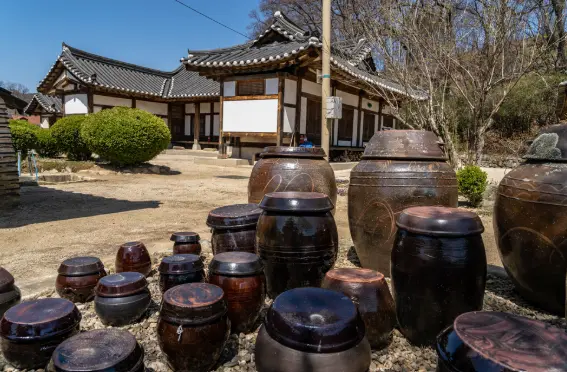
Onggi are traditional Korean earthenware jars used to ferment and store foods such as kimchi, doenjang, ganjang and gochujang.
For centuries, these jars were placed outdoors near Korean homes.
Seasonal temperature changes, air movement and time all influenced the fermentation process.
Onggi are often described as “breathing” jars because their porous structure allows limited gas exchange.
A 2023 study examined how carbon dioxide moves through onggi during kimchi fermentation and compared fermentation in onggi with fermentation in other containers.
This research is interesting because it shows that traditional vessels can be studied scientifically.
But it should not be misunderstood.
This does not mean every fermented food must be made in onggi to be authentic.
Most modern households use refrigerators, kimchi refrigerators, sealed containers or factory-made products.
Even so, onggi still carries strong cultural meaning.
For many Koreans, rows of dark brown onggi jars bring to mind older family homes, countryside kitchens and traditional food preparation.
They represent patience, time and older forms of cooking that contrast with fast urban life.
Global Interest Should Be Explained Carefully
International interest in fermented food has grown over the past decade.
Consumers in many countries are paying more attention to traditional diets, minimally processed foods and the possible relationship between food diversity and digestive health.
As this interest has grown, Korean fermented foods have received more attention.
Kimchi is the most recognised example.
Other fermented foods, such as doenjang, gochujang, makgeolli and fermented vegetable dishes, are also becoming more familiar to some overseas consumers.
However, this topic should be explained carefully.
Fermented foods continue to be studied in many fields, but this article discusses them as part of Korean food culture, not as health advice or medical treatment.
It is also not accurate to assume that every packaged fermented product contains live cultures.
Ingredients, processing methods, pasteurisation, salt levels, serving size and a person’s overall diet all matter.
This balanced explanation is safer and more useful for readers.
Korean fermented food is culturally important.
It is better understood as part of everyday food culture, not as a cure.
The Export Story Is Real, But It Needs Context
The growing interest in Korean fermented food is visible not only in tourism and media, but also in trade.
Korea’s food and agriculture-related exports reached a record 13.62 billion dollars in 2025, supported by the global popularity of Korean food products.
Kimchi exports also reached a record high in 2024, with outbound shipments reported at 47,100 tons.
These figures show that Korean food is travelling farther than before.
But they should be read carefully.
The 2025 food export figure includes many products, not only fermented foods.
Ramyeon, sauces, processed foods, fruits and other categories also contribute to the total.
Kimchi and Korean sauces are part of a wider movement, but they should not be described as the whole story.
Several factors have contributed to the growth of Korean food abroad.
Korean dramas, films and variety programmes have introduced many viewers to Korean meals.
Restaurants, supermarkets and online retailers have made Korean ingredients easier to find.
At the same time, global curiosity about traditional cooking methods and fermented food has encouraged more people to try ingredients that were once unfamiliar.
As a result, foods that were once mostly consumed within Korea are increasingly appearing in home kitchens abroad.
A Korean Meal Is Built Around Balance
Korean fermented foods are rarely eaten alone.
A typical Korean meal often combines rice, soup, vegetables, protein, fermented sauces and several side dishes.
Rather than focusing on one “superfood,” the meal is built around variety.
This is one reason Korean food culture interests foreign visitors.
A table may look simple at first, but it usually contains many small flavours:
spicy,
sour,
salty,
savoury,
fresh,
and fermented.
Namul dishes made with seasonal greens also reflect this balance.
They are usually lightly seasoned and served in small portions with other dishes.
For many Koreans, eating a variety of foods has long been more natural than focusing on one special ingredient.
This is the part that foreign readers should notice.
The value of Korean fermentation is not only in one jar of kimchi.
It is in the way fermented foods sit beside rice, soup, vegetables and other dishes.
The table is the system.
Fermentation is one part of that system.
Fermentation and Slow Food Culture
Korean fermentation also fits naturally into global interest in slow food.
Fermentation takes time.
Kimchi changes as it ages.
Doenjang and ganjang develop deeper flavours over months or years.
Gochujang also depends on time, temperature and careful storage.
This slower rhythm feels different from modern convenience eating.
In Seoul and other cities, some restaurants now highlight seasonal ingredients, traditional sauces, house-made jang and older cooking methods.
These places appeal to people who want food with a clearer sense of origin and preparation.
At the same time, Korean food companies are introducing fermented products overseas in new forms, including vegan kimchi, packaged sauces and premium traditional condiments.
This does not mean Korean fermentation has become only a commercial trend.
Its strength comes from the fact that it still remains part of ordinary Korean meals.
A tradition is strongest when it is not only displayed.
It is strongest when it is still eaten.
Why Foreign Visitors Notice It
For international visitors, fermented food in Korea often feels different because it is not separated from daily life.
Kimchi is not only found in specialist restaurants.
It appears in casual diners, family restaurants, school meals, market stalls and home kitchens.
Doenjang soup is not presented as a luxury dish.
It is familiar comfort food.
Gochujang is not only a sauce for export.
It is used in everyday cooking, from stews to rice bowls and marinades.
This ordinary presence is what makes Korean fermentation interesting.
It is not a performance for tourists.
It is part of how many people eat.
For a visitor, this can be more meaningful than a formal food explanation.
A spoonful of stew, a small dish of kimchi or a bowl seasoned with jang may say more about Korean food culture than a long menu description.
A Culture That Feels Old and Relevant
Korea is often described as fast, digital and modern.
Seoul has high-speed internet, advanced transport, delivery apps and a strong technology culture.
Yet many Koreans still eat foods made through methods developed long before modern refrigeration.
That contrast is one reason Korean fermented food feels meaningful to foreign readers.
It shows a country where speed and tradition exist together.
Korean fermentation is not just about kimchi.
It is about winter preparation, family memory, local ingredients, shared meals, traditional storage jars and patient flavour.
For people interested in Korea, it offers a useful way to understand the country beyond music, dramas and tourist attractions.
The taste is old.
The table is still alive.
Final Takeaway
Korean fermented food is attracting international attention for several reasons:
traditional food culture,
historical preservation methods,
culinary diversity,
and growing global interest in Korean cuisine.
Yet inside Korea, these foods remain remarkably ordinary.
Kimchi, doenjang, ganjang, gochujang and other fermented foods continue to appear in everyday meals rather than being treated as specialised products.
For foreign readers, this may be one of the most interesting aspects of Korean fermentation culture.
It is not a tradition preserved only for museums or tourism.
It remains part of daily life, connecting modern Korea with practices that have been passed down for generations.
Korean Fermented Food Information Notice: This article is for general food culture and educational information only. It does not provide medical, nutritional, dietary or health advice. Fermented foods can vary by ingredients, salt level, processing method, storage condition and pasteurisation. People with allergies, high blood pressure, kidney disease, digestive conditions, pregnancy-related concerns or other health issues should check labels carefully and consult a qualified health professional when needed.
Sources / Further Reading
UNESCO Intangible Cultural Heritage — Kimjang, making and sharing kimchi in the Republic of Korea
UNESCO Intangible Cultural Heritage — Knowledge, beliefs and practices related to jang making in the Republic of Korea
Journal of The Royal Society Interface — Onggi’s permeability to carbon dioxide accelerates kimchi fermentation
Yonhap News Agency — South Korea’s kimchi exports hit record high in 2024
Yonhap News Agency — South Korea’s food and agriculture-related exports hit record high in 2025
Ministry of Agriculture, Food and Rural Affairs — K-Food Plus export data
American Medical Association — Fermented foods and health communication
Google Search Central — Creating helpful, reliable, people-first content