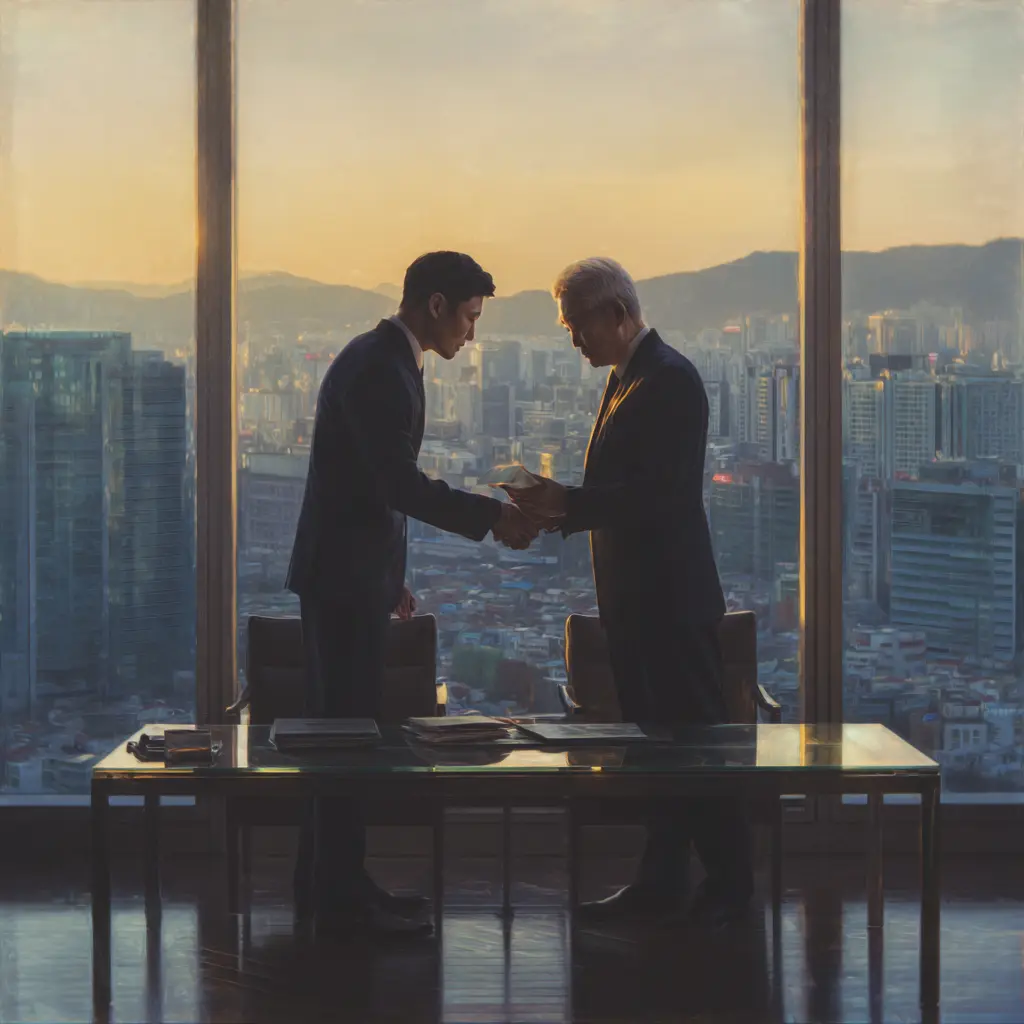
Korean etiquette is easy to notice, but not always easy to understand.
A younger person gives a small bow to an older person. A business card is offered with both hands. A drink is poured for someone else before one’s own glass is filled. At a meal, people may wait until the oldest person begins eating.
To a visitor, these gestures can look like old customs. In daily Korean life, they often do something more practical. They help people understand distance, show respect, reduce embarrassment and make a social situation feel safer.
That is why Korean etiquette still matters. It is not only about tradition. It is a way of managing relationships.
At the same time, Korea is not a society frozen in old manners. Younger Koreans are questioning rigid hierarchy, forced socialising and workplace customs that feel one-sided. The result is not the disappearance of etiquette. It is a slow change in what respect is expected to mean.
Etiquette as Social Distance
From a psychological point of view, etiquette works like a map.
It tells people how close or distant they are from one another. A close friend, a new colleague, an elderly relative, a customer and a senior manager are not treated in exactly the same way. The difference is not only emotional. It is expressed through speech, posture, timing and small gestures.
This is one reason Korean manners can feel complex to outsiders. In some cultures, politeness is shown mainly through friendliness, eye contact or direct speech. In Korea, politeness is often shown through careful distance.
A person may speak casually with a childhood friend, politely with a shop employee and more formally with a company director. The person has not changed. The relationship has changed.
This does not mean every Korean person follows the same rules. Modern Korea is urban, diverse and fast-moving. Still, age, role and context continue to influence many everyday interactions.
For foreign visitors, the safest starting point is simple: begin politely. It is easier to become more relaxed later than to repair a first impression that felt too casual.
Why Honorifics Are More Than Grammar
One of the clearest examples of Korean etiquette is language.
Korean has different ways of speaking depending on the relationship between people. The word commonly used for polite speech is jondaetmal. For many Koreans, polite speech is not just a grammar choice. It is a signal that the speaker recognises the other person and the situation.
This matters in public settings, workplaces, interviews, customer service and first meetings. A young adult may use polite speech with a taxi driver, a restaurant owner, a professor or a colleague they do not know well.
The emotional meaning is important. Polite speech says, in effect, “I am not treating this relationship too casually.”
In business settings, titles also matter. People may use words such as team leader, manager, director or professor instead of first names. A title helps define the relationship before people become personally close.
Some newer companies use English names, flat titles or more casual communication. Even there, many people keep a basic level of politeness until the relationship becomes clear. The form may change, but the instinct to protect social comfort often remains.
Nunchi and the Art of Reading the Room
Another important part of Korean etiquette is nunchi.
Nunchi means the ability to sense the atmosphere, notice what is not being said and adjust one’s behaviour. It is often translated as “reading the room,” but in Korea it can carry a stronger social function.
In a conversation, a person may not always say “no” directly. A phrase such as “That might be difficult” may mean the idea is unlikely to work. A pause, a quiet laugh or a change in tone can also carry meaning.
This is not about being vague for no reason. It is often about avoiding public embarrassment or direct confrontation.
In a meeting, for example, a Korean employee may hesitate before disagreeing with a senior person. A foreign manager who expects immediate yes-or-no answers may misread that hesitation as agreement. On the other side, very blunt criticism can feel unnecessarily harsh if it is delivered without context.
Nunchi helps people protect dignity. But it also has limits. When people avoid speaking too clearly, misunderstandings can grow. The healthier balance is not silence. It is respectful clarity.
Business Cards and First Impressions
Business cards still have meaning in Korean professional life.
When offering a card, it is polite to use both hands or to support the giving hand with the other hand. When receiving a card, it is better to look at it briefly before putting it away. The gesture is small, but it shows attention.
A business card is not just contact information. It tells the other person a name, company, role and position in the conversation. In a culture where role can shape communication, this information helps people know how to address one another.
Foreign visitors do not need to perform every detail perfectly. Most Koreans understand that outsiders are learning. What matters is visible care. A slow, respectful exchange usually leaves a better impression than a rushed one.
Dining Etiquette and Shared Attention
Meals are one of the easiest places to observe Korean etiquette.
In many settings, people wait for the oldest or most senior person to start eating. When alcohol is poured in a formal or senior-junior situation, younger people may use two hands. A person may also receive a drink with both hands or support the glass with the other hand.
Korean meals are often communal. Side dishes are placed in the middle. Grilled meat may be cooked at the table. People notice whether others have enough food, whether a glass is empty and whether someone seems left out.
These habits are not only rules. They are a form of shared attention.
For visitors, the goal is not perfect performance. The better approach is to observe first, move slowly and follow the lead of the group. If unsure, a short polite question is usually enough.
Hoesik and the Changing Workplace
One of the clearest changes in Korean etiquette is happening at work.
For many years, hoesik, or after-work dining with colleagues, was treated as an important part of office culture. It helped teams bond, allowed junior staff to speak more freely and gave managers a way to build group loyalty.
But many younger workers now question late-night drinking and forced socialising. They may still value teamwork, but they want respect to be shown during working hours as well. Health concerns, work-life balance and changing views of authority have all weakened the older style of mandatory hoesik.
This does not mean work dinners have disappeared. They still exist. But the tone is changing. Some gatherings are shorter. Some are optional. Some happen at lunch rather than late at night. Some teams choose meals without heavy drinking.
This shift shows an important change in Korean etiquette. Respect is no longer accepted only as something juniors owe to seniors. More people now expect respect to move in both directions.
The Generational Shift in Manners
Younger Koreans are not rejecting manners altogether.
Many still use polite speech, bow when appropriate and understand dining etiquette. What they often reject is excessive formality that feels unfair, inefficient or one-sided.
This creates tension between generations. Older Koreans may see some younger behaviour as lacking manners. Younger Koreans may see some older expectations as outdated.
At the centre of the debate is one question: what does respect mean today?
Korean etiquette has changed over time. Formal language, social roles and careful manners still matter, but many people now also connect respect with fairness, competence and personal boundaries.
Both sides are talking about respect. They are not always talking about the same kind of respect.
When Etiquette Becomes Silence
Korean etiquette can make social life smoother. It can also create pressure.
In some workplaces, junior employees may hesitate to disagree with senior managers. Teams may avoid open debate because they do not want to disturb harmony. A person may agree in the room and express doubts only later.
This can become a problem in fields that depend on creativity, fast feedback and honest discussion.
The issue is not respect itself. The problem begins when respect becomes silence.
A healthier culture keeps the useful parts of etiquette while reducing fear. People can speak politely and still disagree. Seniors can be respected without being treated as always correct. Meetings can remain orderly without blocking new ideas.
This balance is still developing in Korea.
What Foreigners Should Remember
Foreign visitors do not need to memorise every rule of Korean etiquette.
It is more useful to understand the logic behind the behaviour.
Use two hands when giving or receiving something important. Begin with polite speech or formal greetings. Pay attention to age and role. Avoid embarrassing someone in public. Watch how others behave at the table. Do not assume silence always means agreement.
These small adjustments can make travel, work and friendships easier.
Koreans generally do not expect foreigners to know every custom. But effort is noticed. A simple bow, careful wording or respectful gesture can make an ordinary exchange warmer.
For a practical visitor-focused guide to public manners, dining customs and everyday behaviour, see our Korean Etiquette for Travelers guide.
A Living System of Respect
Korean etiquette is changing, but it has not disappeared.
Some old customs are fading. Some are becoming more flexible. Others remain strong because they still help people navigate relationships.
The most important point is that Korean etiquette is not decoration. It is a social language.
At its best, it helps people show respect, protect dignity and understand the situation. At its worst, it can feel rigid or unequal.
Modern Korea is trying to keep the useful parts while reducing the burden of excessive hierarchy. That tension is what makes Korean etiquette interesting today. It is not simply old tradition. It is a living system that still shapes how people speak, eat, work and build trust in everyday life.
For more guides to Korean customs, language and everyday social behaviour, return to our Culture & Etiquette guide.
Official Information
Information reviewed: September 2026.