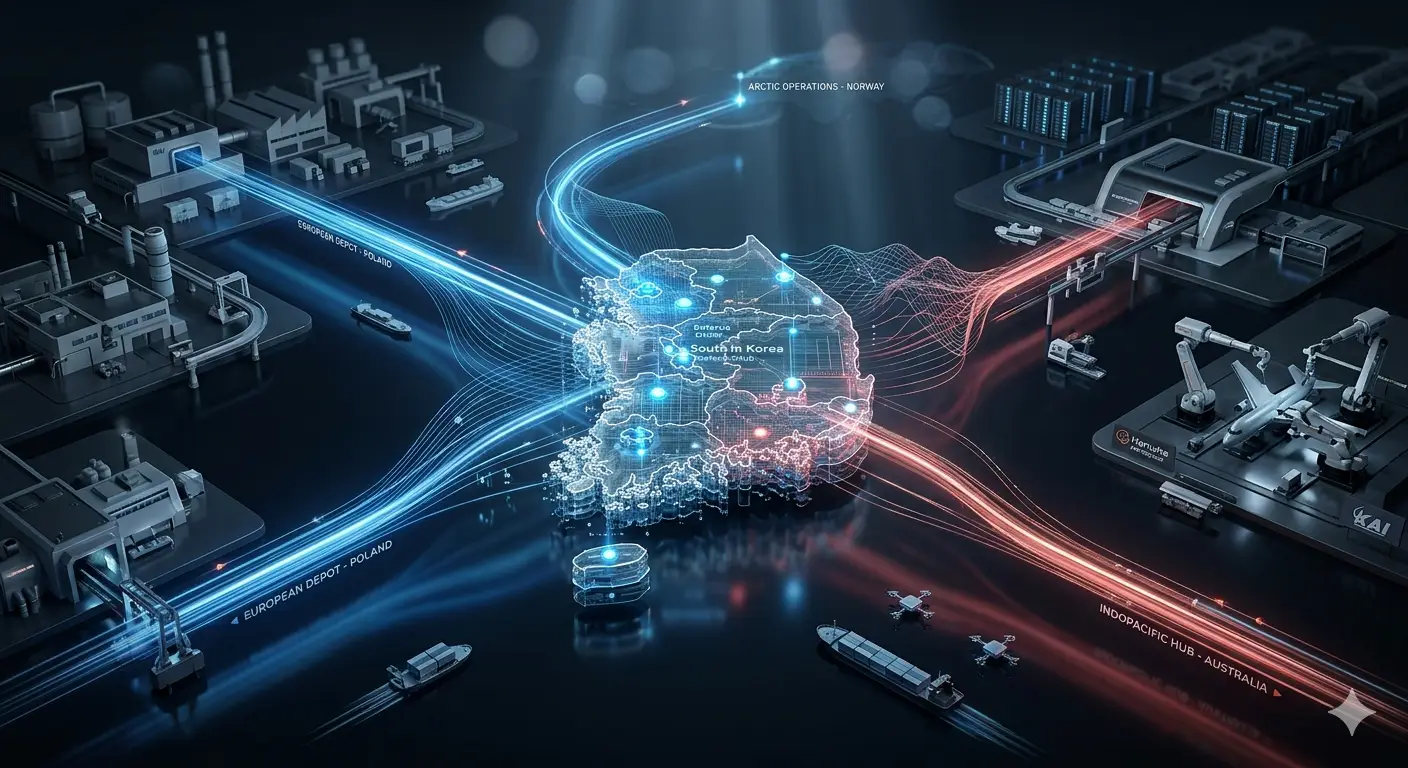
South Korea’s defence industry has become more visible in recent years, but it should not be understood as a simple success story.
For many international readers, South Korea is still associated with semiconductors, smartphones, cars, shipbuilding, batteries, K-pop and television dramas. Defence manufacturing is less familiar. Yet it is now becoming part of the wider discussion about Korea’s industrial economy.
This topic requires careful language. Defence exports are not ordinary manufactured goods. They are connected to national security, public budgets, diplomacy, export controls, conflict, civilian safety and political responsibility. A tank, aircraft or artillery system cannot be discussed in the same way as a car or home appliance.
Still, Korea’s defence sector is worth examining because it reveals something important about the country’s economic structure. It shows how production capacity, supplier networks, delivery schedules, maintenance support and state-backed industrial coordination can affect global procurement decisions.
The important question is not whether Korea has suddenly replaced traditional defence suppliers. It has not. The better question is why some governments have become more willing to include Korean suppliers in their procurement choices.
A Smaller Player With a More Visible Role
South Korea is not the centre of the global arms market.
The United States remains far ahead of all other exporters. Several European countries also continue to play major roles. In comparison, Korea’s share remains limited.
According to SIPRI data for 2020–2024, South Korea ranked as the world’s 10th largest exporter of major arms, with about 2.2 percent of global exports. This is significant enough to attract attention, but it is not large enough to describe Korea as a dominant supplier.
That distinction matters.
A careful economic reading should avoid both exaggeration and dismissal. Korea is not replacing the United States, France, Germany or other established suppliers. But it has become a more visible additional supplier at a time when many governments are reviewing stockpiles, delivery timelines and domestic defence readiness.
In that sense, Korea’s defence exports are less about sudden dominance and more about market entry under changing conditions.
Delivery Time as an Economic Factor
In defence procurement, price and technical standards are important. But recent global events have made delivery time more important than before.
A defence contract does not help a country immediately just because it has been signed. Equipment must be produced, delivered, integrated, maintained and supported. Training, spare parts, ammunition supply, software updates and repair capacity also matter.
This is where Korea’s industrial base becomes relevant.
Korean defence companies have supplied the South Korean military for decades. That domestic demand helped maintain production lines, engineering experience and supplier relationships. When some foreign buyers began looking for faster delivery, Korean firms could point not only to products but also to existing manufacturing capacity.
From an economic perspective, this is a capacity issue. A supplier with an active production line may be more attractive than a supplier with a long backlog, even if the latter has a longer global history.
This does not mean Korean companies can avoid delays or production risks. No large defence project is free from them. But delivery schedules have become part of Korea’s competitive appeal.
Poland and the Importance of Urgency
Poland is one of the clearest examples of Korea’s recent defence export growth.
In 2022, Poland signed major agreements involving Korean-made K2 tanks, K9 self-propelled howitzers, FA-50 aircraft and Chunmoo rocket artillery systems. The early package included 180 K2 tanks, 212 K9 howitzers and 48 FA-50 aircraft.
Poland’s decision should be read in its security context. Russia’s full-scale invasion of Ukraine changed European defence planning. Countries close to the conflict began reviewing military readiness, stockpiles and procurement speed.
For Poland, the Korean agreements were not only about buying equipment. They were also about receiving systems within a shorter timeframe and discussing industrial cooperation, local production, maintenance and training.
This distinction is important. Modern defence procurement is rarely a one-time purchase. It often creates a long relationship between buyer and supplier. A country must consider not only the purchase price, but also training costs, maintenance systems, spare parts, upgrades, local industrial participation and political reliability.
At the same time, the Poland case should not be overstated. Large framework agreements can face financing limits, political changes, industrial delays and renegotiation. A headline number does not always become a completed delivery in the same form.
A balanced view should treat Poland as an important case, not as proof that every Korean defence export plan will proceed without difficulty.
Northern Europe and Lifecycle Support
Korean defence equipment has also gained attention in Northern Europe.
Norway’s use of K9 self-propelled howitzers is relevant not because of the weapon itself, but because of what the contract structure shows. Additional K9 systems have been linked with training, maintenance and integrated logistics support. This points to a broader shift in defence exports.
Buyers are no longer looking only at the platform. They are looking at the life of the system.
An aircraft requires pilot training, maintenance facilities and parts. An artillery system requires technical support, repair capability and ammunition logistics. A naval system may require years of software, sensor and maintenance work.
This is why lifecycle support has become central to defence economics. The initial purchase is only one part of the total cost. The larger question is whether the supplier can support the system for many years.
Korea’s advantage here is not simply product design. It is the ability to connect manufacturing, logistics, maintenance and export management into a package that some buyers find useful.
The Supply Chain Behind Defence Exports
Defence exports depend on complex supply chains.
A single defence system may involve steel, engines, electronics, optics, sensors, software, communications equipment, precision parts and specialised materials. If one important component is delayed, the whole delivery schedule can be affected.
Korea’s broader industrial economy gives its defence firms a useful foundation. The country has deep experience in steel, shipbuilding, vehicles, electronics, semiconductors, machinery and export logistics. These industries do not automatically create defence success, but they provide a manufacturing environment that defence firms can draw on.
This is one reason Korea’s defence industry should be seen as part of the country’s wider industrial structure.
The same economic habits that supported other Korean export sectors are also visible here: process control, supplier coordination, production discipline and after-sales support.
But there are limits. Defence supply chains are exposed to raw material costs, export controls, technology restrictions, financing problems, diplomatic pressure and geopolitical risk. These risks can affect both Korean suppliers and foreign buyers.
A serious analysis should therefore avoid describing Korea’s defence industry as unstoppable. It is growing in visibility, but it remains exposed to the same constraints that affect other strategic industries.
Defence Exports Are Not Ordinary Exports
Defence exports raise ethical and political questions that ordinary industrial exports do not.
A semiconductor chip, ship or automobile can have strategic importance, but a weapon system is directly connected to the use of force. Even when an export is legal and approved by the government, it can still raise questions about end users, conflict zones, diversion risks and long-term political consequences.
This is why defence exports require oversight.
Important questions include who the buyer is, how the equipment will be used, whether the transfer complies with national law and international obligations, and whether there are safeguards against misuse or unauthorized transfer.
These questions are not unique to Korea. They apply to every arms-exporting country.
For Korea, the challenge is to develop its defence industry without treating weapons as ordinary growth products. Economic benefits may include exports, jobs, engineering capability and industrial cooperation. But those benefits must be weighed against legal, diplomatic and ethical responsibilities.
The Role of the State
Defence industries are rarely purely private markets.
Governments shape demand, approve exports, fund research, regulate technology transfer and influence diplomatic relationships. In this sense, defence manufacturing sits between the market and the state.
Korea is no exception. The country’s defence industry developed under the pressure of national security, domestic military demand and long-term industrial policy. Export growth is therefore not only a corporate story. It is also connected to public policy, military planning and diplomatic relationships.
This makes the sector different from consumer electronics or entertainment exports.
A drama can succeed abroad through audience demand. A defence system cannot. It needs government approval, buyer-state trust, financing, training arrangements, export licenses and long-term political management.
That is why defence exports should be analysed through institutions, not only through sales numbers.
Industrial Strength and Industrial Risk
Korea’s defence exports show how manufacturing strength can become strategic influence.
A country that can produce complex systems, deliver them on schedule and support them over time gains a certain form of industrial credibility. This credibility matters in a world where many governments are concerned about supply shortages, long backlogs and geopolitical uncertainty.
But industrial credibility is not permanent.
If deliveries are delayed, financing becomes difficult, export approvals become controversial or after-sales support fails, trust can weaken. Defence buyers are usually making decisions that last for decades. A supplier must remain reliable long after the first delivery.
This is why Korea’s defence industry faces a test. The first stage was gaining attention. The more difficult stage is maintaining reliability across multiple countries, political cycles and long contract periods.
What International Readers Should Understand
South Korea’s defence industry matters because it reflects a broader shift in the global economy.
Security concerns are changing procurement decisions. Supply chains are being reconsidered. Governments are paying more attention to production capacity, not only design. Defence buyers want equipment, but they also want training, maintenance, spare parts and long-term support.
Korea has become more visible because it can offer some of these elements at a time when demand has increased.
But this should not be romanticised.
The story is not simply about weapons, exports or national pride. It is about the connection between industrial capacity, state policy, security demand and ethical responsibility.
South Korea’s defence sector is therefore best understood as part of the country’s changing industrial identity. It shows how a manufacturing economy can move into more strategic fields. It also shows why strategic industries require more caution, not less.
The economic lesson is clear: in today’s defence market, production capacity, delivery reliability and lifecycle support can matter as much as the product itself.
The policy lesson is just as important: growth in this sector must be matched by responsible export controls, transparent oversight and careful public debate.
Defence Industry Information Notice
This article is for general informational and industrial analysis purposes only. It does not promote weapons, military action, arms purchases or any specific defence company. Defence exports are subject to national laws, export controls, end-user review, international obligations and political oversight. Readers should consult official government sources, defence procurement documents and independent research institutions for current and detailed information.
Further Reading
SIPRI – Trends in International Arms Transfers, 2024
SIPRI – Research on South Korea as a defence exporter
Polish Ministry of National Defence – 2022 defence procurement announcements
Reuters – Reporting on European arms imports and defence procurement after the Ukraine war
Hanwha Aerospace – Norway K9 contract and lifecycle support information
OECD and Korean policy sources – Industrial policy, manufacturing and strategic sectors